

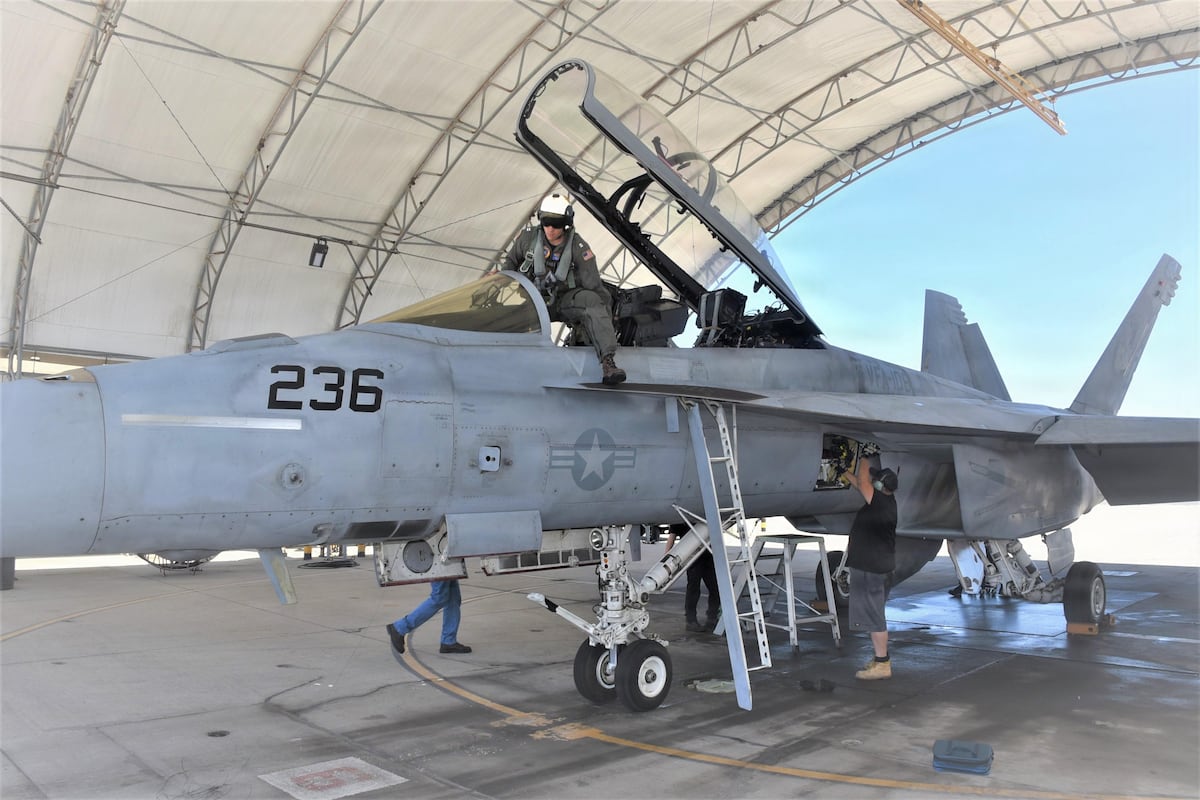

Composite repair time for F/A-18 Super Hornets could be slashed in half with a groundbreaking 3D-printing repair method, according to the Naval Air Warfare Center Aircraft Division.
By utilizing a “high-performance, 3D-printed composite patches that can be applied directly onto the aircraft,” the 3D-printing method has the possibility of enabling sailors to perform complex composite fixes directly at forward operating bases, abandoning the need for “highly specialized maintenance artisans” and lengthy turnaround times that can cause severe delays, a Wednesday release notes.
“Our goal is to put capability directly into the hands of the Fleet,” NAWCAD Commander Rear Adm. Todd Evans said in the release. “By simplifying a complex repair so it can be done forward, our engineers would get aircraft back in the fight faster — it’s a smart solution that makes our squadrons more self-sufficient and directly improves operational readiness.”
Typically, the repair of the grounded F/A-18 can cause significant delays as naval crews wait for parts to be shipped back to repair depots in the U.S. and then shipped back to the fleet. In the interim, the Navy loses critical combat capability as it stretches to repair its fighter jet.
To contend with this, a joint team of engineers from NAWCAD and Fleet Readiness Center Southwest developed the 3D-printed composite patches, allowing crews to rapidly assess and repair the damaged plane in 50% less time.
After successful lab and ground tests, flight-tests are slated to begin on operational aircraft this summer.
The patch job comes as the U.S. Marine Corps moves to deactivate all remaining Hornet squadrons by 2030 and eliminate the maintenance specialties associated with the aging fighter jet as it transitions to an all-F-35 tactical aircraft fleet, according to previous Military Times reporting.
According to the release, 22 Navy maintenances sites across the globe already possess 3D printers, potentially allowing for swift repairs where the aircraft actively operate.
Claire Barrett is an editor and military history correspondent for Military Times. She is also a World War II researcher with an unparalleled affinity for Sir Winston Churchill and Michigan football.
Read the full article here
