

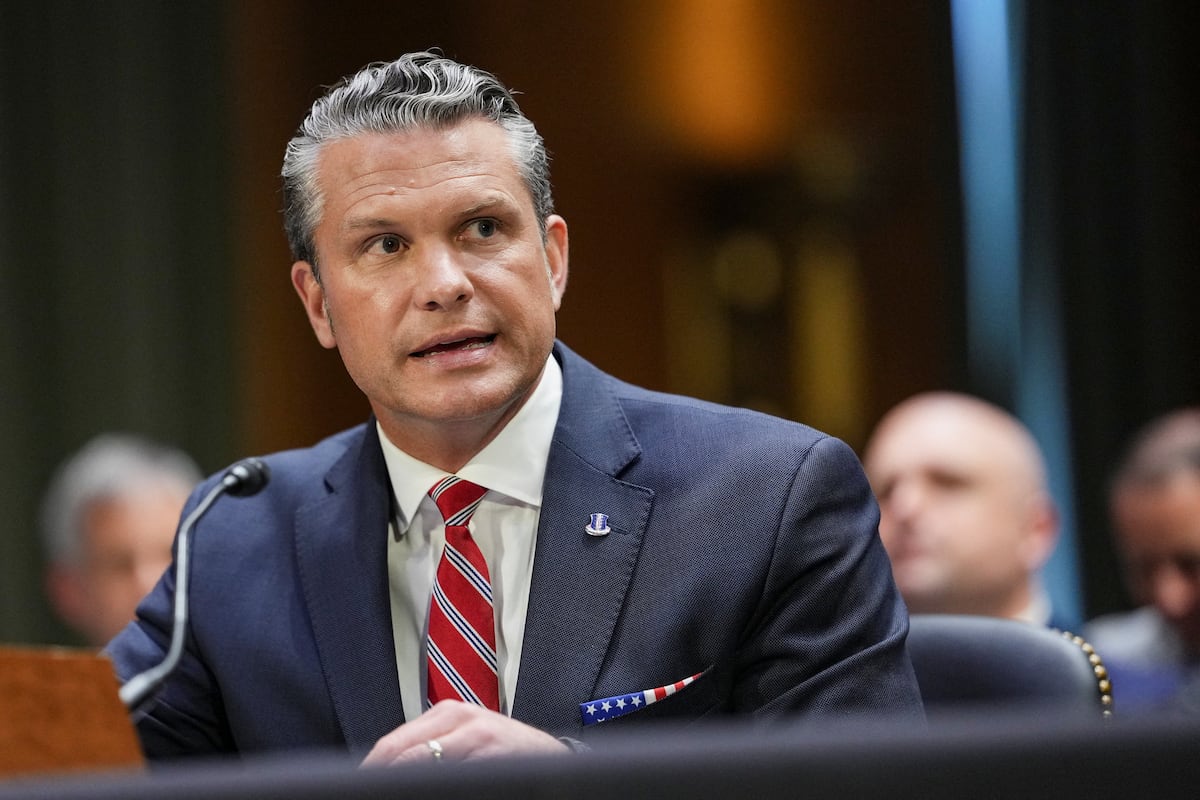

The Iran war has cost the Defense Department $37.5 billion to date, Secretary Pete Hegseth told senators Tuesday during a hearing to request emergency funding for the ongoing conflict.
Hegseth and Chairman of the Joint Chiefs of Staff Gen. John Caine testified before the Senate Appropriations Committee to seek $67.1 billion in supplemental money for the war and other DoD expenses, such as munitions, drones and the Army and National Guard deployments to the southern U.S. border and Washington, D.C.
Given that the department has $75 billion in its coffers from the $156 billion it received last year in reconciliation funding in the One Big Beautiful Bill, senators voiced skepticism over the emergency request.
Sen. Patty Murray of Washington, the committee’s top Democrat, said the committee would not “rubber stamp a request to bankroll this war,” given that the DoD received more than $1 trillion in funding last year and has requested $1.3 trillion this year.
“The president’s request is not even a primarily a request to cover the costs of the Iran war. This request is chock full of asks to fund un DoD priorities, which should be considered through our annual appropriations process, not in an emergency supplemental,” the senator said.
Similarly, Sen. Kristin Gillibrand, D-N.Y., asked how to convey the DoD’s needs when constituents have seen gas prices, food and other household expenses rise.
“You’re asking for $1.5 trillion, unlimited money for bombs, but insufficient money for the American people for their healthcare, their food, their housing,” Gillibrand said.
Hegseth said the new funding is needed to support operations because the $75 billion in reconciliation funds are slated to be used to restore a military that was “ignored” under the Biden administration. The new request is an “urgent, necessary injection of resources to address” immediate needs, he said.
“The military requires a generational investment to deliver on peace through strength,” Hegseth said, later adding that he didn’t know what his predecessor, former Defense Secretary Lloyd Austin, “did for four years.”
“The amount of neglect, the amount of stale thinking and bureaucracy was staggering when we took over,” Hegseth said.
He added that the supplemental was “a new request based on new realities of a world we face.”
“[We’re] stepping up to meet the moment,” Hegseth said.
In May, Hegseth estimated that the cost of war at the time was $29 billion.
Roughly half of the supplemental request, $32.7 billion, is slated to fund the ongoing operation directly. The remainder is for national security priorities not to the war.
The request includes $21 billion for munitions, $17.3 billion for operations, $12.1 billion for classified programs, $5.1 billion for cybersecurity, $2.4 billion for drones, $1.7 billion for readiness, $1.5 billion for fuel and $2 billion for “administration priorities” and National Guard support.
The request comes as the war, which began Feb. 28, has escalated in the past two weeks. The U.S. has conducted air strikes consecutively for the last 10 days, and four U.S. service members have been killed in the last four days, bringing the total number of U.S. casualties to 18.
At least 14 merchant mariners also have died as a result of attacks in the Strait of Hormuz, according to the International Maritime Organization, and transits have decreased dramatically as Iran has reasserted its control over the strategic waterway.
Caine told senators he sat before them asking for the funding “while the window of opportunity — while time — is still on our side.”
“Our adversaries are aligning in their interests, creating simultaneous challenges across multiple domains. They are sharing intelligence, combat capabilities and technology. Technology. That is accelerating the speed of war, isn’t it?” Caine said in opening remarks.
Of concern to Sen. John Kennedy, R-La., and several other senators, was the administration’s approach to the Russia-Ukraine war and funding promised to support Ukraine that has not been allocated. Kennedy wanted assurances that the DoD had chosen a clear side in the conflict, asking Caine who “we” wanted to win.
“Sir, I want Ukraine to win,” Caine said.
“Is Russia America’s friend?” Kennedy asked.
“I think that depends on your definition of friend. I think it’s a complicated relationship,” Caine replied. After a brief pause, he added, “But no, I don’t think they’re our friends.”
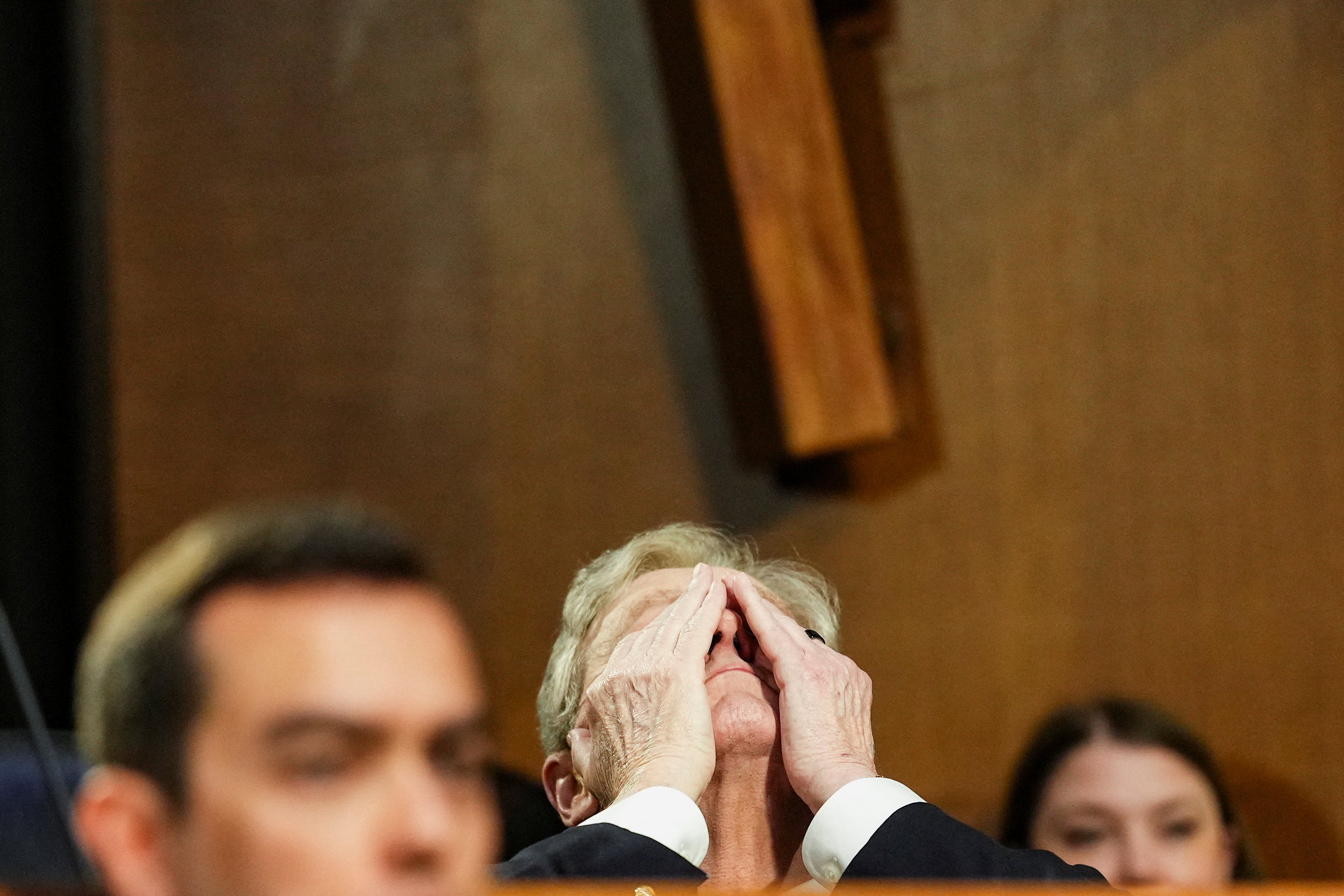
Kennedy also asked what the administration thinks will happen regarding the Strait of Hormuz and what Iran’s intentions are in developing a nuclear weapon — the initial reason President Donald Trump gave for attacking Iran.
“We need straight answers!” Kennedy told Hegseth.
Republican Sen. Lisa Murkowski of Alaska sought assurances that should the supplemental request be approved, the Trump administration would not perceive passage as a measure for restarting the 60-day clock on a War Powers Resolution, which the Senate passed 50-48 in June.
Citing precedent by President Bill Clinton in sending U.S. troops to Kosovo, Murkowski asked if the administration felt it had adequate authorization to continue the conflict in Iran.
“We certainly, as department, take the position of the White House that we have all the authorities necessary at this moment,” Hegseth said.
Two lawmakers, Sen. Tammy Baldwin, D-Wisc., and Sen. Shelley Moore Capito, R-W. Va., asked Hegseth to answer for the record, to concerns that service members injured in the current conflict did not receive proper medical care from the U.S. military or screenings for traumatic brain injury.
As of Tuesday, more than 440 troops have been injured in the conflict.
“Every effort was made to provide every level of medical care possible,” Hegseth said.
Patricia Kime is a senior writer covering military and veterans health care, medicine and personnel issues.
Read the full article here
