

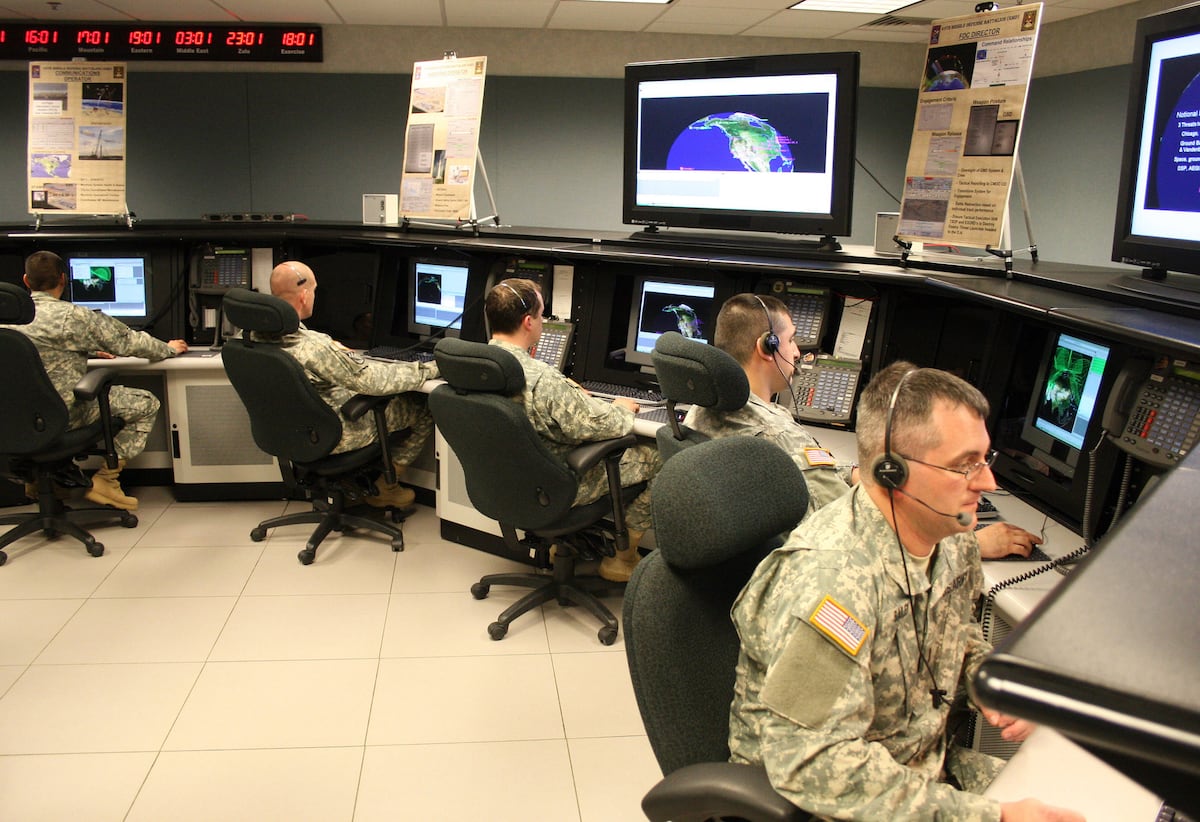

HUNTSVILLE, Ala. — The U.S. Army will soon assume a broader mission in defending the U.S. homeland, expanding from a focus on countering intercontinental ballistic missiles to address a much wider variety of threats, from drones to cruise missiles to hypersonic weapons, said Lt. Gen. Sean Gainey, commander of Army Space and Missile Defense Command.
Through its 100th Missile Defense Brigade, the Army already manages command-and-control missions for the Ground-Based Midcourse Defense system that is designed to defend the homeland from ICBMs from North Korea and Iran. The GMD system is made up of 44 interceptors buried in the ground at Fort Greeley, Alaska, and Vandenberg Space Force Base in California.
The 100th Missile Defense Brigade is made up of largely National Guardsmen but also includes active-duty soldiers.
As the Defense Department continues to work on the architecture and elements of President Donald Trump’s Golden Dome homeland missile defense shield, the Army has been developing capabilities to counter cruise missiles and a wide variety of drones, including systems that can defeat entire swarms.
The service is also leading the acquisition of systems that will become a part of the air and missile defense architecture for Guam that’s currently taking shape. Those capabilities include the Patriot air-and-missile defense system, a new missile defense radar and the Indirect Fire Protection Capability system that can defend against cruise missiles, drones, rockets, artillery and mortars.
The Army, which currently serves as the space component for the GMD system under U.S. Northern Command, will expand into the role of service component command for all air-and-missile defense, Gainey told Defense News in an interview at the Space and Missile Defense Symposium in Huntsville, Alabama.
“That aperture has been opened,” Gainey said. “No longer are we just focused on the GBIs [Ground-Based Interceptors] in Alaska defending the homeland from an ICBM attack. We’re now going to be in a role for [US NORTHCOM commander] Gen. [Gregory] Guillot for all of air and missile defense, and it’s appropriate that it’s going to reside with Space and Missile Defense Command.”
The change will also realign CONUS-based Army Air and Missile Defense Commands, or AAMDCs, under SMDC, giving them a higher headquarters with deep expertise in homeland defense operations.
Gainey said the shift will allow the commands to “synergize” their efforts, optimizing mission sets between the two AAMDCs and improving coordination.
Gainey, who also commands the Joint Functional Component Command for Integrated Air and Missile Defense, or JFCC IAMD, said his team is preparing to support the homeland defense mission more directly. JFCC IAMD’s current responsibilities include assessing new missile capabilities, developing multinational missile defense effectiveness and executing joint and combined training.
Soon, Gainey said, it will “transform to assist SMDC in the homeland defense initiative.”
The broader role will be outlined in the upcoming Army Space and Missile Defense strategy, which Gainey said should be released within the next three months. The strategy reflects changes in the threat environment, including the rise of drone warfare, the need for artificial intelligence to manage operator workloads and the growing complexity of regional and “trans-regional” threats that can reach the U.S. homeland.
One key focus will be “missile defeat” — measures that go beyond traditional interceptor-based defense.
“The masses [of threats] introduce a whole new element into the calculus,” Gainey said. “We can no longer look at it the same of interceptor on interceptor.”
While details of the expanded mission are still taking shape, Gainey said the changes will position the Army to take a more holistic approach to homeland defense.
“We’re pretty excited about those opportunities of going from GMD to more holistic air and missile defense,” he said.
Jen Judson is an award-winning journalist covering land warfare for Defense News. She has also worked for Politico and Inside Defense. She holds a Master of Science degree in journalism from Boston University and a Bachelor of Arts degree from Kenyon College.
Read the full article here
