

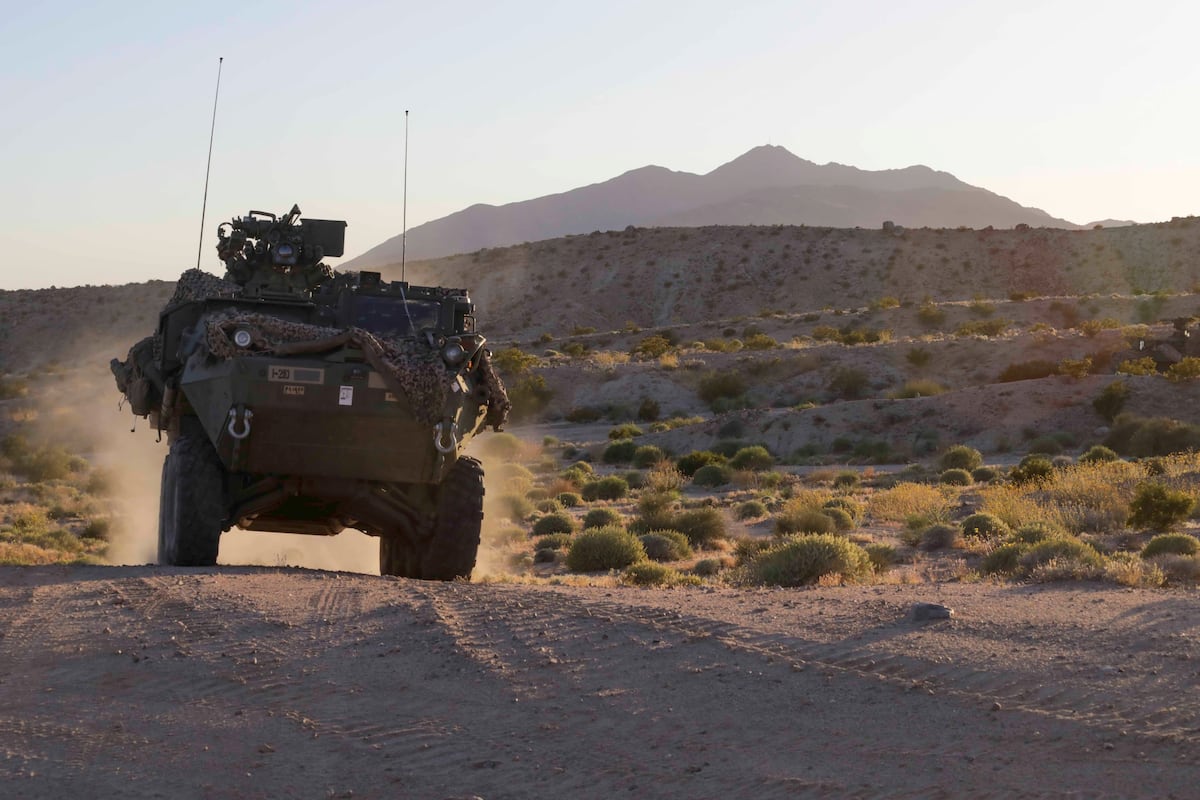

The majority of ground combat vehicles used by the U.S. Army and Marine Corps are not ready to take part in missions due to a lack of maintenance and shortages of spare parts, warns a congressional watchdog.
Vehicles that regularly fail to meet their expected standards of readiness include 18 key types of combat and support vehicles used by both services, including the Bradley Fighting Vehicle, Armored Personnel Carrier, Stryker Combat Vehicle, Abrams Tank, Light Armored Vehicle, Assault Amphibious Vehicle and Joint Light Tactical Vehicle, among others, according to a Government Accountability Office report released last month.
Over the last decade, both the Army and the Marines have seen their vehicle combat readiness kneecapped by a combination of industry challenges, reductions in vehicle overhauls and lack of available skilled technicians, GAO found.
Industry challenges include diminishing supplies, long lead times in production, lack of available manufacturers and strains on single-source suppliers, the watchdog noted. Concurrently, manufacturing costs have gone up.
From fiscal 2015 to fiscal 2024, both services significantly reduced the number of vehicle overhauls, according to the report. The Army experienced the largest decline, reducing the amount of maintenance overhauls performed in its depots from 1,278 in fiscal 2015 to only 12 in fiscal 2024, according to the report. The Marines during that same time period dropped their overhauls from 725 to 163.
“A senior Army official stated that the Army accepted the risk from the decision to reduce funding for overhauls,” the report noted.
However, despite the decline in performed maintenance, spending has remained high, with both services reported to have spent over $2.5 billion in fiscal 2023 on depot maintenance of ground vehicles, according to GAO.
The Army’s maintenance cuts have, in turn, resulted in a loss of skilled workers who have had to seek other jobs, with the Bradley program being particularly affected.
“According to Army officials, diminished depot workload has led to higher turnover among experienced personnel, resulting in some gaps in needed skills,” according to the report.
Moreover, the lack of available technical data has hindered the Army’s attempts to conduct in-house repairs on some vehicles, according to the report, with Army technicians in some cases having to rely on drawings from the 1960s to guide them. Army technicians have had to send repair work on the Abrams, Bradley and Stryker vehicles back to the original manufacturers due to a lack of technical information about the vehicles accessible at Army depots.
None of the Army vehicles surveyed by GAO met their mission availability standards in fiscal 2024, the watchdog noted. The Marine Corps, by contrast, demonstrated that three vehicles — the Light Armored Vehicle, Logistics Vehicle System Replacement and Medium Tactical Vehicle Replacement — were at or above an 80% mission capability rate last fiscal year, as the Marines have maintained overhaul programs for these vehicles.
Demands for maintenance continue, as depots must cope with the need for unexpected vehicle repairs, GAO said. Additionally, demands on industry have increased, as both services are aiming to maintain new vehicle components while simultaneously seeking parts to ensure combat viability for existing systems.
“More recently fielded types of vehicles also face parts and materiel challenges because they are competing with vehicles currently being produced for the same components,” the report stated. “For example, both services’ officials reported that their JLTVs [Joint Light Tactical Vehicles] are competing for the same parts and materiel as the manufacturer producing new JLTVs.”
Zita Ballinger Fletcher previously served as editor of Military History Quarterly and Vietnam magazines and as the historian of the U.S. Drug Enforcement Administration. She holds an M.A. with distinction in military history.
Read the full article here
