


When modern systems fail, food stops being about preference and starts being about reliability.
Power outages, supply shortages, fuel disruptions, and weather emergencies all expose the same truth: most people don’t actually know how to turn pantry staples into real meals without electricity or modern appliances.
That’s where frybread comes in.
This is not trendy food. It’s not comfort food in the modern sense.
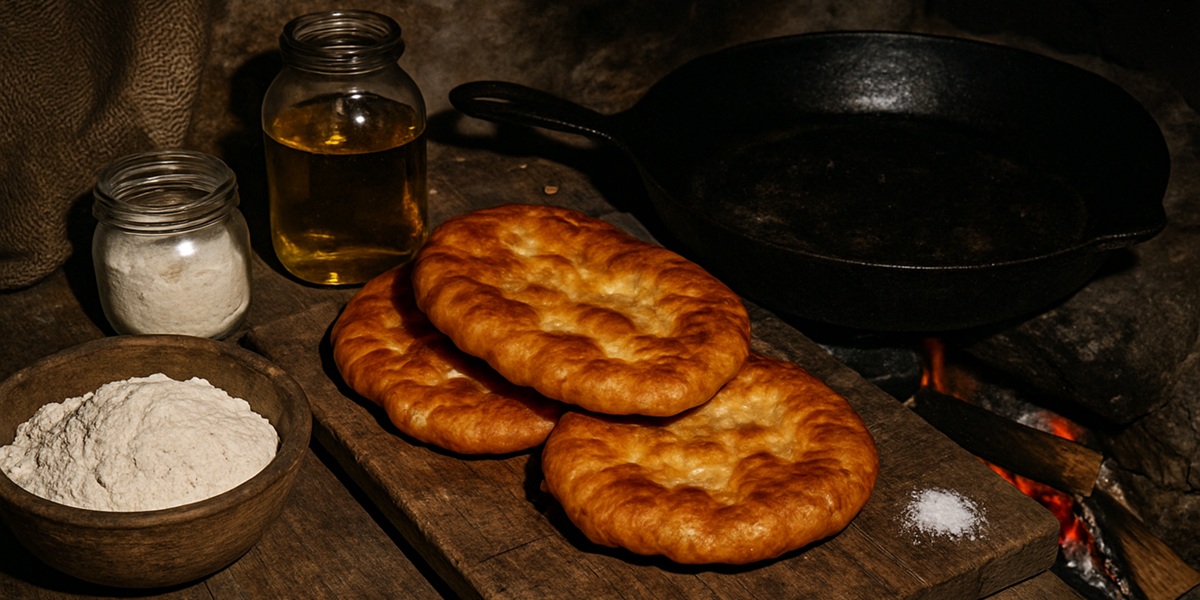
It’s survival food — simple, calorie-dense, forgiving, and built around ingredients preppers already store.
If you know how to make frybread, you’re never more than a hot pan away from a filling meal.
Why Frybread Has Always Been Survival Food
Frybread exists because people needed food that worked when everything else failed.
Historically, it was made during times of forced displacement, rationing, and scarcity. Flour, fat, salt, and water were often all that was available — and frybread turned those basics into something sustaining.
For preppers, frybread matters because it:
- Requires no oven and no electricity
- Uses long-shelf-life pantry staples
- Works with rough measurements
- Can be cooked over fire, wood stove, or camp stove
- Delivers high calories for low effort
In a grid-down scenario, that combination is priceless.
The Core Ingredients (And Why Preppers Love Them)
The classic frybread recipe uses four ingredients — all of which belong in every preparedness pantry.
- Flour – Easy to store, stackable, and versatile
- Salt – Indefinite shelf life and critical for survival
- Fat – Oil, lard, or shortening; rotate regularly
- Water – Filtered, treated, or stored
No yeast. No baking powder. No refrigeration.
This simplicity is what makes frybread reliable when modern baking fails.
How to Make Frybread Anywhere (Step-by-Step)
Step 1: Mix the Dough
In a bowl, pot, or even a clean pan, combine:
- 2 cups flour
- 1 teaspoon salt
Add:
- 1 tablespoon fat
- About ¾ cup water (slowly)
Mix until the dough is soft and workable. It should not be sticky or crumbly. Adjust with small amounts of flour or water as needed.
This dough is forgiving — perfection is not required.
Step 2: Let the Dough Rest (Optional)
If time allows, let the dough rest for 10–15 minutes. This relaxes the gluten and makes shaping easier.
If you’re in a hurry or conserving fuel, skip it. Frybread still works.
Step 3: Heat Your Cooking Fat
Pour about ½ inch of oil or fat into a skillet. Cast iron is ideal, but any sturdy pan works.
Heat until a small piece of dough sizzles immediately when dropped in.
Too cold and the bread absorbs oil.
Too hot and it burns before cooking through.
Step 4: Shape and Fry
Tear off dough balls about the size of a golf ball. Flatten them into thin discs.
Carefully place them into the hot fat.
- Fry 30–60 seconds per side
- Flip when golden brown
- Remove when puffed and crisp
Drain on cloth, paper towel, or clean cardboard.
You now have survival bread.
How Frybread Fits Into a Survival Food Plan
Frybread isn’t just something you eat alone. It’s a food multiplier.
Stretching Other Supplies
One piece of frybread can turn:
- A small serving of beans into a full meal
- Soup into something filling
- Jerky or canned meat into sustained energy
Bread extends calories and boosts morale — both matter in emergencies.
Sweet or Savory Flexibility
Depending on what you have, frybread can become:
- Sweet (honey, sugar, dried fruit)
- Savory (salt, beans, meat, powdered cheese)
When you’re eating from storage for weeks, variety matters more than people expect.
Off-Grid Friendly Cooking
You can make frybread:
- Over a campfire
- On a rocket stove
- On a propane burner
- On a wood stove
If you can heat a pan, you can feed yourself.
That’s real resilience.
Why Every Prepper Should Practice This Now
Cooking skills degrade under stress if you haven’t practiced.
Knowing frybread on paper is not the same as making it during a blackout, storm, or supply disruption. Practice now, adjust ratios, test your heat source, and build confidence.
Skills are lighter than gear — and harder to lose.
Stockpiling Food Is Only Half the Plan
Having stored food is important. Knowing how to turn it into meals for months is what actually keeps you alive.
That’s why many preppers turn to No Grid Survival Projects.
This guide doesn’t just show you how to store food — it teaches:
- Survival recipes built around pantry staples
- How to stockpile and rotate food for 3 months or more
- How to cook when power, fuel, and convenience disappear
- Practical ways to turn stored ingredients into real meals
If frybread makes sense to you, the approach inside this book will feel familiar — simple, realistic, and designed for long-term disruption.
👉 Learn more about No Grid Survival Projects here!
Final Thoughts
Frybread isn’t glamorous. It isn’t optimized. It doesn’t come in a package.
It works.
And in survival situations, what works beats everything else.
Learn it. Practice it. Store for it.
Because when the grid goes down, the people who eat are the ones who planned ahead.
You may also like:
Hardtack: The Survival Bread That Refuses to Die
The ‘Superweed’ That Saved Large Communities During The Great Depression (Video)
How to Make Canned Bread for a Shelf Life of Up to 5 Years
How To Make Pine Bark Bread
No-Knead Sourdough Bread
Read the full article here
