

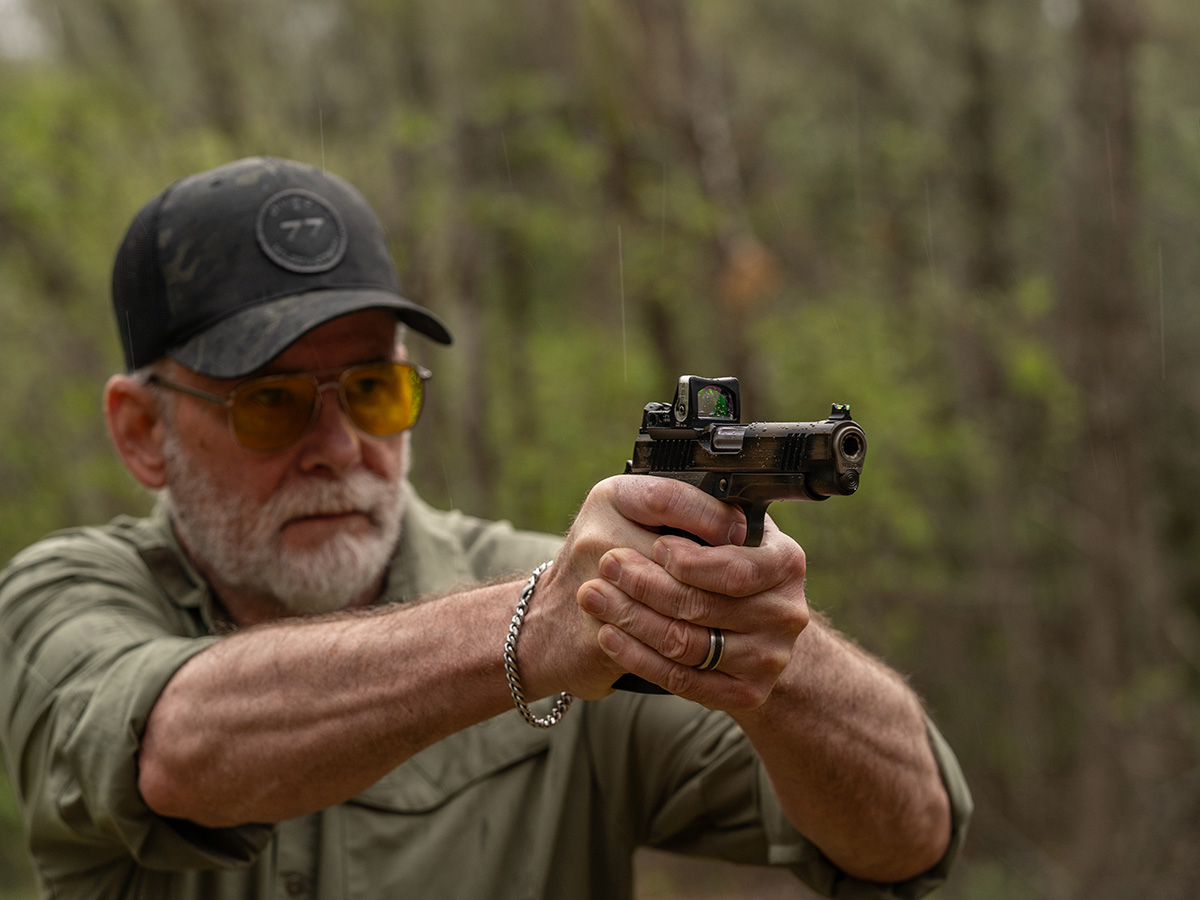

If a lethal threat ever forces you to draw your gun, you need to focus on hitting center mass of the available target.
As it has been wisely pointed out by numerous firearms instructors, the purpose of shooting is hitting. However, hitting is not just about directing your bullet so it impacts the target—it’s about placing your bullet on the correct spot on the target.
For example, if you’re shooting at a bull’s-eye target, the goal is not to just hit the bull, it’s to hit the center of the bull’s-eye. But, in a real-world scenario where you would need to shoot a human attacker with your defensive handgun, there will not be a bull’s-eye to aim at.
So, what should you do?
Shoot to Stop
Hunters shoot to kill. Their goal is to place a bullet in the most lethal spot they can. Most often this is in the heart and lung area of the target. This area—like with a deer—is about the size of a paper plate like you would use at a picnic. If a hunter can place a rifle bullet in this area, there is a high probability he can achieve a fast and humane kill.
It’s different when you’re shooting in a self-defense situation. With a self-defense handgun, your goal is not to kill, but to stop; you’re simply trying to use the bullets fired by your defensive handgun to make the bad guy stop doing bad things.
Any attempt to kill on your part would represent lethal intent or malice, neither of which are agreeable with a justifiable self-defense shooting. When you engage a human threat with a defensive handgun, you are hoping that, through either pain or fear, you will convince your attacker to cease and desist. The pain you’re hoping for is the pain that a bullet can cause.
Unlike animals that have no concept of injury or death, you’re also hoping that the fear of the effects of the shot—or even a miss—you have made will stop the fight. To successfully inflict that pain and/or fear on an attacker, ideally, you must hit your target, and the highest probability for that is to aim center mass.
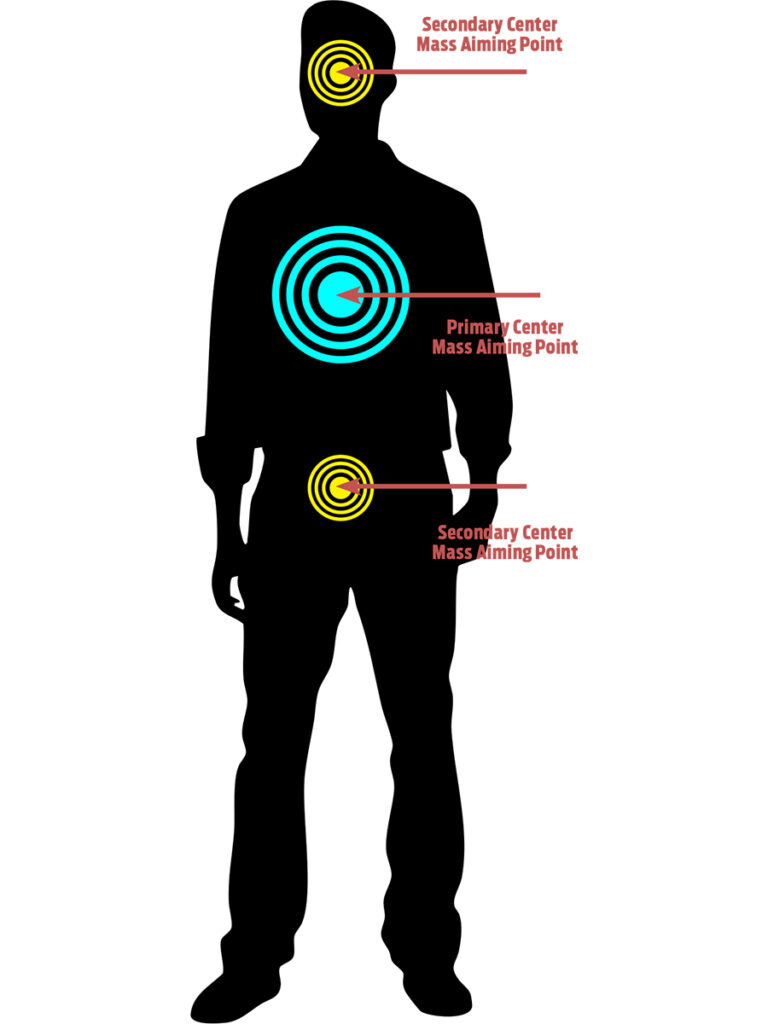
Center Mass
By aiming center mass, you’re simply giving your bullets the best chance to contact the target. It’s no different than when you’re shooting at a steel plate. You know that, under the stress of time, enhanced with a fear for your life, you will most likely not shoot your best. Also, the target—the bad guy—might be moving, which complicates getting a hit at all.
Though it’s possible that unleashing a hail of bullets in the direction of your attacker might cause them to give up and/or flee, it’s not something to be counted on. And you must remember that you own every bullet you fire. This is particularly important with the ones that miss.
Yeah, you fired three shots in the direction of the fiend that was trying to kill you, and he ran off, unharmed. You win! But what about those shots that missed and hit an innocent bystander? You cannot blame them on the bad guy; you are responsible for those shots.
Aiming/shooting center mass sounds easy, but “center mass of what?” is the real question.
Available Target
On a human who’s standing facing you, center mass—center of the available target—is generally at the celiac plexus, or solar plexus. The celiac plexus is a complex network of nerves located in the abdomen, near where the celiac trunk, superior mesenteric artery and renal arteries branch from the abdominal aorta.
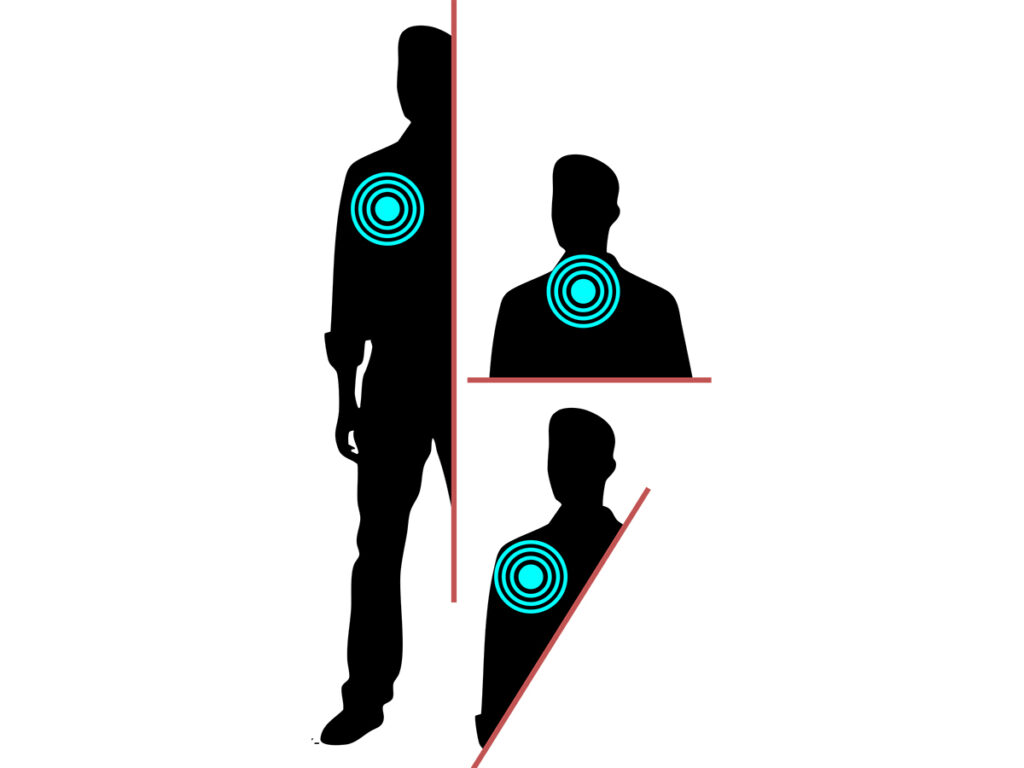
Of course, you cannot see any of this … but if you have ever had the wind knocked out of you, you know exactly where the solar plexus is located.
As for aiming at the solar plexus, it’s located about midway between a horizontal line drawn between the nipples and the belly button. Of course, unless your attacker is naked you cannot see this, either. And this “center of the available target” will vary depending on what parts of your target/attacker you can see.
If a bad guy is shooting at you from behind a car, your available target does not include the solar plexus; you’ll most likely only be able to see his arms, shoulders and head. In a self-defense situation, your available target is the totality of all your attacker that you can see, and the center of that is where you aim.
Exceptions to the Rule
There are several reasons shots to the center mass of your available target—your attacker—might not be sufficient.
Your attacker could be holding something blocking his center mass, such as a rifle, or he could be wearing body armor and/or be under the influence of narcotics. In these cases, hits in and around the solar plexus might not be possible … or might not have the immediate effect you’re hoping for.
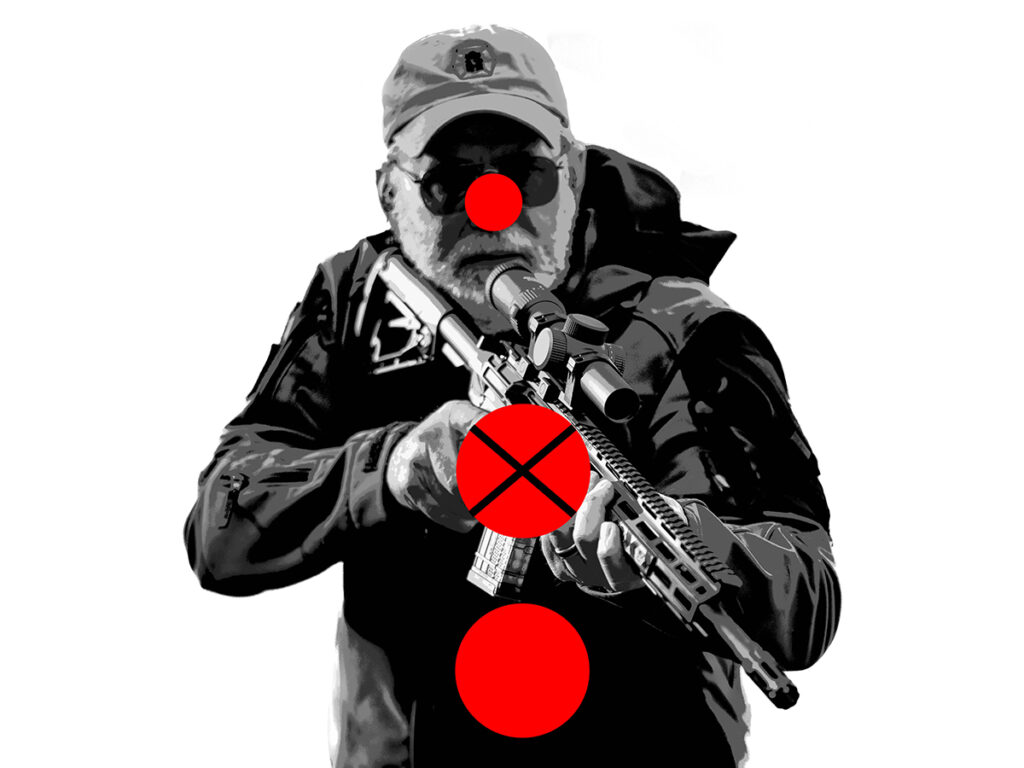
If you have fired multiple shots at the center mass of your attacker, and believe you’ve been getting hits but are not seeing results—and, if you are still being attacked—then it might be a good idea to aim/shoot at something else.
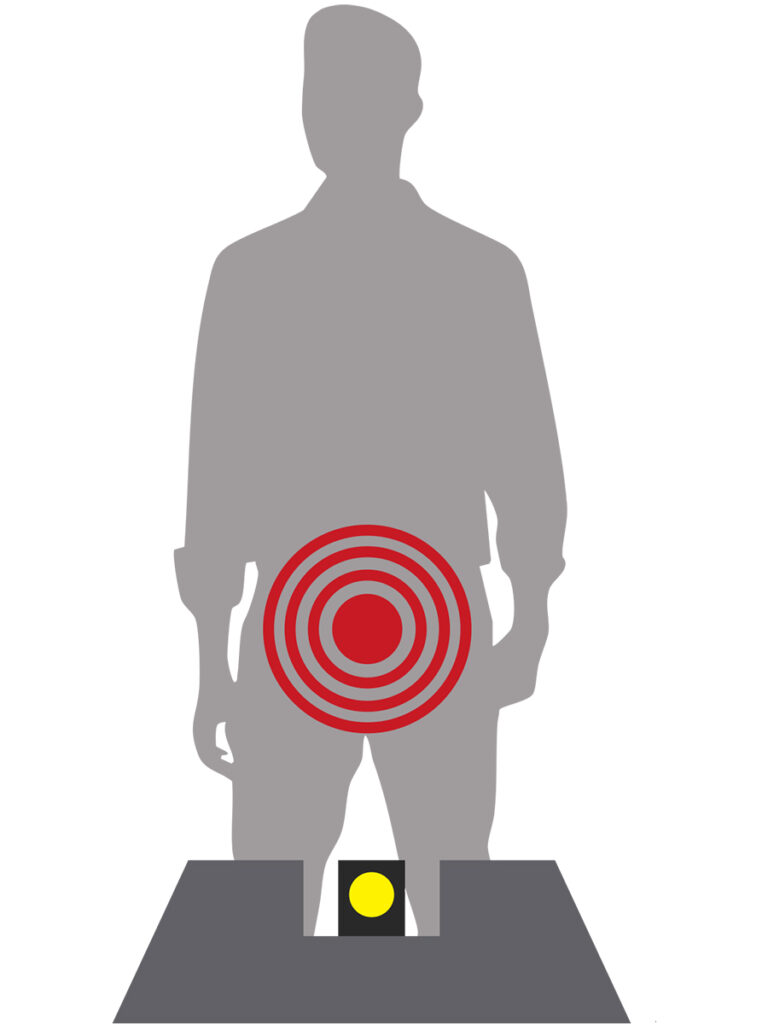
In this instance, you need to direct your shots at a specific body part that can have a more profound effect. The two primary options are the pelvic girdle and the head.
With a shot to the pelvic girdle, your bullet can break the support structure and potentially cause collapse.
Also, if you’re holding a dangerous suspect at gun point, you might/should be aiming at his pelvic girdle area so you can see his hands. If he moves for a weapon or attacks, you simply pull the trigger and then transition to center mass shots.
And finally, a shot to the head can damage the central nervous system of your attacker and cause immediate collapse.
Now, you might be thinking, if a shot to the head is so much more effective, why would I not try that first?
There are two reasons.
First, the head is a small target that is most often moving. This makes it harder to hit and increases the opportunity for an errant bullet to hit something or someone else. Secondly, an initial shot to the head does not convey the justifiable—shoot to stop—purpose of shooting another human.
Big targets are easier to hit than small targets, so aim at the center of the big target and pray that a hit there will be enough.
Then, if it fails to stop your attacker, you have options.
Editor’s Note: This article originally appeared in the February 2026 issue of Gun Digest the Magazine.
More Knowledge For The Armed Citizen
Read the full article here
