

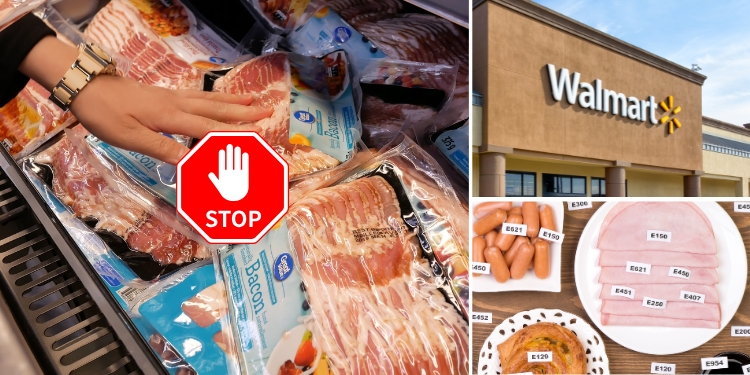

This may not be something most folks like to hear, especially when grocery bills already feel too high, but it needs to be said plainly and without sugarcoating: the meat most Americans buy today is not the same meat we grew up on, and pretending otherwise doesn’t do anyone any favors.
This isn’t an attack on Walmart, and it’s not about shaming anyone for where they shop. Walmart exists because people need affordable food, and for a lot of families, it’s the only store within driving distance. That reality matters. What also matters is understanding what kind of meat you’re bringing home, how it affects your health over time, and whether it truly belongs in a long-term food plan.
The Kind of Meat Most People Are Actually Buying
 When we talk about meat from big-box stores, we’re not talking about a single bad product or some secret ingredient nobody wants you to know about.
We’re talking about meat that comes from an industrial system designed to move enormous volumes at the lowest possible cost, with speed valued far more than quality.
The animals are raised quickly, processed quickly, packaged quickly, and shipped long distances before they ever land in a refrigerated case.
By the time you pick up that package of chicken or ground beef, it has already lived a much harder life than most people realize.
Anyone who’s been cooking for decades knows something is off. Chicken breasts today often look bloated, cook unevenly, and lose a shocking amount of liquid in the pan. Ground beef browns more like it’s boiling, and pork chops that look thick in the package turn thin and dry by the time dinner hits the plate.
This isn’t your imagination. Much of today’s mass-produced meat carries extra water and has muscle structure that simply isn’t as firm as what older generations remember. Animals that are pushed to grow fast don’t develop the same density, and that affects both texture and nutrition.
Over time, eating meat like this every day means you’re getting less out of each serving. You may feel full, but your body isn’t getting the same depth of nourishment it once did from similar portions. That matters even more as we get older.
The Problem with Antibiotics
In large-scale animal agriculture, antibiotics are commonly used to treat illness, but also to prevent disease in crowded conditions and, historically, to promote faster growth. According to the FDA, a significant majority of medically important antibiotics sold in the United States have been used in food-producing animals, not humans.
The Centers for Disease Control and Prevention and WHO have both warned that routine antibiotic use in livestock contributes to antibiotic-resistant bacteria. These resistant bacteria can spread through food, water, and the environment, making infections harder to treat when they reach people.
Even when meat meets legal safety standards, this system still has consequences. Constant low-level exposure to antibiotic residues and resistant bacteria places extra strain on the immune system. It doesn’t cause immediate illness, but over years, it can quietly reduce resilience, especially in older adults or anyone already under physical stress.
This is one more reason to know how to source, preserve, or procure your own food. When you control how meat is raised, handled, or replaced with wild protein, you reduce dependence on a system that trades long-term health for short-term efficiency.
If you’re a homesteader or living off-grid, chances are you already have a solid set of skills under your belt. But true self-sufficiency is a journey, not a destination and even experienced hands can refine and sharpen what they know.
Take something as simple as poultry, for example. How confident are you that the birds you’re buying are truly healthy and capable of providing the nutrients you’re relying on?
Even if you think you’ve already got everything figured out… this just might make you see things differently:
Where Prepping Changes the Conversation
If all you cared about was tonight’s dinner, this might not be such a big issue. But anyone reading Ask A Prepper knows food isn’t just about the next meal. This is where big-box meat starts to show its weaknesses.
Meat that has already been heavily processed and transported doesn’t age well in a freezer. Even when stored properly, it tends to lose texture and flavor faster, and in some cases it becomes downright unpleasant after extended storage. A freezer full of meat looks reassuring until you actually start cooking through it months later and realize you’ve been stockpiling disappointment.
👉 The Traps You Can Use to Catch Your Next Meal While You Sleep
And the Problem Gets Worse With Traditional Preservation. Traditionally, Americans didn’t rely on freezers alone. Meat was canned, cured, smoked, and dried because those methods worked, and they worked well with properly raised animals.
Modern supermarket meat often struggles with these processes. Pressure-canned beef can turn soft and crumbly. Pork that should cure firm and rich can end up tasting flat or overly salty. Smoking sometimes fails to bring out depth because there wasn’t much there to begin with. So, if the meat starts out weak, no amount of skill can turn it into something it isn’t.
Why This Matters in Uncertain Times
 Supply chains today are fragile, whether people want to admit it or not. Prices swing wildly, availability changes overnight, and once in a while shelves go empty for reasons nobody saw coming. When that happens, what you already have becomes far more important than what you can still buy.
Stockpiling food that doesn’t hold up over time gives a false sense of security. When you finally need to rely on it, you discover the hard way that quantity means nothing if quality isn’t there.
Why is it important to eat quality food? Well, good meat feeds the body differently, and that difference becomes more noticeable the longer you rely on it. In situations where food choices are limited, quality starts becoming a necessity. Here are a few reasons why quality meat should be a priority when prepping:
- It keeps you satisfied longer, because the protein and fat are denser and more complete, which helps prevent that constant feeling of hunger even after a full meal.
- It provides steadier energy, supporting both physical work and clear thinking without the ups and downs that come from weaker nutrition.
- It helps maintain strength and health over time, which matters far more in long-term situations where recovery is slower and resources are limited.
Remembering What Used to Work
If you’re old enough to remember buying meat from a local butcher or splitting a cow with neighbors, you already know there’s another way. Meat used to come from animals that lived longer, moved more, and ate what they were supposed to eat. That meat cooked better, froze better, and tasted better months down the road. It wasn’t perfect, but it was honest.
The truth is, these old methods make more sense today than they ever did. We may have more kitchen gadgets than our grandparents could have imagined, but no blender, air fryer, or countertop machine can replace time-tested preservation done right. There’s a reason jerky and smoked meat have always been staples for preppers who think long-term.
👉 27 Items You Need to Buy As Soon As Possible (They Will Become the New Money)
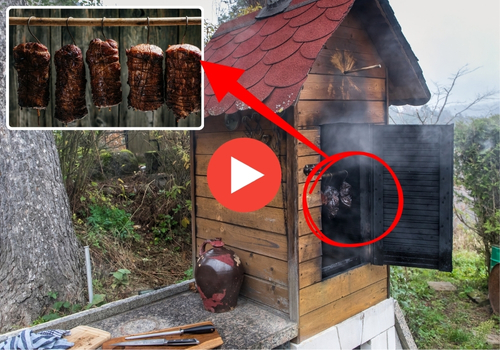
That curiosity is what pushed us to build a small Amish-style smokehouse and try doing it ourselves. We kept the setup simple, used only a handful of basic tools and ingredients, and focused on doing things the old way instead of the fast way. The results were better than we expected, not just in flavor, but in how well the meat held up.
What made the biggest difference was the beef itself. It came straight from the barn, already stored in a traditional buried fridge, and that quality showed through at every step.
If you are curious about our smokehouse experiment, here’s a video that will show you a few secrets about how to cook quality meat:
Better Choices Without Going Broke
This doesn’t mean everyone needs to become a homesteader or swear off grocery stores entirely. It does mean being more intentional when you can.
Local butchers often offer fresher cuts that haven’t traveled halfway across the country. Farmers who sell directly can tell you how the animal was raised, and many will sell in bulk at prices that beat supermarket meat over time. Even regional processors tend to produce meat that handles freezing and preservation far better than mass-market options.
The upfront cost can feel higher, but the value shows up over months. Better meat fills you up more, cooks more predictably, and wastes less, which is something every household can appreciate.
Why You Shouldn’t Buy Meat from Walmart…
 One thing most people don’t realize is that Walmart’s meat operation is designed around one priority above all others: scale. Feeding millions of customers every single day requires a system that values uniformity, speed, and price control.
Quality, in the traditional sense, simply cannot sit at the top of that list without breaking the model. To keep shelves full nationwide, Walmart depends on a small group of enormous meat processors.
These companies source animals from many different farms, often mixing livestock raised under very different conditions into the same production stream. By the time that meat reaches the store, it no longer represents a single farm, a single region, or even a consistent standard beyond what’s legally required.
That matters because meat reflects how an animal lived. When animals are raised quickly, fed for growth instead of strength, and moved through the system as fast as possible, the meat carries those shortcuts with it. Walmart isn’t hiding this, but it isn’t advertising it either.
Another issue is timing. Meat sold through Walmart is often processed well before it ever reaches your local store. Even though dates may look fine on the package, that meat has already spent a good chunk of its usable life in transit and storage. That doesn’t always show up when it’s fresh, but it becomes painfully obvious when you freeze it or try to preserve it later.
None of this makes Walmart meat dangerous or illegal. But, if your goal is dependable nutrition, that’s a tradeoff worth thinking hard about before you keep stacking those packages in your cart.
Quality meat is expensive. And while it’s absolutely worth every penny compared to supermarket meat pumped full of water and antibiotics, it still leaves you dependent on a fragile system.
If you live off-grid, you might like this book. No matter your age, learning how to build small-game traps, fish efficiently, or cook without modern tools can save you today… and when SHTF.
Wilderness Long-Term Survival Guide teaches you forgotten skills that help you take control of your food, your safety, and your independence, without relying on processed, nutrient-poor meat that weakens your immune system.
Inside this guide, you’ll discover:
- The only types of fire you actually need to know
- How to build a pine smokehouse and a wilderness refrigerator
- What to do if you come face to face with a bear, cougar, or wolf
- How to cook in the wild with absolutely no gear

Don’t miss the chance to own one of the most practical and fascinating survival books available! Today only, you can get it with my 77.4% DISCOUNT COUPON by clicking here. At this price, the book is almost free!
Final Thoughts
We need to be clear about this – no one is saying Walmart is evil or that you shouldn’t shop there. This is about understanding the limits of a system that was never built with long-term resilience in mind.
If you care about your health and your ability to feed yourself well no matter what happens, then it’s worth stepping back and asking whether the meat you’re buying truly supports those goals.
Our parents and grandparents didn’t get everything right, but when it came to food, they understood one thing very well: strong bodies come from good food, and good food starts at the source. That lesson hasn’t changed, even if the grocery store has.
Disclaimer: This article is not intended to criticize Walmart or damage its reputation. Walmart is used solely as an example due to its size as the largest U.S. retailer and one of the country’s largest meat producers and processors. The purpose of this article is to discuss general meat quality considerations and how they may affect food preparedness. It is not intended to discourage purchasing products from Walmart or similar retailers, which offer many reliable and affordable options.
You may also like:
 50 Ways Mylar Bags Will Save Your Life Post-SHTF
How Our Grandparents Preserved Half A Pig For A Whole Year (VIDEO)
Prepping Items the Government Doesn’t Want You to Have
How Long Can You Survive Without Food?
Foods You Should Never Wash
Read the full article here
