

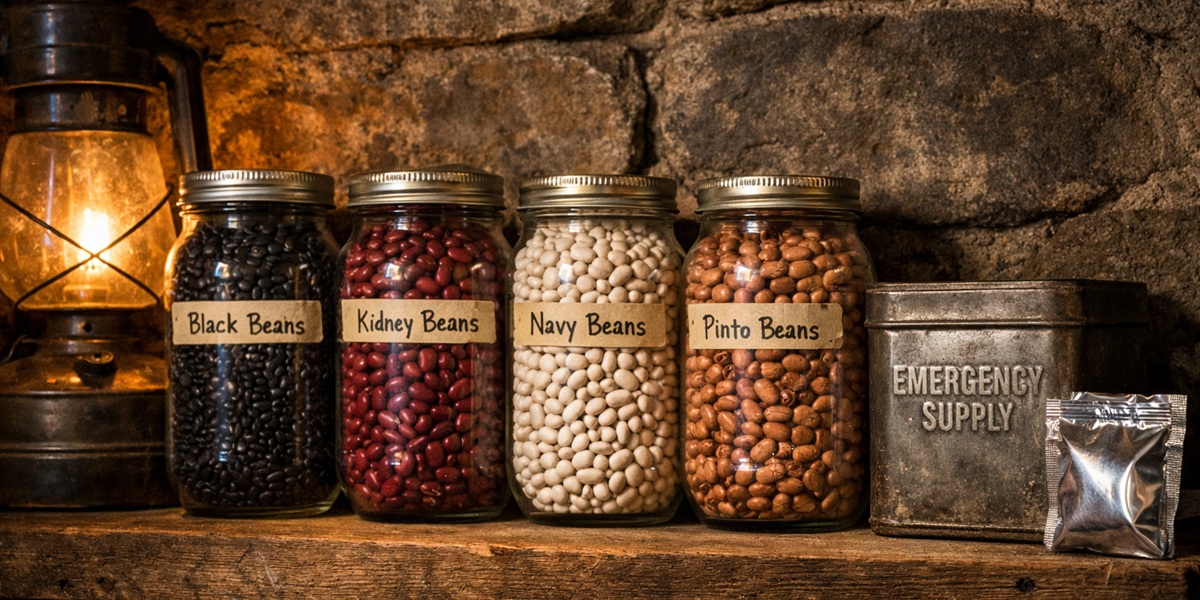

If you only stockpile one food for long-term survival, make it dried beans. That is not an exaggeration. Dried beans deliver protein, fiber, complex carbohydrates, and essential minerals in a shelf-stable package that costs almost nothing, weighs very little, and can last 25 to 30 years when stored correctly. They are the backbone of every serious prepper’s food storage plan and have sustained entire civilizations through wars, famines, and natural disasters.
This guide covers everything you need to know about dried beans: which types to stockpile, how long they really last, the best storage methods, how to cook them when the grid goes down, and how they stack up nutritionally against other survival foods.
Why Dried Beans Deserve a Place in Every Prepper’s Stockpile
Preppers obsess over calories, shelf life, and cost per serving. Dried beans win on all three counts. A single pound of dried beans costs between $1 and $2 at most grocery stores and yields roughly 6 to 7 servings after cooking. Compare that to freeze-dried meals or canned meats and the value is not even close.
Beyond economics, dried beans offer something most shelf-stable foods cannot: complete nutrition. When paired with a grain like rice or corn tortillas, beans provide all essential amino acids, forming a complete protein source. This combination has fed people around the world for thousands of years and is especially valuable when animal proteins are unavailable.
The USDA recommends adults consume 1.5 to 2 cups of legumes per week as part of a healthy diet. In a grid-down or extended emergency scenario, beans may become one of your primary calorie sources, making your stockpile and preparation knowledge absolutely critical.
According to the USDA FoodData Central database, one cup of cooked black beans contains approximately 227 calories, 15 grams of protein, 15 grams of fiber, and significant amounts of iron, magnesium, folate, and potassium. That is exceptional nutritional density for a food that stores at room temperature for decades.
The Best Types of Dried Beans for Long-Term Food Storage
Not all beans are created equal when it comes to prepping. Some have thicker skins that hold up better in storage. Others cook faster, require less water, or provide more calories per pound. Here is a breakdown of the top types to stockpile.
Pinto Beans
Pinto beans are arguably the most popular dried bean in North America for good reason. They are affordable, widely available, versatile in recipes, and pack a strong nutritional punch. When cooked they have a creamy texture and earthy flavor that holds up well in soups, stews, and traditional bean dishes. They store for 25 to 30 years in optimal conditions.
Black Beans
Black beans (also called turtle beans) have a slightly firmer skin than pintos, which helps them survive long-term storage without turning mushy. They are high in antioxidants, iron, and folate. In a survival kitchen, black beans work well in soups, grain bowls, and mixed dishes. They cook in about 90 minutes after soaking.
Kidney Beans
Red kidney beans are dense, meaty, and extremely calorie-rich compared to other bean varieties. A single cup of cooked kidney beans provides around 225 calories and 15 grams of protein. They hold their shape well during long cooking times, making them ideal for slow-cooked survival meals. One critical note: raw kidney beans contain phytohaemagglutinin, a natural toxin that is destroyed by boiling. Never eat them undercooked.
Navy Beans
Small, white, and mild-flavored, navy beans have a long history as military ration food, which tells you everything you need to know about their suitability for emergencies. They cook relatively quickly compared to larger beans and are the traditional base for baked beans and white bean soup. They are also one of the highest-fiber bean varieties available, supporting digestive health during stressful situations.
Great Northern Beans
Great Northern beans are slightly larger than navy beans with a more delicate flavor. They break down easily when cooked, making them excellent for soups and purees. In a long-term storage context, they function similarly to navy beans and are often interchangeable in recipes.
Lentils
Technically a legume rather than a true bean, lentils deserve special mention because they do not require soaking before cooking. That makes them uniquely valuable in a scenario where water conservation matters. Red lentils cook in 15 to 20 minutes, green and brown lentils in 30 to 40. They are also exceptionally high in iron, a nutrient that can become deficient in long-term survival diets lacking meat.
Split Peas
Green and yellow split peas are another fast-cooking legume that preppers often overlook. Like lentils, they require no soaking and cook down into a thick, satisfying broth. Split pea soup with any available protein source is a complete, calorie-dense survival meal.
| Bean Type | Protein (per cup cooked) | Approx. Cook Time (soaked) | Shelf Life (sealed) | Best Use |
| Pinto | 15g | 90 min | 25-30 years | Soups, refried beans |
| Black | 15g | 90 min | 25-30 years | Soups, rice dishes |
| Kidney (Red) | 15g | 60-90 min | 25-30 years | Chili, stews |
| Navy | 15g | 60-90 min | 25-30 years | Baked beans, soup |
| Great Northern | 15g | 60-90 min | 25-30 years | Soups, purees |
| Lentils (Red) | 18g | 15-20 min (no soak) | 4-5 years | Soup, porridge |
| Lentils (Green) | 18g | 30-40 min (no soak) | 4-5 years | Soups, salads |
| Split Peas | 16g | 30-45 min (no soak) | 4-5 years | Soup, stew |
The CDC’s emergency food supply guidelines emphasize the importance of calorie-dense, shelf-stable proteins in any disaster preparedness plan, and legumes consistently rank among the most recommended options.
Dried Beans Shelf Life: How Long Do They Really Last?
This is where misinformation runs rampant online. The honest answer is that dried beans technically remain safe to eat almost indefinitely, but their quality, texture, and cook time degrade significantly over time.
Under ideal storage conditions (cool, dry, dark, sealed with oxygen absorbers), most dried beans maintain peak quality for 8 to 10 years. Beyond that, they are still safe to eat but become progressively harder to cook through, resulting in a gritty or undercooked texture even after extended boiling. This is caused by moisture causing the starches inside the bean to harden over time, a process that cannot be fully reversed by soaking or cooking.
Practical shelf life guidelines for dried beans:
- Pantry storage (sealed bag or canister): 1 to 3 years
- Airtight container with no oxygen absorber: 5 to 7 years
- Mylar bag with oxygen absorber in a cool, dark location: 25 to 30 years
- Commercial #10 cans (nitrogen-flushed): 25 to 30 years
The USDA Complete Guide to Home Canning and Food Preservation recommends storing dried legumes at temperatures below 70 degrees Fahrenheit for maximum shelf life. Every 10 degrees above 70 roughly halves the effective storage life.
The most important variable is not the bean itself but the storage conditions. A pinto bean stored in a Mylar bag with oxygen absorbers at 60 degrees Fahrenheit will outlast the same bean stored in an open bag in a warm pantry by a factor of 10 or more.
How to Store Dried Beans Long Term: Step-by-Step Methods
Proper storage is non-negotiable if you want your bean stockpile to actually perform when you need it. The three enemies of dried bean shelf life are moisture, oxygen, heat, and light. Address all four and your beans will outlast most of your other preps.
Method 1: Mylar Bags with Oxygen Absorbers
This is the gold standard for long-term bean storage. Mylar bags are made from a metalized polyester film that blocks light and moisture far more effectively than any plastic container. Combined with oxygen absorbers, they eliminate the oxidation that degrades nutrients and accelerates hardening.
- Use food-grade Mylar bags (at least 5-mil thickness for long-term storage)
- Fill bags to within 2 inches of the top, leaving room to seal
- Add appropriately sized oxygen absorbers (300cc per gallon is a general guideline)
- Heat-seal the bag completely with a flat iron or Mylar bag sealer
- Store sealed bags inside food-grade plastic buckets (5-gallon gamma-seal buckets are ideal) to protect from rodents and physical damage
- Label each bag with bean type and date sealed
Method 2: Food-Grade 5-Gallon Buckets
For shorter-term storage or if you do not have access to Mylar bags, food-grade HDPE buckets with airtight gamma-seal lids are a solid option. The lids allow easy access without compromising the seal each time you open them. Add oxygen absorbers directly to the bucket before sealing for extended shelf life.
Method 3: Commercial #10 Cans
Many preparedness retailers sell dried beans in nitrogen-flushed #10 cans with 25-year shelf life claims. These are convenient, stackable, and require no additional effort on your part. The trade-off is cost: you will pay significantly more per pound than buying bulk beans and packaging them yourself.
What Not to Do
- Never store beans in the original paper or thin plastic bags for more than 6 months
- Avoid cardboard boxes, which offer no moisture or rodent protection
- Do not store near heat sources such as water heaters, stoves, or exterior walls that receive direct sun
- Never store with strong-smelling foods or chemicals, as dried beans can absorb odors
The FEMA emergency food supply recommendations specifically list dried legumes as a priority food for any home emergency supply, and advise storing them in airtight containers in a cool, dry location.
| Storage Method | Container Type | Shelf Life | Cost Level | Best For |
| Basic pantry | Original bag, canister | 1-3 years | No extra cost | Short-term rotation |
| Airtight bucket | Food-grade HDPE bucket | 5-7 years | Low | Medium-term storage |
| Mylar + O2 absorber + bucket | Mylar bag inside 5-gal bucket | 25-30 years | Low-medium | Long-term prepping |
| #10 commercial cans | Nitrogen-flushed tin can | 25-30 years | High | No-effort long storage |
How to Cook Dried Beans: Off-Grid and On-Grid Methods
Knowing how to cook dried beans is as important as storing them. Improperly cooked beans are indigestible and in the case of kidney beans, potentially dangerous. Here is a complete breakdown of cooking methods for both normal and grid-down scenarios.
The Basic Method: Soaking and Boiling
Soaking dramatically reduces cook time and improves digestibility by breaking down raffinose and other complex sugars that cause gas and bloating. There are two effective soaking methods.
Overnight Soak (preferred):
- Rinse beans thoroughly and pick out any debris or shriveled beans
- Cover with at least 3 inches of cold water
- Soak 8 to 12 hours at room temperature
- Drain, rinse, cover with fresh water, and boil
Quick Soak:
- Rinse beans, cover with water in a pot
- Bring to a rapid boil for 2 to 3 minutes
- Remove from heat, cover, and let stand 1 hour
- Drain, rinse, refill with fresh water, and cook
Off-Grid Cooking Methods
The ability to cook beans without electricity or gas is an essential survival skill. Each method below has practical applications depending on your situation.
Rocket Stove:
A rocket stove uses small-diameter wood fuel burned in a combustion chamber to produce intense, focused heat with very little fuel. It is one of the most efficient off-grid cooking methods available and can bring a pot of beans to a full boil within minutes. Build plans and commercial rocket stoves are widely available.
Wood Fire with Dutch Oven:
A cast iron Dutch oven over a wood fire is the most historically proven method for cooking beans. Place soaked beans in the Dutch oven, cover with 2 inches of water, bring to a boil, then nestle the Dutch oven in a bed of hot coals with coals on the lid for even, low heat. Most beans cook fully in 1.5 to 2.5 hours using this method.
Propane or Butane Camp Stove:
A two-burner camp stove with stored propane is the easiest grid-down transition for most preppers. It uses your normal pots and requires no adaptation. A single 1-pound propane canister can cook multiple batches of beans. Store a significant quantity if this is your primary backup method.
Thermal Cooker (Wonder Box / Retained-Heat Cooking):
Retained-heat cooking is one of the most fuel-efficient methods for beans. Bring the beans to a rolling boil for 10 to 15 minutes on any heat source, then transfer the pot to an insulated container (a cooler stuffed with blankets works in a pinch, or a dedicated thermal cooker bag). The retained heat continues cooking the beans for 3 to 8 hours without additional fuel. This method is outstanding in a scenario where fuel conservation is critical.
Pressure Cooker:
A stovetop pressure cooker cuts bean cook time by roughly 60 to 70 percent. Soaked pinto or black beans that would normally take 90 minutes boiling cook in 25 to 30 minutes under pressure. A quality stainless steel pressure cooker works on any heat source including wood fire and rocket stoves. If you only buy one piece of off-grid cooking equipment, a pressure cooker delivers more return on investment than almost anything else.
The National Center for Home Food Preservation at the University of Georgia provides detailed tested cooking times and pressure canning guidelines for beans that can be adapted for emergency cooking scenarios.
Dried Beans vs Canned Beans: Which Is Better for Preppers?
This question comes up constantly and the honest answer is: both have a role in a well-rounded food storage plan. Here is a direct comparison.
| Factor | Dried Beans | Canned Beans |
| Shelf life | 25-30 years (properly stored) | 3-5 years |
| Cost per serving | $0.10-$0.20 | $0.50-$0.90 |
| Storage space | Very compact (dense) | Bulky and heavy |
| Water required to prepare | Significant (soaking + cooking) | None (ready to eat cold) |
| Prep time | 8-12 hours (soaking) + 1-2 hours cooking | 0-5 minutes |
| Nutrition | Identical to canned | Identical to dried |
| BPA/lining concerns | None | Some cans use BPA lining |
| Off-grid viability | Requires fuel and water | Fully ready without any resources |
| Weight to carry | Extremely light | Very heavy |
The takeaway: dried beans are your primary long-term storage food, canned beans are your short-term and bug-out option. Keep 3 to 6 months of canned beans accessible for immediate use and store your 1 to 5 year supply as dried beans in proper long-term packaging.
Nutritional Value of Dried Beans: Why They Are a Survival Superfood
When the food system is stressed or disrupted, nutritional deficiencies can become a serious problem within weeks. Dried beans are one of the few shelf-stable foods that address multiple nutritional needs simultaneously.
Protein and Amino Acids
Dried beans are one of the richest plant-based protein sources available. While they are not a complete protein on their own (they lack sufficient methionine), combining them with any grain (rice, cornbread, wheat tortillas) creates a full amino acid profile equivalent to animal protein. This combination is the nutritional foundation of traditional diets across Latin America, Asia, and the Middle East, all regions where beans and grains have sustained populations through scarcity for millennia.
Complex Carbohydrates and Fiber
Dried beans are a low-glycemic, high-fiber carbohydrate source. Unlike refined grains, beans digest slowly, providing sustained energy without blood sugar spikes. The high fiber content (15 grams or more per cooked cup) supports digestive health, which is critically important in high-stress survival scenarios where digestive function is often compromised.
Micronutrients
Research published through the NIH National Library of Medicine consistently identifies legumes as one of the best dietary sources of iron, zinc, folate, magnesium, and potassium. These micronutrients are frequently deficient in disaster-scenario diets that rely heavily on refined grains and canned goods.
- Iron: Critical for oxygen transport and energy. Especially important for women and children.
- Folate: Essential for cell repair, immune function, and fetal development.
- Magnesium: Supports muscle function, nerve health, and stress response.
- Potassium: Regulates blood pressure and hydration, both of which are stressed in survival situations.
- Zinc: Supports immune function and wound healing.
Improving Digestibility
A common complaint about beans is digestive discomfort. Several strategies minimize this problem, which is important in a survival setting where antacids and digestive aids may not be available.
- Always discard the soaking water and rinse beans before cooking
- Change cooking water once during a long cook if possible
- Add a small piece of kombu seaweed to the cooking water (contains enzymes that break down oligosaccharides)
- Increase bean consumption gradually to allow gut bacteria to adapt
- Fully cooked beans cause significantly less gas than partially cooked ones; never rush the cook time
How Many Dried Beans Should You Store? Calculating Your Stockpile
Most preparedness experts recommend that beans and other legumes constitute a significant portion of your calorie and protein storage. A practical guideline is 1/4 pound of dried beans per person per day for a scenario where beans are a major component of your diet (as opposed to a supplement to stored meats and freeze-dried meals).
| Timeframe | Per Person | Family of 2 | Family of 4 |
| 1 month | 7.5 lbs | 15 lbs | 30 lbs |
| 3 months | 22.5 lbs | 45 lbs | 90 lbs |
| 6 months | 45 lbs | 90 lbs | 180 lbs |
| 1 year | 90 lbs | 180 lbs | 360 lbs |
These numbers assume beans are contributing roughly 400 to 600 calories per person per day in a mixed diet. If beans are your primary protein and a major calorie source, increase quantities by 30 to 50 percent.
Store a variety of types rather than relying on a single bean. Variety prevents palate fatigue, provides different nutritional profiles, and adds recipe flexibility. A suggested split for a balanced stockpile: 40 percent pinto, 20 percent black, 15 percent kidney, 15 percent navy or Great Northern, and 10 percent lentils or split peas.
The FEMA individual and family preparedness guidelines recommend a minimum 72-hour emergency supply, but most serious preparedness planners aim for a 3-month to 1-year supply of core food staples, with beans forming a central component of that plan.
Common Mistakes Preppers Make With Dried Bean Storage
- Buying beans and never testing them: Rotate your stock. Use beans from your oldest stash regularly, replacing what you use. If you never cook with your stored beans, you will not know until an emergency that they have hardened beyond practical use.
- Skipping the oxygen absorbers: Oxygen is the primary driver of nutrient degradation and the development of a hard-seed condition. Never store long-term beans without oxygen absorbers unless you are using nitrogen-flushed commercial cans.
- Ignoring temperature: A Mylar bag in a hot garage will degrade faster than beans in a simple canister kept at 60 degrees Fahrenheit. Temperature is the most overlooked variable in food storage.
- Not storing enough water: Cooking beans requires substantial water. Budget at least 3 gallons of water per pound of dried beans for soaking and cooking. If your water storage plan does not account for this, your bean stockpile is less useful than it appears.
- Using non-food-grade containers: Hardware buckets, garbage bags, and non-food-safe plastics can leach chemicals into your beans over years of storage. Always use food-grade HDPE buckets and food-grade Mylar bags.
- Forgetting salt and seasonings: Plain boiled beans are edible but extremely difficult to eat day after day. Store salt, garlic, onion powder, cumin, and other shelf-stable seasonings alongside your beans. Flavor matters enormously for morale in a prolonged emergency.
Survival Recipes Using Only Dried Beans and Pantry Staples
Basic Survival Bean Soup
Soak 1 cup of beans overnight. Drain and rinse. Cover with 6 cups of fresh water. Bring to a boil, reduce heat, and simmer 1.5 to 2 hours until fully tender. Season with salt, garlic powder, and whatever dried herbs are available. This simple recipe provides approximately 500 calories and 30 grams of protein per two-serving batch.
Beans and Rice (The Survival Staple)
Combine cooked beans with an equal volume of cooked rice. Season to taste. This combination forms a complete protein and can be prepared over any heat source. A single meal of beans and rice made from pantry staples costs under $0.30 per serving and provides roughly 400 to 500 calories with a full amino acid profile.
Refried Beans from Scratch
Cook pinto beans until very soft. Drain most of the cooking liquid, reserving 1 cup. Mash beans thoroughly, adding reserved liquid to adjust consistency. Season with salt, garlic, and cumin. Heat in a pan with any available fat (lard, oil, or bacon grease from stored cans). Refried beans extend the palatability of a bean-heavy diet significantly and pair with tortillas, cornbread, or any available bread.
Lentil Porridge (No Soak Required)
Bring 3 cups of water to a boil. Add 1 cup of red lentils (no soaking needed). Simmer 15 to 20 minutes, stirring occasionally, until lentils dissolve into a thick porridge. Season with salt, cumin, and any available spices. This is one of the fastest and most fuel-efficient bean-based survival meals available.
Frequently Asked Questions About Dried Beans
Do dried beans expire?
Dried beans do not expire in the sense of becoming unsafe to eat, but they do lose quality over time. Beans stored for more than 10 years without proper conditions become progressively harder to cook through. With Mylar bag storage and oxygen absorbers, beans remain at peak quality for 25 to 30 years.
Why won’t my old dried beans get soft no matter how long I cook them?
Hard-seed syndrome occurs when moisture over time causes the starches inside the bean to crystallize in a way that cannot be reversed by cooking. It is the main quality issue with improperly stored older beans. Prevention is the only solution: store beans in airtight containers with oxygen absorbers from the start.
Can I store dried beans in the freezer?
Yes. Freezing dried beans at 0 degrees Fahrenheit for at least 72 hours before long-term storage kills any insect eggs that may be present. After freezing, allow beans to come to room temperature before sealing to prevent condensation inside your storage container. Freezing is an excellent first step before Mylar bag sealing.
Are dried beans safe to eat raw in an emergency?
No. Most dried beans, especially kidney beans, contain lectins (particularly phytohaemagglutinin) that cause severe nausea, vomiting, and diarrhea when consumed raw or undercooked. Lentils and split peas are less toxic but should still be cooked. Sprouting beans reduces lectins significantly and is one option for a no-cook scenario.
How much fuel does it take to cook dried beans off-grid?
A full batch of soaked beans typically requires 60 to 90 minutes of moderate heat. Using a retained-heat cooker (bringing to boil for 15 minutes then insulating) dramatically reduces fuel consumption. A pressure cooker further reduces cook time by 60 to 70 percent. Plan your fuel storage with these cooking demands in mind.
What is the best bean for someone new to prepping?
Pinto beans. They are the most affordable, widely available, versatile in cooking, and store exceptionally well. Buy a 25-pound bag of dried pintos, package them in Mylar bags with oxygen absorbers, and you have established the nutritional foundation of a serious food storage plan.
Should I store beans whole or grind them into flour?
Store whole beans. Bean flour has a dramatically shorter shelf life due to increased surface area exposure to oxygen. Whole dried beans in sealed containers will outlast ground bean flour by decades. Grind or process only what you intend to use within a few months.
Final Word: Build Your Bean Stockpile Now
Dried beans are not glamorous. They do not make for dramatic social media posts or impressive gear photos. But they are the most economically and nutritionally efficient survival food you can store, full stop.
A 90-day supply of dried beans for a family of four requires roughly 90 pounds of product and costs around $100 to $150 at bulk prices. Packaged correctly in Mylar bags with oxygen absorbers, that supply will still be fully viable in 25 years. No other survival food comes close to that combination of nutrition, cost, density, and shelf life.
Get your beans. Package them properly. Learn to cook them without modern infrastructure. Practice the recipes before you need them. This is basic preparedness that actually works.
What Most People Miss About Survival Food
Stockpiling dried beans is one of the smartest moves you can make. Cheap, nutritious, and incredibly long-lasting. But here’s the uncomfortable truth most preppers ignore:
You can only eat beans for so long before your body and your morale start breaking down.
In a real long-term scenario, survival isn’t just about calories. It’s about variety, missing nutrients, and foods that don’t require hours of soaking, water, and fuel to prepare.
That’s exactly why you need to go beyond just beans.
👉 This is where Lost SuperFoods changes everything.
Inside this guide, you’ll discover dozens of forgotten survival foods that were used for centuries to get people through famine, war, and total system collapse. Foods that:
- Store for years without refrigeration
- Require little to no cooking
- Provide critical nutrients beans alone can’t cover
- Can be made or sourced even when supply chains fail
We’re talking about things like long-lasting survival bread, natural energy foods, preserved meats, and shelf-stable calorie sources that complement your bean stockpile perfectly.
Because the reality is simple:
Beans will keep you alive… but variety, knowledge, and preparation will keep you going.
If you’re serious about building a food supply that actually works in the real world—not just on paper—this is something you need to see.
👉 Check out Lost SuperFoods here!
You may also like:
 Does Peanut Butter Go Bad?
The 10 Medicinal Plants You Need to Have in Your Backyard When SHTF (VIDEO)
Why Is Beef Jerky So Expensive?
How to Make Frybread: A Survival Food Every Prepper Should Master
Dehydrated Vegetables Are One of the Smartest Survival Foods You Can Store
Read the full article here
