

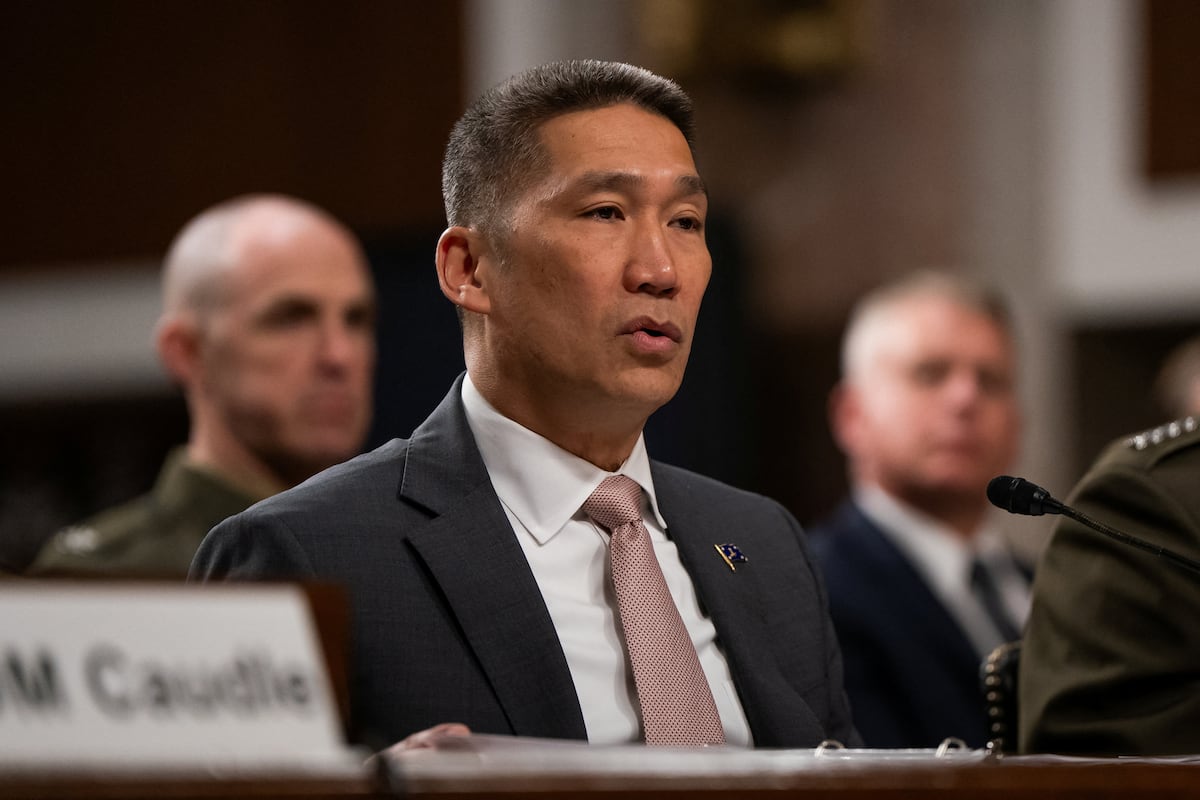

Secretary of the Navy Hung Cao on June 8 established the Department of the Navy Communication Strategy, aimed at combat not of the seas, but of information.
“We are in a fight for the narrative,” Cao wrote. “Our adversaries compete not only with steel, but with coordinated disinformation designed to undermine our will, divide our alliances, and erode the confidence of the American people. We will not cede the information domain.”
The purpose of the overarching communication strategy, according to Cao, is to streamline “enterprise-wide communication posture” in order to reinforce “an unwavering trust with the American people.”
Further details regarding the communication strategy remain unclear.
The secretary of the Navy’s announcement comes as tensions mount between U.S. media and the second Trump administration.
In May, The New York Times sued the Defense Department in Federal District Court in Washington over the department’s policy requiring journalists to have an official escort at all times while visiting the Pentagon. The Times is accusing the Pentagon of violating the First Amendment.
Secretary of Defense Pete Hegseth subsequently changed the policy on June 1, voiding the escort policy by declaring the Pentagon’s press office a classified space inaccessible to journalists.
In his ALNAV message, Cao stressed that the fundamental communication goal within the U.S. Navy is to “to educate and inform the American public about their maritime services,” while a streamlined communication effort “nested within the White House and Department of War priorities” would help ensure a unified communication strategy for all public affairs officers.
“Now is the time to tell our story with the reverence, purpose, and precision it deserves,” he concluded.
Claire Barrett is an editor and military history correspondent for Military Times. She is also a World War II researcher with an unparalleled affinity for Sir Winston Churchill and Michigan football.
Read the full article here
