

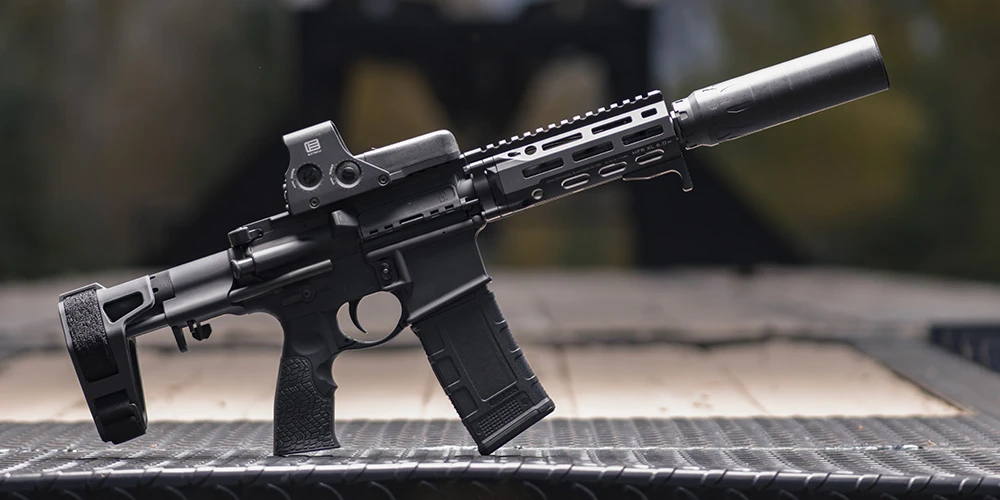

The 300 Blackout has become one of the most popular choices for suppressed shooting, and for good reason. Developed to provide .30-caliber performance in the AR-15 platform, it excels with both subsonic and supersonic ammunition. But when you’re building or buying a 300 Blackout specifically for suppressor use, barrel length becomes a critical consideration that affects everything from velocity to handling characteristics.
Why Barrel Length Matters for Suppressed 300 Blackout
Barrel length directly impacts several key performance factors in any rifle, but the relationship becomes more nuanced when you add a suppressor to the equation. With 300 Blackout, you’re dealing with a cartridge designed to perform optimally from short barrels, which is part of its appeal. The powder charge burns efficiently in compact spaces, making it ideal for short-barreled rifle and AR 15 pistol configurations.
When you thread a suppressor onto your muzzle, you’re typically adding 5 to 8 inches to your overall rifle length, depending on the can you choose. This changes the handling dynamics considerably.
A 16-inch barrel might feel perfectly balanced unsuppressed, but add a 7-inch suppressor and you’re suddenly managing a front-heavy 23-inch package. For many shooters, this tips the scales toward shorter barrel options.
The Sweet Spot: 8 to 10 Inches
For most suppressor users shooting 300 Blackout, an 8 to 10-inch barrel represents the optimal balance of performance and practicality. This length provides several distinct advantages that make it the most popular choice among serious suppressed shooters.
First, you achieve complete powder burn with both subsonic and supersonic loads in this barrel length range. The 300 Blackout cartridge was engineered to maximize its powder efficiency in 9-inch barrels, meaning you’re not sacrificing significant velocity compared to longer options.
With supersonic ammunition, you’ll see velocities in the 2,100 to 2,200 feet per second range from a 9-inch barrel, which is more than adequate for the cartridge’s effective range of 300 yards or less.
The handling characteristics of an 8 to 10-inch suppressed barrel are nearly perfect. With a typical 7-inch suppressor attached, your overall length comes in around 15 to 17 inches. This creates a maneuverable package that’s still compact enough for close-quarters work, home defense, or hunting from a blind. The balance point remains close to the magazine well, preventing that front-heavy feel that plagues longer suppressed setups.
Subsonic Performance Considerations
If you plan to shoot primarily subsonic ammunition (and let’s be honest, that’s half the appeal of a suppressed 300 Blackout), barrel length affects your performance differently than with supersonic loads. Subsonic 300 Blackout ammunition typically uses heavy bullets in the 190 to 220-grain range, traveling at speeds below 1,100 feet per second to avoid breaking the sound barrier.
With subsonic loads, barrel length has minimal impact on velocity once you reach about 8 inches. The slower-burning powders used in subsonic ammunition don’t require long barrels to achieve complete combustion. What matters more is ensuring you have adequate barrel length to stabilize those heavy, long bullets. Most 300 Blackout barrels use a 1:7 or 1:8 twist rate specifically to handle subsonic projectiles, and an 8-inch barrel provides plenty of stabilization distance.
The real advantage of keeping your barrel in the 8 to 10-inch range for subsonic shooting is simple: reduced overall length without sacrificing anything meaningful in terms of performance. You’re already giving up velocity for sound suppression, so why carry around extra barrel weight and length that provides no appreciable benefit?
The 16-Inch Option: When It Makes Sense
While shorter barrels dominate the suppressed 300 Blackout landscape, the 16-inch barrel still has its place. If you want to avoid NFA paperwork and the associated tax stamp, transfer time, and registration requirements that come with short-barreled rifles, a 16-inch barrel keeps you in standard rifle territory.
The performance benefits of a 16-inch barrel are modest but real. With supersonic ammunition, you might gain 50 to 100 feet per second compared to a 9-inch barrel. That translates to slightly flatter trajectory and a bit more energy downrange. For hunting applications at moderate ranges, this can be meaningful.
However, you should honestly assess whether those marginal ballistic gains are worth the handling compromises. A 16-inch barrel with a 7-inch suppressor creates a 23-inch front end. This length can feel unwieldy in tight spaces and creates a significantly different balance than shorter configurations.
For pure target shooting or hunting from stationary positions, this might not matter. For home defense or dynamic shooting scenarios, it’s a legitimate concern. Another option to consider would be an AR 15 pistol setup.
Ultra-Short: 5 to 7 Inches
Some shooters push the envelope even further with 5 to 7-inch barrels, creating extremely compact suppressed packages. These ultra-short configurations have their advocates, particularly among those who prioritize maneuverability above all else.
The reality is that 300 Blackout still performs reasonably well even from these abbreviated barrels. You’ll lose some velocity with supersonic loads—expect speeds in the 1,900 to 2,000 feet per second range from a 7-inch barrel—but subsonic performance remains virtually identical to longer barrels.
The complete package with a suppressor stays under 14 inches, creating one of the most compact centerfire rifle platforms available.
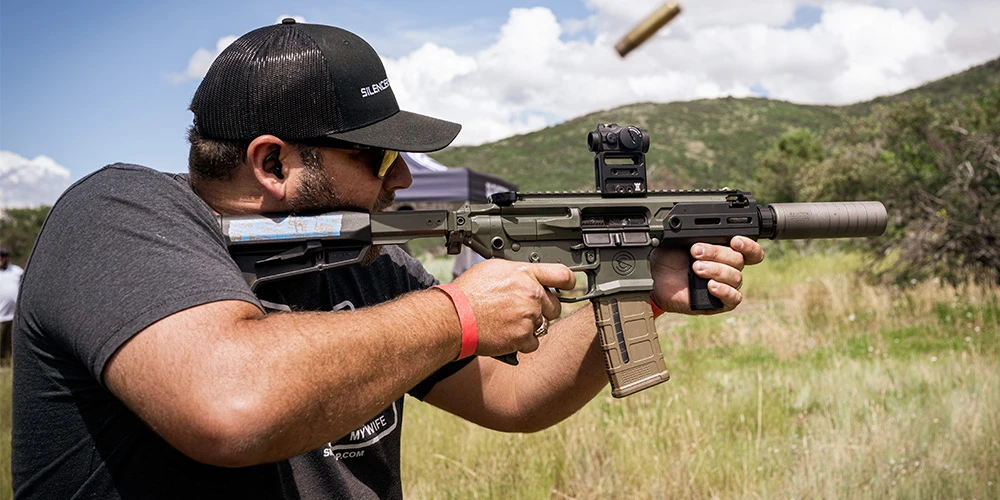
The downsides are increased muzzle blast at the shooter’s ear (even suppressed, ultra-short barrels produce more concussion with supersonic ammunition), greater flash signature, and reduced effective range due to lower velocities. These are typically purpose-built guns for specific close-quarter applications rather than general-use rifles.
Gas System Length and Suppressor Compatibility
When selecting your barrel length, don’t forget to consider gas system length and how it interacts with your suppressor. Suppressors increase backpressure in the gas system, which can lead to over-gassing and accelerated wear on your bolt carrier group.
Pistol-length gas systems, common on 8 to 10-inch barrels, tend to run well suppressed because the gas port is positioned relatively far forward. Carbine-length systems on longer barrels can become over-gassed when suppressed, potentially requiring an adjustable gas block to tune performance properly.
Final Thoughts
For most shooters building a suppressed 300 Blackout, an 8 to 10-inch barrel delivers the best overall experience. It maximizes the cartridge’s efficiency, creates excellent handling with a suppressor attached, and performs equally well with both subsonic and supersonic ammunition. You get complete powder burn, adequate velocity for realistic engagement distances, and a balanced rifle that’s still compact enough for practical use.
The 16-inch option makes sense if you want to avoid NFA restrictions or need maximum velocity with supersonic ammunition for hunting applications. Ultra-short barrels work for specialized uses where compactness trumps everything else. But that 8 to 10-inch sweet spot represents the ideal compromise between performance, handling, and versatility that made 300 Blackout famous in the first place.
Read the full article here
