



Out where the road turns to dust and the next town might be two days’ ride, a rifle isn’t a conversation piece.
It’s a decision.
After the Civil War, the country was full of guns that still belonged to the old rhythm. One shot. Reload slow. Hope nothing goes sideways while your hands are busy. That system works fine in theory and clean conditions.
The frontier was neither.
The Winchester Model 1866 showed up not as a legend, but as a fix. It took the repeating rifle from “clever idea” to “workhorse you can live with.” It did it with simple changes that mattered in the real world.
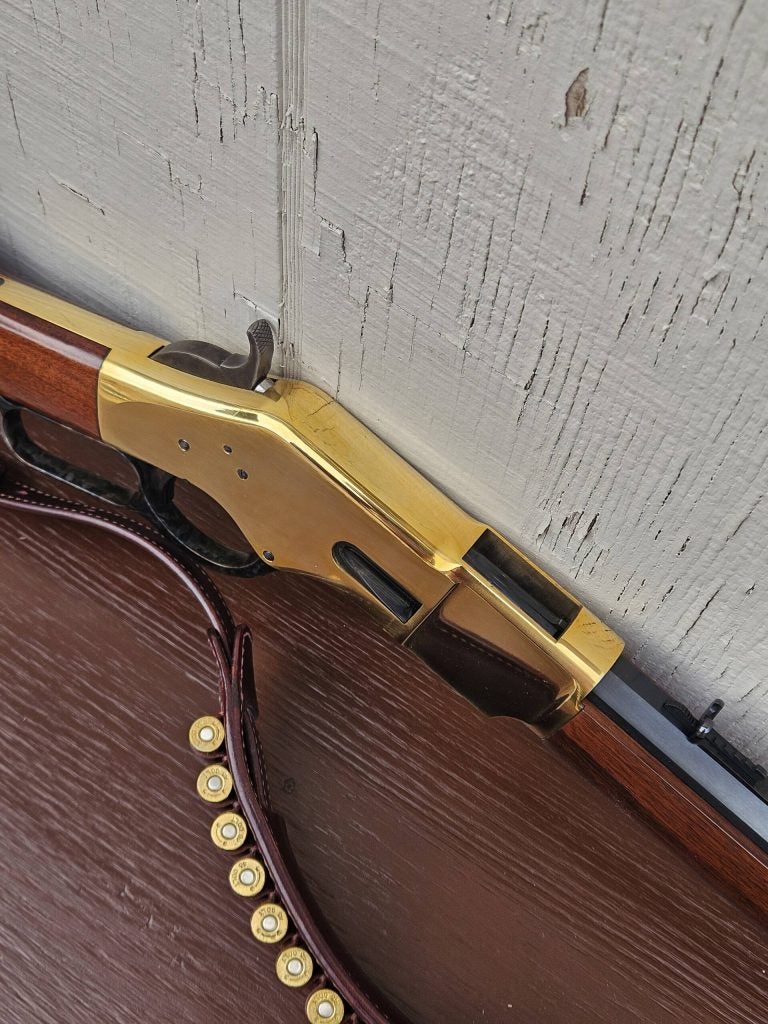
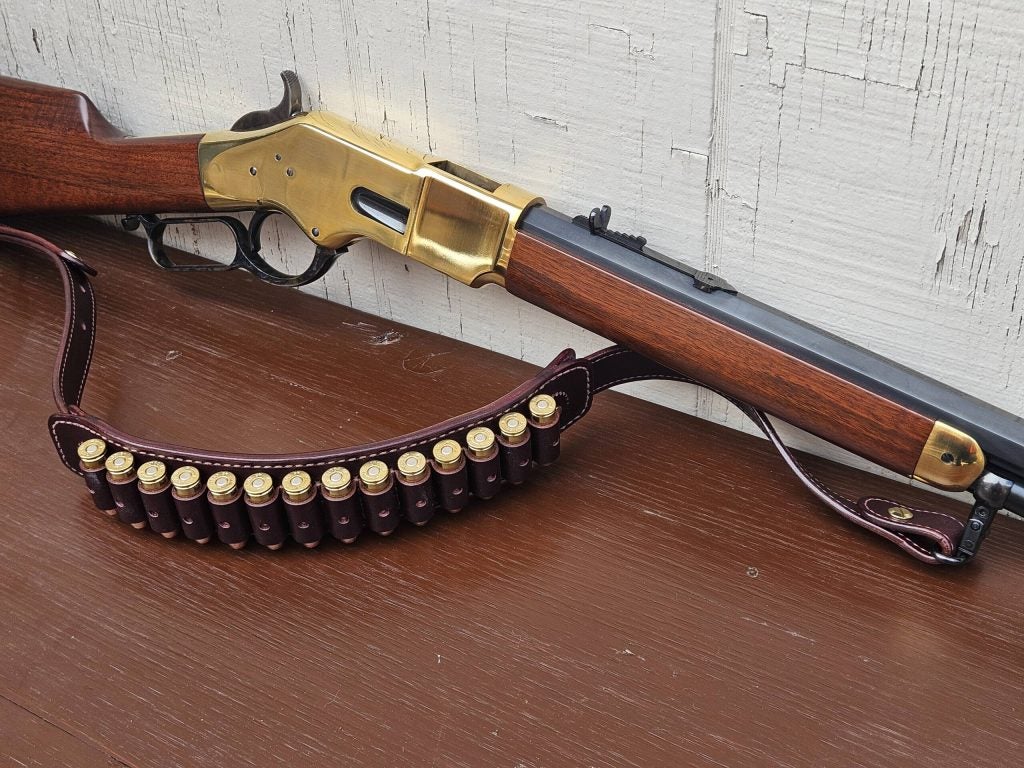
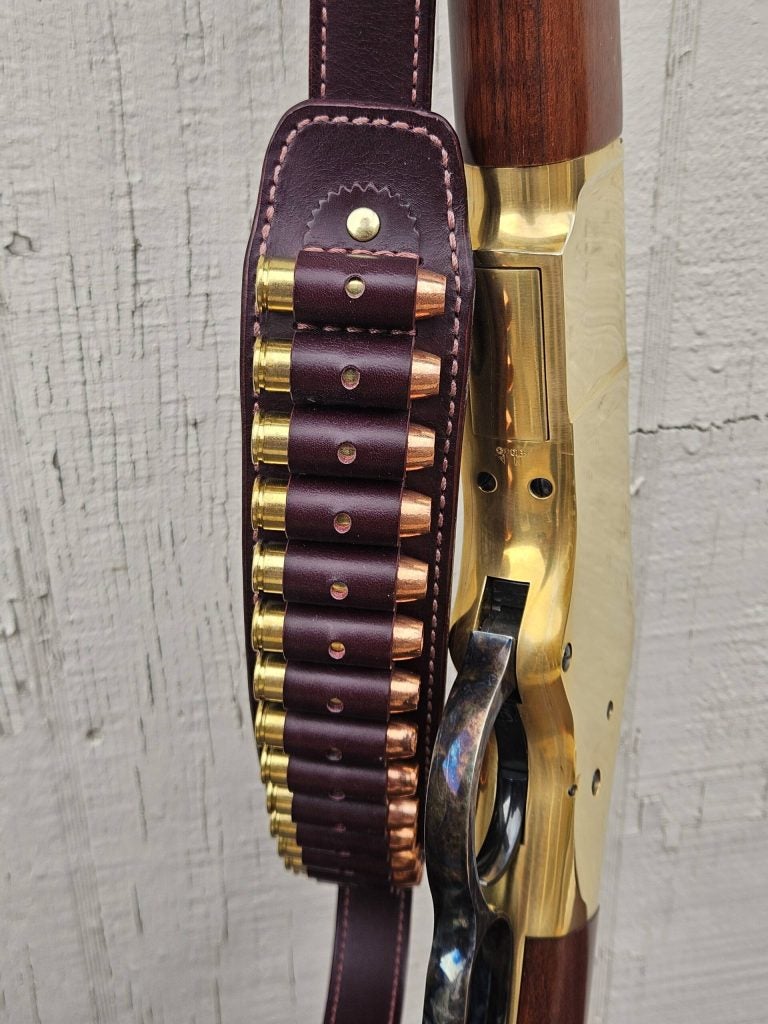
Cimarron’s 1866 Yellowboy brings that exact turning point back to life—brass-framed, lever-driven, and built for the kind of use that doesn’t care about excuses.
The Problem Winchester Had to Solve
The Henry rifle had already proved a man could carry real firepower in a long gun. Fifteen rounds on tap changed the math in a hurry. Folks noticed. Soldiers noticed. Anyone who’d ever been in a bad spot noticed.
But the Henry was still a rifle with city manners.
Loading through the front of the magazine tube was awkward and slow when you were cold, wet, tired, or riding. The magazine was exposed. The barrel got hot and there was no fore-end to hold on to. It worked, sure—but it wasn’t as practical as it needed to be for hard travel and everyday carry.
Winchester didn’t need a new miracle.
Winchester needed a rifle that fit frontier reality.
That’s where the 1866 came in.
What the 1866 Changed, and Why It Mattered
The improvements on the 1866 look modest until you picture them out where it counts.
The side loading gate
This was the real breakthrough for daily use. Instead of feeding cartridges in from the front, you load through the receiver. You can top off the magazine without disassembling anything or standing there like a man trying to thread a needle in a windstorm.
It meant the rifle could stay ready.
The fore-end and enclosed magazine
Winchester added a wooden fore-end and enclosed the magazine tube. That kept hands off hot metal. It gave you a natural grip. It also made the rifle more civilized to carry, handle, and shoot in strings.
The brass receiver
The “Yellowboy” name comes from that warm, golden frame. Folks will argue about romance. The truth is more practical.
Brass is easier to machine with mid-19th-century tooling than the steels commonly available at the time. It resists corrosion. It tolerates neglect. Dust and weather don’t care what your receiver is made of, but the 1866 handled those conditions better than many rifles of the time.
The action stayed the same
The 1866 retained the toggle-link action inherited from the Henry. It wasn’t the strongest mechanism Winchester would ever make, but it was smooth and reliable for the cartridges it was built around.
That’s the pattern here.
Nothing flashy. Just fixes that made the rifle usable everywhere.
Why the Yellowboy Spread Like Wildfire
The frontier didn’t reward sentiment.
It rewarded equipment that worked.
The 1866 offered repeating firepower in a package a working person could actually live with. It carried well. It handled well. It could be topped off quickly. It functioned through heat, cold, rain, and dust that found its way into everything you owned.
Cowboys valued a rifle that could be run fast without climbing down from the saddle.
Ranchers valued a rifle that could answer trouble without a long reload.
Rail crews valued anything that kept them alive in remote stretches where law was a rumor.
Settlers valued the ability to hunt and defend without gambling everything on a single shot.
And Native American warriors recognized the same advantage. A repeating rifle changes the tempo of a fight when the other side is still living in the one-shot world.

Word Traveled Past the Border, Then Past the Ocean
People like to keep the 1866 locked inside Old West stories, but the rifle’s reach went far beyond cattle towns and stage stops.
Foreign governments paid attention to what repeating fire could do when most armies were still tied to single-shot rifles and slow doctrine. Orders went overseas. The Yellowboy showed up in conflicts where sustained fire mattered more than theory.
When one side can put multiple rounds downrange while the other side reloads like it’s a ceremony, outcomes change. That lesson wasn’t lost on military planners watching casualties pile up.

The 1866 wasn’t designed as a formal military rifle. It simply performed like one where it counted.
Why Winchester Kept Making It
Here’s a fact that surprises people: Winchester kept producing the 1866 for decades, even as newer designs arrived.
The reason is simple.
It still sold.
The brass-framed rifle remained economical to produce compared to early steel-receiver designs. It remained reliable. For a huge number of users, its limitations didn’t matter. They weren’t chasing maximum pressure or long-range performance.
They wanted a rifle that cycled, shot straight, and stayed alive in rough conditions.
That’s not nostalgia.
That’s economics and practicality.

Cimarron’s 1866: A Proper Reproduction, Not a Reinvention
Cimarron’s reputation rests on getting the important details right.
Their 1866 Yellowboy keeps the proportions, lines, sights, and furniture that make the rifle what it is. Modern manufacturing gives you consistency the 19th century couldn’t always guarantee, but the rifle is still true to the original concept.
Chambering it in .45 Colt brings the idea into the modern world without turning it into something else. The original 1866 was built around .44 Henry rimfire. Today, .45 Colt is widely available, easy to reload, and well-suited to the role.
The point of the rifle remains unchanged.
A repeatable, manageable cartridge in a smooth-running lever gun.

How It Shoots Today
The Cimarron 1866 does not shoot like a modern tactical rifle.
It shoots like a serious old tool that expects you to do your part.
The lever throw is long but smooth. The rifle carries some weight, and that weight steadies the gun and tames recoil. In .45 Colt, the rifle is controllable and comfortable, with a push that’s more firm than sharp.
The sights are simple. The accuracy is honest. It does what it was designed to do inside practical distances.



Closing
The Winchester 1866 didn’t perfect the lever gun. It made the repeating rifle practical enough for hard travel and everyday hands.
That’s why it spread. That’s why it stayed in production. And that’s why the Yellowboy still makes sense as a rifle you can run and understand, not just admire.
Cimarron’s 1866 keeps that frontier fix exactly where it belongs—on the shoulder, in the rack, and ready to work.
Max Tactical Firearms, LLC is a licensed FFL and SOT dealer with a nationwide online store featuring 40,000+ products from over 500 brands. You’ll find everything from firearms and archery gear to hunting, camping, survival equipment, optics, and more.
We also specialize in NFA items—including suppressors, SBRs, and other Class III firearms—and ship regulated orders to FFLs across the country while also accepting transfers. In addition, we offer custom heirloom-grade display cases and handcrafted leather goods built to last.
Read the full article here
