

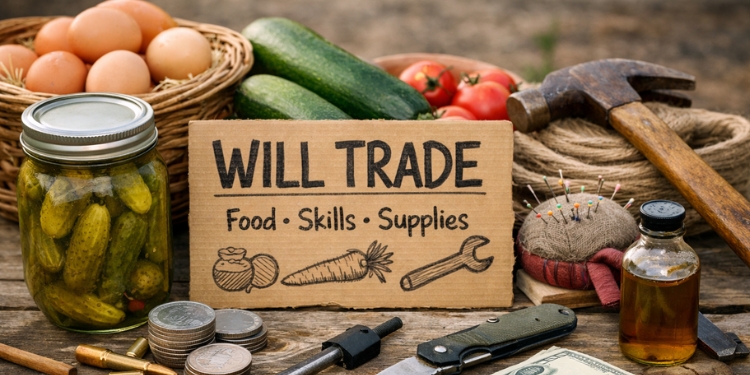

Let’s be real – the economy feels shaky right now. Between rising prices and the general uncertainty in the air, it’s hard not to wonder what’s coming next. And if you’re anything like most preppers, that little voice in the back of your head is saying, maybe I should be more prepared.
You absolutely can be. And it doesn’t require a bunker or a doomsday mindset. It just means picking up a handful of practical skills that’ll save you money, stress, and trips to the store – no matter what the economy does.
Think of it this way: every skill you learn is one less thing you have to pay someone else to do. That’s freedom. And honestly? Most of this stuff is easier than you think.
10. Making Your Own Cleaning Supplies
Here’s one that’ll save you money starting today. Most commercial cleaning products are expensive, full of harsh chemicals, and honestly? Unnecessary.
You can clean just about everything in your home with a few simple ingredients you probably already have:
- All-purpose cleaner – equal parts vinegar and water with a few drops of your favorite essential oil.
- Glass cleaner – one part vinegar, two parts water. Streak-free and costs almost nothing.
- Scrubbing paste – baking soda mixed with a little water. Works wonders on sinks and tubs.
- Disinfecting spray – rubbing alcohol, water, and a few drops of tea tree oil.
I haven’t tried store-bought cleaning supplies in a decade, because I realized these homemade products are just as good. They are even gentler on your health, almost free and you’ll never have to worry about cleaning supplies being out of stock or overpriced.
9. Growing Your Own Food
You don’t need convincing that growing your own food is one of the smartest things a prepper can do – you’re probably already doing it. But if you’re looking to tighten up your garden strategy, it’s worth focusing on the crops that give you the most return for the least effort.
These are the ones that belong in every prepper’s garden, no matter how experienced you are:
- Radishes – they grow fast and are practically foolproof.
- Lettuce – you can harvest it over and over again from the same plant.
- Green beans – easy to plant, and they produce a lot.
- Zucchini – one plant will give you more zucchini than you know what to do with.
- Herbs like basil or mint – they thrive in small spaces and make everything you cook taste better.
- Medicinal Herbs like chamomile, calendula, yarrow, lavender, California poppy, and feverfew – these will also matter when SHTF. They help you with pain relief, wound care, sleep, fevers, anxiety, and inflammation. You can find a complete seed kit with these herbs and many others here.
8. Canning and Dehydrating
So you’ve got a garden going and suddenly you have way more tomatoes than you can eat in a week. That’s a great problem to have, as long as you know how to preserve them.
As you might already know, canning and dehydrating are old-school tricks that are making a big comeback. Even so, they are underestimated skills in the prepper community.
These preservation methods allow you store food for months (even years), so nothing goes to waste. Water bath canning works great for fruits and acidic vegetables. Pressure canning handles meats and low-acid foods. And dehydrating? Perfect for herbs, fruits, and jerky.
Even if you’re already experienced with these methods, you might be surprised – I know I was. This course taught me techniques inspired by the Amish that I had never come across before.
Picture this: shelves lined with jars of homemade salsa, dried herbs, and canned peaches. That’s peace of mind. Whatever happens with the economy, your family is covered.
7. Basic Home Repairs
You know that dripping faucet you’ve been ignoring? Or the small hole in the drywall you keep walking past? Now’s the time to tackle those. Hiring a contractor for little fixes can eat through your budget fast – and during a downturn, it might not even be an option.
The great news is you don’t need to be handy to get started. A DIY book for no-grid living and some basic tools, and you’ll be surprised how much you can handle on your own.
Here are a few good ones to start with:
- Fixing a leaky faucet – usually it’s just a worn-out washer or seal. A quick swap and you’re done.
- Patching drywall – a little spackle, some sanding, and that hole disappears.
- Unclogging drains – a plunger or a cheap drain snake will solve most clogs in minutes.
- Repairing a running toilet – typically just a flapper replacement. Takes about ten minutes and saves you money on your water bill.
- Replacing a light fixture or outlet – with basic safety precautions, this is more straightforward than it sounds.
- Tightening or replacing a door hinge – if your door is sticking or sagging, this is usually the fix.
There’s something genuinely satisfying about fixing something with your own hands. Once you start the projects in this survival book (70+ of them), you’ll wonder why you ever waited.
6. Basic First Aid Skills
Nobody likes to think about emergencies, but when you know how to handle minor injuries and illnesses at home you are already covered. During tough economic times, a trip to the ER for something you could’ve treated yourself is a financial hit you don’t need.
Start by putting together a solid first aid kit – bandages, gauze, antiseptic wipes, tweezers, scissors, cold packs, pain relievers, and elastic bandages. Then take a basic first aid course. Many are free online, and your local community center might offer them too.
You could also learn some tricks on how to get antibiotics without a prescription – they will sure be handy in a crisis.
Of course, you’re not trying to become a doctor here. You’re just making sure that when someone gets a cut, a burn, or a bad sprain, you can handle it calmly and competently. That confidence is worth a lot.
5. Basic Carpentry
You don’t need to build a house from scratch. Start simple – a birdhouse or a small planter box is a great first project. Once you get a feel for measuring, cutting, and joining wood, you’ll find yourself looking at broken furniture and thinking, I can fix that – instead of hauling it to the curb and buying a replacement.
If you want to skip the guesswork and start building with confidence, this collection of 16,000 step-by-step woodworking plans walks you through every cut, every measurement, and every joint – no expensive tools or big workshop required.
A few friends of mine have gone through these plans and said the same thing – they’re basically like building with Lego. Most projects take no more than a couple of days from start to finish. You can check them out here.
4. Water Purification and Storage
You already know how to boil water and use purification tablets – that’s day-one stuff. But how long could you actually sustain clean water for your household if the taps stopped running tomorrow?
Most preppers I know have a supply stored, but fewer have a reliable system to keep producing it indefinitely. That’s where it pays to level up – systems like the Aqua Tower or the Water Freedom System are worth looking into if you want something that produces clean water without relying on the grid. And if you’ve been in the prepping space for any amount of time, you’ve probably already heard of H2O Dynamo – it’s popular for a reason.
So, the goal isn’t just having water on hand for 72 hours. It’s knowing you can source, filter, and store it long-term, no matter what’s happening around you.
3. DIY Energy Solutions
Your electricity bill is probably already higher than you’d like. And in an economic crisis, it could get worse. Having a few backup energy options in your toolkit can make a real difference.
You don’t have to go off-grid to benefit from this. Here are some approachable projects:
- A solar charger for your phone – portable and surprisingly easy to put together. Or you could learn how to charge a phone without a charger.
- A rocket stove – an efficient way to cook using very little fuel. Great for emergencies.
- A solar oven – cook food using nothing but sunlight. It really works. I built one on a Saturday by watching this tutorial.
- A small backup battery system – deep-cycle batteries can keep your essential electronics running during an outage. Or you can go even a little bit further and build the Moray Generator – one of the most popular DIY projects available at the moment.
2. Bartering and Negotiation Skills
Let’s be real – the lone wolf approach might sound appealing, but when things fall apart, it’s the people around you who make the real difference. When things get tough, it’s the people around you who make the difference.
Bartering isn’t just a backup plan – it’s how things actually get done in a crisis. The better you are at trading skills, goods, and services within your community, the stronger your chances of survival.
Here are a few simple ways to learn the art of bartering:
- Lead with what you can offer. Think about your skills – maybe you’re good at fixing things, cooking, gardening, or watching kids. Approach someone by saying “I can do X for you – would you be open to helping me with Y?”
- Keep it fair and flexible. A good trade doesn’t have to be perfectly equal, but both sides should feel like they’re getting something worthwhile. Be open to creative swaps.
- Start small and local. Trade a jar of homemade jam for some fresh eggs from a neighbor, or offer to mow someone’s lawn in exchange for help with a home repair. Low-stakes trades build trust.
- Know the value of what you have. Don’t undersell yourself. If you’ve grown food, learned to sew, or can fix a leaky pipe, those skills have real worth, especially when people can’t easily hire someone.
- Build relationships before you need them. The best time to start trading favors and building community connections is now, not in the middle of a crisis. People help the people they already know and trust.
- Learn from the Amish. The Amish have been living this way for generations – trading labor, sharing resources, and relying on their community instead of cash. They raise barns together, share harvests, and swap skills as a normal part of daily life. You don’t have to adopt their whole lifestyle, but their approach to community-based exchange is a great model. The core idea is simple: when everyone contributes what they’re good at, the whole group thrives. 👉 I want to learn more about the Amish.
Start practicing now. Offer to help a neighbor with something you’re good at in exchange for something they can do for you. Get comfortable with the give-and-take of negotiation. In a pinch, the things you can do and the food you can grow might be better than cash.
1. Making Your Own Medicine
Our ancestors did this for thousands of years. They didn’t have CVS. They had gardens, forests, and the knowledge passed down through generations. And honestly? A lot of that knowledge still works – it’s just been forgotten by most people. Let’s bring it back!
DIY Natural Antibiotics
Raw honey is one of the simplest and most powerful places to start – applied directly to wounds, it prevents infection and speeds healing. Crushed raw garlic is another must-have, since it activates allicin, one of nature’s strongest antibacterial compounds.
If you want something even more concentrated, this antibiotic restorative cream works wonders both topically and internally. And for overall immune support, you should try the famous Anti-Inflammatory turmeric golden milk. If you try these recipes now, you’ll have a first line of defense in a crisis.
DIY Ointments and Salves
The basic formula is simple: herb-infused oil + beeswax = salve. Infuse dried calendula flowers in olive oil for 4-6 weeks, strain, and mix with melted beeswax for an incredible healing salve for cuts, burns, and skin repair.
Do the same with yarrow for a wound ointment that stops bleeding (it’s been used on battlefields for centuries). Lavender infused in coconut oil makes a burn salve that soothes and reduces scarring. Plantain leaf – that “weed” in your yard – draws out splinters, venom, and infection like nothing else. And comfrey, known as “knitbone,” speeds the healing of bruises, sprains, and even minor fractures.
Once you learn the method, you can make a salve out of almost any medicinal herb. And we’ve got the perfect recipe compilation for you try. 👉Take me there!
DIY Tinctures
This is the big one. Tinctures are concentrated herbal extracts made by soaking plants in high-proof alcohol (like vodka or Everclear) for several weeks. They’re potent, shelf-stable for years, and just a few drops under the tongue can deliver powerful medicine.
For example, you should learn how to make an All-Purpose First Aid Salve – a blend of calendula, comfrey, lavender, and plantain that covers everything from cuts and burns to bug bites and rashes.
But beyond first aid, you should also be making tinctures for brain and overall health, from superfoods such as Lemon Balm, Reishi mushroom, Cordyceps and Lion’s Mane – these are all known to support brain health, memory, clarity, and nerve regeneration.
Now, I’ll be honest with you – I tried making all of these myself. The salves and the fire cider? No problem. But some of the plants, especially the medicinal mushrooms like Reishi or Cordyceps, were just not easy to find or grow in my area. After a lot of searching, I found Nicole’s brain bundle, and the tinctures are simply amazing. High-quality, potent, and made with real knowledge behind them. If you can’t source the plants yourself, I’d highly recommend checking them out!
So, Where Do You Start?
You don’t have to learn all of this overnight. Pick one or two skills that feel relevant to your life right now and just begin. Watch a tutorial, read a DIY book, build a small garden. Fix that leaky faucet this weekend.
Every skill you pick up is a little more security in your back pocket. And honestly, even if the economy holds steady, you’ll save money, gain confidence, and feel a lot more capable in your everyday life. That’s a win no matter what happens.
But if you’re the kind of person who wants it all in one place – the remedies, the food preservation methods, the water solutions, the DIY projects – without having to piece it together from dozens of YouTube videos and random blog posts, this is the book I’d point you to:
It walks you through everything step by step, with clear diagrams and instructions – from making your own natural medicine and building a food stockpile that never spoils, to filtering clean water off-grid and creating household products from stuff most people throw away. It’s the kind of book you pick up once and keep coming back to for years.
Every skill you pick up is a little more security in your back pocket. And honestly, even if the economy holds steady, you’ll save money, gain confidence, and feel a lot more capable in your everyday life. That’s a win no matter what happens.
You may also like:
 17 Depression Era Bartering Skills We Will Use Again Soon
What Happens If You Put a Garlic Glove in Your Nose (VIDEO)
Amish Canning: Myths Debunked
The Lost Skills You Need to Survive an Economic Collapse
Money Saving Tips From Real Survivors Of The Great Depression
Read the full article here
