


This story, “Nature’s Horn of Plenty,” was originally published in the April 1974 issue of Outdoor Life.
Most outdoorsmen don’t realize it, but when old Mother Nature tilts her horn of plenty the fruits, berries, and nuts that come rolling out can be made into some true gourmet delights.
And the best feature is that these items can be harvested by just about anyone — without a fishing rod, a gun, or even a license.
I harvest wild foods for two big reasons. It gives me something to do when I can’t hunt or fish because the seasons are not open or for some other reason. I also find that taking advantage of nature’s bounty often saves a hunting or fishing trip that didn’t pan out.
Take, for example, one of my fall combination outings for squirrels and bass. I left home in Indianapolis, where I am an outdoor editor of a newspaper, before daylight and drove 70 miles to the Muscatatuck River bottoms in southern Indiana, only to find too much wind for decent squirrel hunting or bass fishing.
But that evil wind brought down ripe persimmons by the bucket. When I got home that night I had only two squirrels, but I had enough persimmons to make nine pints of pulp for the freezer and a batch of wine, and enough pawpaws for two cups of pulp and a batch of wine.
For some outdoorsmen two squirrels would not have been enough to salvage the day, but to me the game, the persimmons, and the pawpaws made it a raging success. If you wonder why, you never have tasted persimmon pudding or pawpaw cream pie — or had your palate tickled by an after — dinner sip of persimmon or pawpaw wine.
I hardly know where to start in telling how I go about harvesting and using the wild foods I find for free. Spring is a good place, though, for this is the beginning of nature’s cycle.
My wife Nancy and our daughters — Donna, 13 years old; Joan, six; and Patty, four — and I seldom go anyplace without buckets, boxes, and sacks in the car. We never know when we will run into some products of nature we can use. Over the years I have got my wife and children involved, for I believe it helps them understand nature and, by extension, the world we live in. Wild strawberries ripen in central Indiana about Memorial Day — a bit earlier in the south and later in the north.
Wild Strawberries
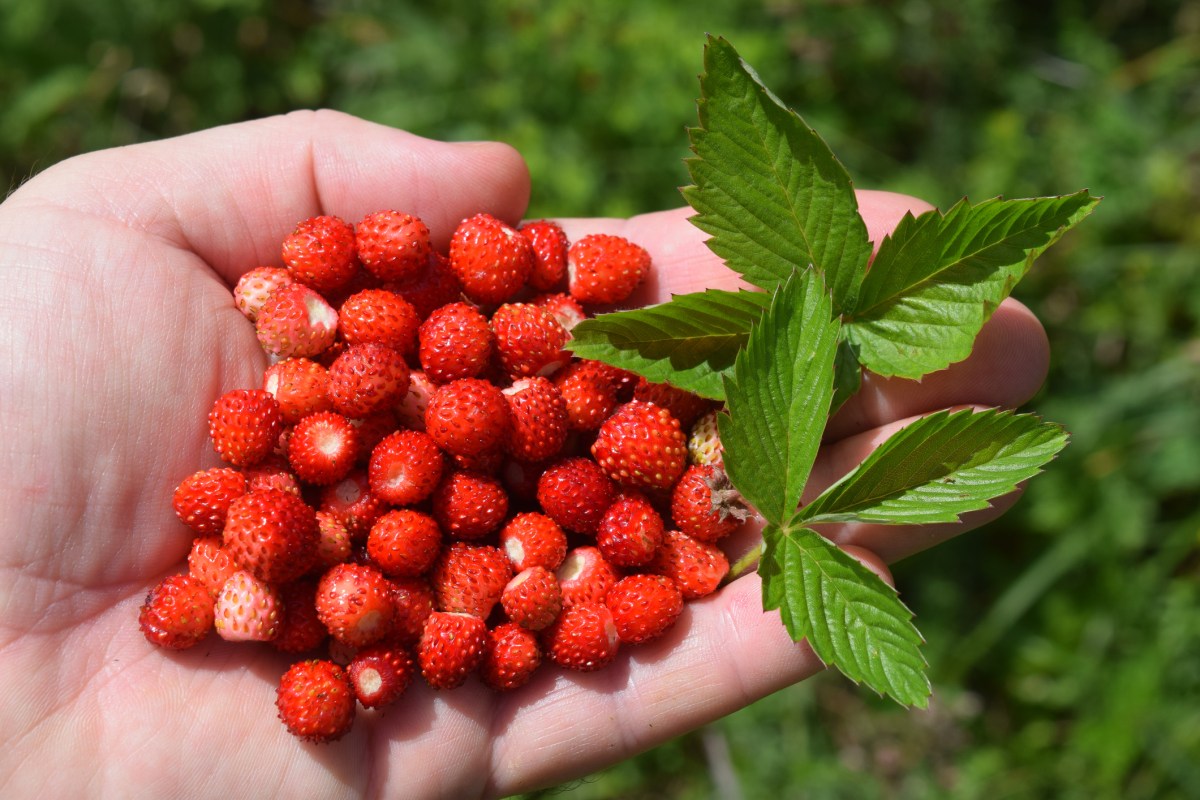
The wild strawberry plants usually grow no more than six inches high among short weeds on fallow hillsides and along railroad rights-of-way. The berries are much smaller than those from domesticated plants, but I maintain that’s why they are so good.
Large domestic strawberries may be spongy — even hollow at times — but wild strawberries aren’t. These little scarlet gems — a big one is only half as large as your thumb’s first joint — are solid and juicy when plucked at the right stage.
Harvesting wild strawberries is backbreaking because they grow so low. When I find a good patch, I get right down on hands and knees and work my way carefully through the patch without crushing the plants. One good patch is all you need to harvest several gallons of berries. They just keep growing and ripening as the season progresses.
In an ordinary year I will harvest three or four gallons of wild strawberries, but in a good year I’ll pick twice as many.
Over the years I have formed some pretty definite ideas about ways to prepare wild fruits and nuts. I think wild strawberries are better in homemade shortcake than in pie. For preserving them for winter, I prefer making jam to either jelly or freezing. Then, of course, there is wine.
To prepare wild strawberries for food, I rinse then in cold water at the kitchen sink, removing the green stems between a paring-knife point and my thumb.
I place the cleaned berries in a strainer to drain, and chill them in the refrigerator. If I plan on using berries for wine, I avoid overwashing. I don’t even remove the stems, because I want the natural yeast to remain.
If wild strawberries are to be used on a sauce for shortcake, my wife cuts them up with a paring knife or cabbage chopper and stirs in sugar. She then bakes a simple shortcake and smothers it with the sweetened chopped berries, topping the dish with ice cream or whipped cream.
My wife does most of the baking — with the girls’ help. But I convert the berries into jellies, jams, and wines and prepare them for the freezer.
Making Wild Jelly
The thought of making jelly or jam from wild fruits made me quite discouraged at first, but I asked a few questions and did some experimenting, and now I find it easy.
If I plan on making jelly from berries, I know I must extract the natural juices and discard the seeds. So when the berries have been cleaned I place them in a pan with about one cup of water. If I want four cups of juice, I start with eight cups of berries.
I bring the berries to a boil slowly, stirring and crushing them with a wooden spoon against the sides of the pan. Then I pour them into a strainer lined with three or four thicknesses of cheesecloth. If I want my jelly to be very clear, I do not squeeze out the last pulpy drops of juice. While the juice is straining, I prepare the jars. I sterilize the jars by boiling them for five to seven minutes in water.
Then I am ready to start the jelly in a pan several times as large as the batch I intend to make. If I intend to make a four-cup batch of jelly, I want a pan with high sides that will hold at least six quarts. Boiling jelly can be mean to handle.
I used to make jelly with preservatives that provide the pectin needed to hasten the jelling. This process is easy if you just follow directions.
In recent years, however, I have gotten away from the preservatives and now make jelly and jam with nothing more than the pure juices and crushed berries with sugar and vinegar.
I use sugar and juice in about equal parts, stirring in the sugar as the juice simmers to a boil. Then I stir in a tablespoon of vinegar before the mixture boils. When the stuff is boiling well, I turn the heat down. But I keep the mixture cooking for some 20 minutes, stirring it occasionally.
A bit of scum will come to the top of the cooking jelly. Skim it off as the jelly cools. Get the jelly into the jars as soon as possible.
Jars should not be filled any closer to the top than a half or a quarter inch. You still have to pour on the melted paraffin as a seal. The cookbooks all say to pour the paraffin on right away, but I seem to get a better, more even seal if I let the jelly cool in the jars a bit first.
I use all kinds of jars. I even buy some now and then. But babyfood and other jars that my wife has saved over the years are as good as anything. Screwtops offer insurance against spilling if the paraffin seal should fail.
I never know just when to quit boiling my jelly or jam for perfect consistency. But there are consolations for failure. If my mixture fails to jell as much as I would like, it still makes a delicious ice-cream topping. If it is too thin for that, it will make an exquisite syrup for hotcakes or waffles.
Berry Preserves
To make berry preserves the process is about the same, but use chopped or squashed berries as well as the juice.
I like to use wild strawberries for jam better than for jelly because the seeds are tiny. I like to make black raspberries, dewberries, and blackberries into jelly because their seeds are large and would be hard to chew.
Making wine from wild berries and such fruits as the persimmon and pawpaw is a fairly simple though time-consuming process.
Making Wild Wine
I don’t suppose it’s too obvious to mention that wild grapes make a fine wine — the best, in my opinion. A dozen species grow in the U.S., and two are fairly common in Indiana: the fox grape and its smaller cousin, the possum grape. Both make excellent jellies.
My wine-making equipment is no more complicated than a few plastic garbage cans with tops, a large strainer, cheesecloth, gallon jugs, surgical or plastic tubing, bottles, and a few vapor locks, which are the only items I buy at wine-making shops.
I make wine in small hatches because if I ever flop I don’t want a great catastrophe. I’ve never made more than four gallons in one vat, but at times the wine turned out so well I wished I had made more.
I don’t wash the fruit or berries unless it’s necessary, but I do look them over well and pick out foreign objects. I leave on stems and skins. The skin often carries a natural yeast that aids fermentation.
I crush the berries in my hands. l wear clean rubber or plastic gloves to avoid stains. I place the crushed fruit in a garbage can, adding half a gallon of water for each gallon of berries.
I dissolve a cake of cooking yeast in a cup of warm water and stir this into the mixture. A bubbling fermentation begins within 24 hours at room temperature and continues for five to 10 days. I stir the mixture once or twice a day. I may start adding a cup of sugar each day after the third day.
When the mixture stops bubbling, I pour it through a wire strainer lined with three or four thicknesses of cheesecloth and into another plastic garbage can. I add sugar until it is a little sweeter than I like it. Continued working eliminates some sweetness.
Adding sugar starts the wine working again, and this produces a scumparticularly pronounced in grape wine -each morning. This scum should be· skimmed off before the wine is stirred.
At this point I start tasting. I will add water if I think I can do so without diluting the wine too much. I might add sugar.
The second working stage usually lasts a week or 10 days. This stage is finished when no scum forms.
Then I pour the wine into gallon jugs. On each I put a vapor lock, which lets pressure from the still-working wine out but keeps air from entering. This final stage may last weeks, even months. When the vapor locks quit blurping, the wine is ready to bottle. Continued storage in the gallon jugs won’t hurt a thing. But store the wine in a cool, dark place or in darkcolored bottles to avoid subjecting the finished product to the destructive effects of direct light, which eliminates some or all the color.
I siphon the wine from the jugs so, that I can leave the dregs. I use strong sterilized bottles.
Not many people who make wine know about it, but homemade wine is regulated by the U.S. Treasury Department. Federal regulations provide that the head of a household may make up to 200 gallons of wine a year without tax if he registers to do so.
But even a registered homemade wine maker may not sell or give his wine to people outside his immediate family. Nor may he remove wine from his home without permission of the assistant regional commissioner of the Alcohol, Tobacco, and Firearms Division of the Internal Revenue Service. The comm1ss1oner also distributes Form 1541, the registration form.
Picking Berries
In a good year wild strawberries ripen from late May through mid-June or later. In June wild black raspberries are just coming ripe. The wild black raspberry season will overlap the blackberry season toward early July.
The dewberry, that roundish member of the blackberry family that grows on low, rambling vines on fallow hillsides, comes on during the last part of the black-raspberry season. I don’t find a fraction of the dewberries today that I once found, because there are fewer fallow hillsides.
Picking wild berries is an art. It starts with spotting potentially good patches by the white blossoms and goes on through knowing at a glance when a berry is so sweet that it should be plopped into your mouth on the spot. A man who comes out of a berry patch with unstained lips can’t be a real berry-picking enthusiast.
When wild strawberries are ripe, place the four fingers of your picking hand under a cluster of berries and rub each berry off into your palm with your thumb. As each berry is dislodged you will hear a slight snap.
Picking black raspberries and blackberries is faster, even if you get pricked now and then. You usually pick these berries from a more comfortable standing· position because they grow on canes that run from waisthigh to head-high. And the ripe berries come off at the slightest touch.
Wild blackberries often come as large as the first joint of the thumb, and even an average berry is larger than the wild strawberry or the black raspberry.
My favorite black-raspberry and blackberry picking come when I find a patch of berries that have ripened in the shade. I find these berries larger and sweeter than berries that have grown in bright sunlight.
Berry Pies
I like my wife’s berry pies — blackberry, dewberry, or black raspberry better than anything else, but she turns out a pretty good cobbler too. And now and then she will surprise me with a berry innovation that’s so simple you wouldn’t dream it could be so tasty like blackberries from the freezer, sugared slightly and chilled in their own juices for a day or so before being spooned over vanilla ice cream.
Any cookbook will tell you how to make a berry pie. But my wife’s cobbler is so good, and so simple, that I think I should pass it along.
Melt a cup of butter or margarine in a small, shallow Pyrex pan. Mix ¾ cup of milk, 1 cup of sugar, 1 cup of flour, 1½ teaspoons of baking powder, and pour over melted butter. Do not stir. Pour over this 2 cups of thawed berries. Do not stir. Pour 1 cup of sugar over berries. Do not stir. Bake in a 350 to 375 degree oven for 30 minutes and serve hot or cold with whipped cream or ice cream.
Berry Dumplings
Now and again I pull a culinary caper of my own, and one of my favorites is berry dumplings. My mother used to make berry dumplings, but she did it “by ear” and did not leave a recipe. So I boarded myself up in the kitchen one day a few years back and came up with th following:
Place 2 cups of thawed berries in a deep pan and add ½ cup of water. Stir in sugar to taste — I use about 1 cup — while bringing berries to a boil. Cook berries slowly, stirring almost constantly, until they are mushy, and melt in ½ to ¾ stick of butter or margarine.
Place 1 cup of flour in a shallow bowl, sprinkle 1 tablespoon of sugar over the flour, and make a depression to the bottom of the bowl with a fork.
Bring berries to a good boil, and spoon about ¼ cup of hot juice into the depression in the flour. Mix flour into the berry juice with a fork, and turn out the mixture onto a floured cutting board or foil sheet, where dough should be rolled flat and about ½-inch thick and cut into 1-inch squares. Loosen from cutting board with spatula, and allow dumplings to dry for ½ hour or so. I usually make two batches.
Since you took out juice to make dumplings, you may have to add water. perhaps as much as or more than you took out.
Bring the berries to a boil again, and stir the dumplings in slowly. When all dumplings are in, turn the heat down, cover, and cook for 20 minutes, stirring occasionally. Serve hot with .1 sweet cream or ice cream.
To freeze black raspberries, dewberries, and blackberries for winter, I just wash them in cold water, drain, and place them in plastic bags.
Read Next: How to Find More Morel Mushrooms This Spring
By August I am thinking of elderberries, wild cherries, and grapes. I use the elderberries mostly for wine. The wild cherries and wild grapes make excellent jelly, as well as wine.
Wild Nuts & Tree Fruit
Then when nights grow cool toward mid-September, I slip a pair of pliers in my hunting coat, and one or two mesh sacks. I know that my squirrel hunts will take me to hickory nuts, black walnuts, and at times even butternuts, beechnuts, and hazelnuts.
If I find a tree producing nuts of quality, I pick up a bagful. I first crack a few nuts with the pliers to make sure they are good.
Shellbarks — the thin-shelled little nuts found often on hillsides — are my favorites, but the big thick-shelled nuts that grow on the tall bottomland hickories also are very good.
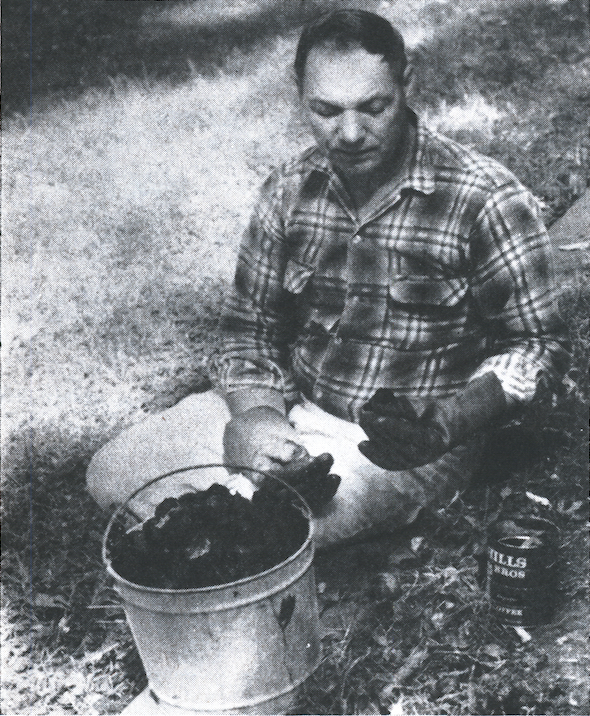
Black walnuts mature at about the same time. I wear rubber gloves when harvesting this nut to keep the dark stain of the outer shells off my hands. Most of the outer shell will come off if you step on it and twist your foot.
I spread black walnuts on the roof of the house or some other building so that the rain will remove the last pieces of the green outer shell and the sun will dry the nuts.
Both hickory-nut and black-walnut meat will remain in excellent shape in the shell throughout the winter. If you plan to keep hickory nuts longer, they should be shelled and frozen. Otherwise you may find the nut meats strong. The flavor of frozen hickory and black-walnut meats remains pretty good for several years.
We use black walnuts in candies, cakes, and pies. Now and then I shake loose in the kitchen to whip up an off-the-cuff delight like my special icecream topping.
I pour ½ cup of maple syrup into a small pan and place this over medium heat to melt in ¼ stick of butter or margarine. I stir in ¼ to ½ cup of chopped nut meats (all hickory nuts, all black walnuts, or a combination) and add a dash of strained honey.
When this is bubbling slowly I stir in marshmallows. I spoon this over vanilla ice cream in liberal amounts.
Persimmons
In harvesting persimmons I place much emphasis on taking the soft, orange ones that have fallen on their own. Nothing is worse than a puckery persimmon.
Persimmons grow on trees all the way from the East Coast to Texas and through much of the Midwest and South.
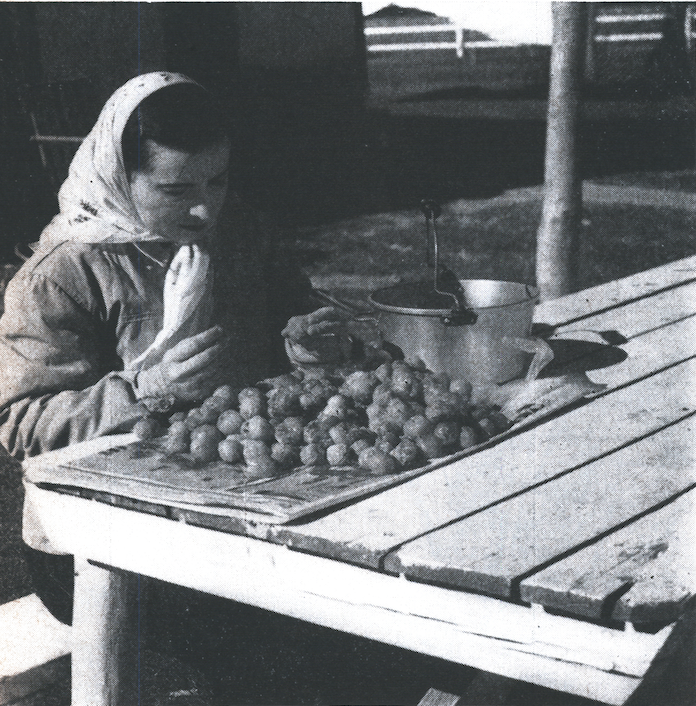
I separate the pulp of the persimmons from seeds and skins by running them through a colander after carefully removing the tiny, hard, needlelike growth that appears on the bottom. I process pawpaws, also known as Indiana bananas, much the same way.
Related: How and Why to Forage for Pawpaws
I freeze persimmon pulp in one-pint containers, and pawpaw pulp in onecup units, for these are the right amounts for pudding or pies.
My wife’s persimmon pudding is so simple and so delicious that I will pass the recipe along.
Mix 2 cups of persimmon pulp, 2 cups of· sugar, and 2 cups of flour. Then stir in 2 cups of milk and ¾ stick of melted butter or margarine and 1 teaspoon of cinnamon. Pour into a medium-size pan, and bake for 1 hour in a 350 degree preheated oven.
Pawpaws
Pawpaw pulp is rather oversweet, yet it makes a pretty good cream pie if you use only about one cup for each pie. Pawpaws, like persimmons, make a good sweet after-dinner wine.
By the time I get the berries, grapes, hickory nuts, black walnuts, persimmons, and pawpaws taken care of, it is time for some upland and other hunting.
But the lull doesn’t last long. When the last rabbit hunt is still fresh on my mind at the end of January, I slip the ax and spade into the car, because I know that on one of my icefishing trips I am going to dig sassafras roots.
The sassafras tree has a range even greater than that of the persimmon, and the roots grow shallow and often parallel to the ground. When chopped into kindlinglike chunks and placed in a pan of water to heat and simmer, the roots produce an aromatic tea that is hard to beat. Simmer the roots until they are a rich red; strain out the bark, and sweeten with sugar or wild honey.
Read the full article here
