


Most parents give kids chores because the house needs to be clean. Prepper parents give kids chores because the world can fall apart, and a child who has never done hard work is a child who is not ready for it. The question of how do chores teach life skills has a simple answer: they do it by forcing kids to engage with real tasks, real consequences, and real effort. No simulation. No safety net. Just work that needs to get done.
From a preparedness standpoint, every chore your child completes is a building block toward competence. Self-reliance is not a personality trait. It is a collection of practiced skills. Chores are how you practice them.
Chores Build Functional Competence, Not Just Habits
There is a significant difference between a child who has been told how to do something and one who has actually done it under pressure. Washing dishes, hauling firewood, tending a garden, or cooking a simple meal are not busywork. They are core survival competencies dressed in everyday clothing.
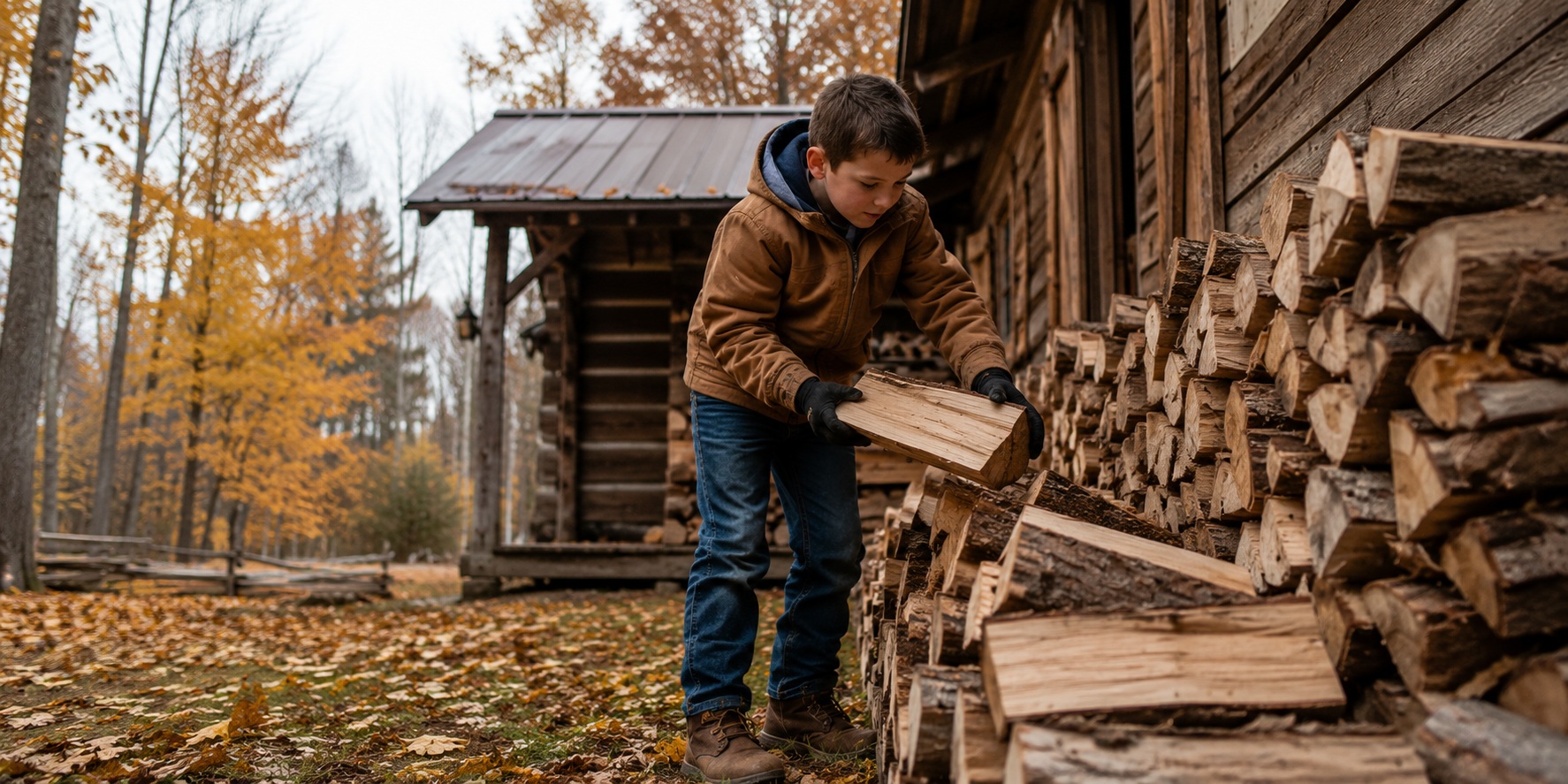
When a child learns to cook by actually cooking, they develop knife handling, fire awareness, timing, and improvisation. When they haul and stack wood, they build physical endurance, spatial reasoning, and an understanding of how energy is produced and stored. These are not abstract lessons. They are the kind of know-how that keeps people alive when systems fail.
A child who has spent years doing meaningful household work is not going to freeze when the grid goes down. They already know how to work without convenience.
Discipline and Accountability Are Survival Traits
Prepping is a discipline game. You cannot stockpile food, maintain equipment, or execute a bug-out plan without personal accountability. Chores are the first training ground for both.
When a child is assigned a task and is expected to complete it, every day, without being reminded, they are building the internal structure that discipline requires. They learn that some things have to happen regardless of how they feel. The chickens need feeding whether it is raining or not. The water supply needs checking whether they slept well or not.
This daily repetition also teaches consequence. A garden that is not watered dies. A fire that is not tended goes out. Kids who are shielded from these outcomes grow into adults who have no instinct for proactive maintenance, which is one of the most dangerous gaps a prepper family can have.
Problem-Solving Under Real Conditions
Chores break. Equipment fails. The mop head falls off. The kindling is wet. The recipe is missing an ingredient. What happens in those moments matters far more than the task itself.
Research in child development shows that children who engage in practical household problem-solving develop stronger executive function than those who are sheltered from challenges. For preppers, executive function is another way of saying the ability to stay calm, assess options, and act. It is what separates people who adapt from people who collapse.
Do not fix the problem for your child every time something goes sideways during a chore. Let them figure it out. Ask them what they think should happen next. That friction is where the real skill lives.
Chores by Age: Building a Progression That Actually Prepares Them
Assigning age-appropriate chores matters. Too easy and there is no growth. Too hard and confidence breaks before it builds. Here is a rough framework built around preparedness value:
- Ages 4-6: Feeding pets, setting and clearing the table, picking up around the house, helping sort supplies by category.
- Ages 7-10: Washing dishes, helping cook simple meals, basic garden tasks, sweeping and mopping, carrying and stacking firewood.
- Ages 11-14: Cooking full meals unsupervised, doing laundry start to finish, maintaining a garden plot, basic tool use and maintenance.
- Ages 15+: Managing household inventory, making supply runs, minor home repairs, fire building and maintenance, leading younger siblings through tasks.
Each tier builds on the last. By the time your child is a teenager, they should be a functional contributor to household resilience, not a dependent passenger.
The Mental Toughness Component
There is something that happens to a person, young or old, who completes a hard task they did not want to do. They learn they are capable of more than they thought. That knowledge is not small. It is the foundation of resilience.
Kids who do difficult chores regularly develop what psychologists call a growth mindset in practical terms: the lived understanding that effort produces results. For prepper families, this is especially important because a crisis does not ask whether you feel ready. You either have the internal strength to push through or you do not.
Every time a child completes a chore that was hard or unpleasant, they are banking a small proof that they can handle discomfort. That bank account matters when the stakes get real.
Making Chores Count: Frame Them Right
How you talk about chores in your household shapes how your kids relate to work. If chores are presented as punishment or as something to endure, kids will associate productive labor with suffering. If they are framed as contribution and training, the mindset shifts.
Prepper families have an advantage here. You can be honest with your kids about why these skills matter. Not in a fear-based way, but in a straightforward, practical way: we take care of what we have, we know how to do things ourselves, and we do not wait for someone else to handle what we can handle. That is a value system, not just a chore schedule.
Tie the chore to the skill explicitly. “You are learning to build a fire because if we ever lose power in winter, you will know how to keep us warm.” That context turns a task into training. Kids respond to purpose.
Raise Kids Who Know How To Survive, Not Just Scroll
One thing the Amish understood long before modern parenting books existed is that children become capable adults by participating in real life early. They learn responsibility by doing meaningful work, not by being entertained every waking hour.
That is exactly why The Amish Ways resonates with so many prepper and homesteading families today.
Inside this book, you will discover practical old-world skills, self-reliance principles, food preservation methods, homestead habits, and family-centered traditions that helped Amish communities raise resilient, disciplined, highly capable children for generations — without depending on modern systems for everything.
If you want your kids to grow into adults who know how to work, adapt, solve problems, and contribute when life gets hard, this book is worth reading.
👉 Get your copy of The Amish Ways and start rebuilding the kind of practical family culture that creates strong, prepared, self-reliant people.
Final Thoughts
The question of how do chores teach life skills is really a question about what kind of adults you are raising. Chores done consistently and intentionally build competence, discipline, problem-solving, and mental toughness. For preppers, those are not optional traits. They are the core of what it means to be ready.
Start young. Stay consistent. Raise the difficulty over time. Let them fail and figure it out. The child who has been doing real work since they were four years old is not going to be helpless when the situation demands something of them. They have been preparing their whole life.
You May Also Like:

Life Skills For Kids – Teaching Fundamental Skills For Your Child To Succeed In Life
DIY Harmless Pest Traps That Actually Work (VIDEO)
Best Prepper Books – 9 Books To Survive ANY Crisis!
7 Life Skills I Wish I Knew Sooner
How Financial Literacy Skills Can Make or Break Your Survival Plan
How to Improve Vocational Skills
Read the full article here
