

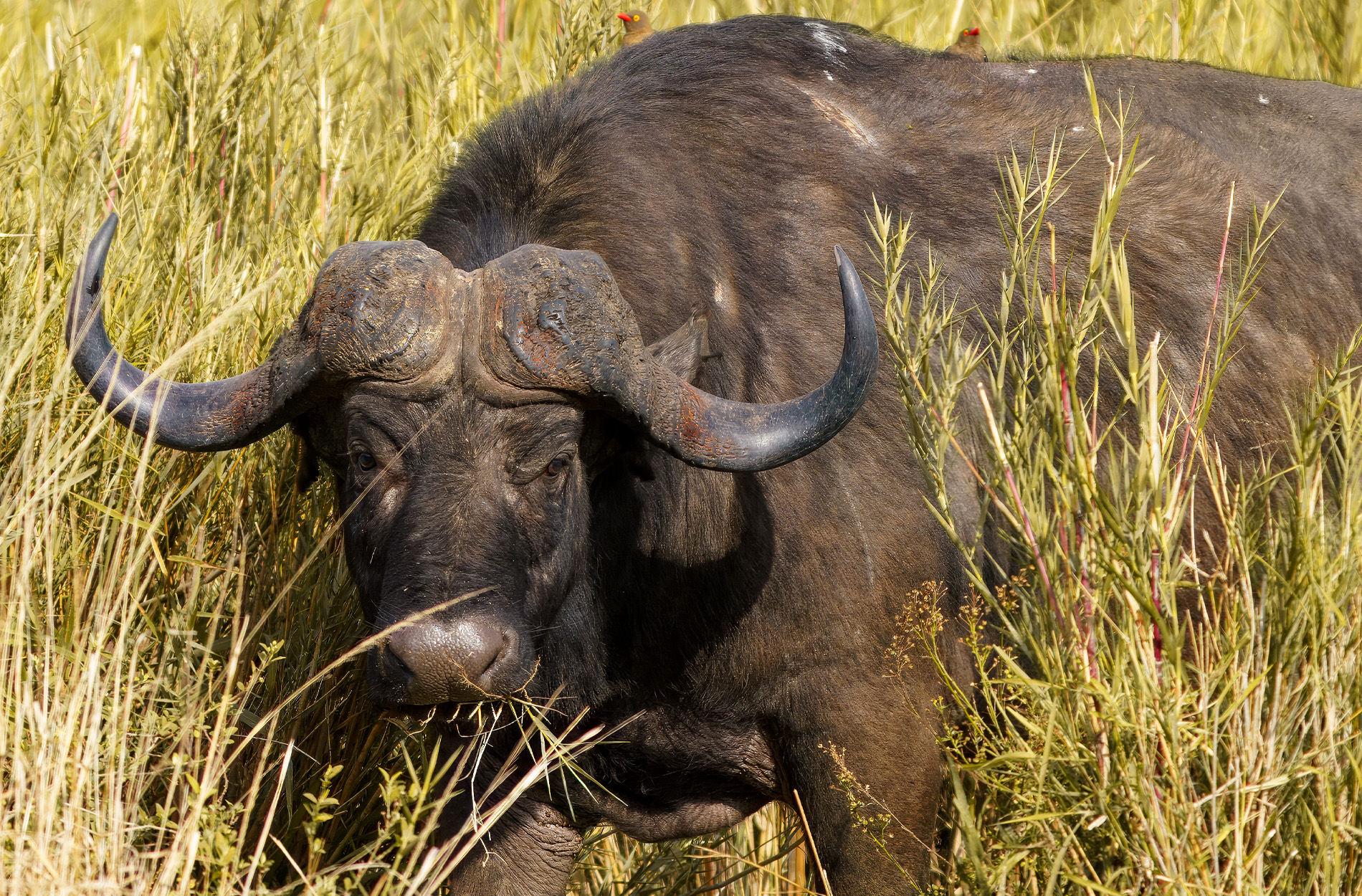

A Texas man was killed over the weekend while hunting Cape buffalo in South Africa’s Limpopo province. Asher Watkins, 52, was tracking the animal alongside others in his party when the buffalo charged and gored him. The animal was not wounded, and the safari outfitter Watkins was hunting with said the fatal attack was sudden and unprovoked.
“It’s a reality that’s still hard to put into words,” the hunter’s ex-wife Courtney told UK-based Metro News. “We’ve been in a state of shock and heartbreak ever since. Trying to process not just the loss, but the complexity that comes with it.”
Asher’s unfortunate death is a tragic loss, and it highlights the risks involved with pursuing a one-ton animal that many hunters consider the most dangerous member of Africa’s Big 5 — the five species most likely to kill you. Cape buffalo are the largest wild bovine on the continent. Standing around 50 inches tall and weighing up to 1,900 pounds, they can reach speeds of up to 35 mph and are quick to charge when wounded or afraid. Their aggressive, ornery, and unpredictable nature has earned them the nickname Black Death.
“It’s a very challenging animal to hunt,” says Outdoor Life shooting editor John Snow, who has hunted Cape buffalo in South Africa and Zimbabwe. “Sometimes they will deliberately bolt and flee, but they are absolutely animals that will stand their ground and fight as well.”
Read Next: Cape Fear: Hunting Buffalo in the Matetsi Safari Area of Zimbabwe
The terrain they inhabit increases this risk. Cape buffalo graze savannas covered in waist-high, or higher, grasses, and they seek cover in dense, thorny brush where visibility is limited. Adding to the challenge is proximity. Because of how tough the animals are, hunters typically have to be close — within 50 yards and sometimes 10 yards — to make a clean shot.
“You have to always be prepared, and you never want to relax or let your guard down,” Snow says. “If you’re not on your toes, Cape buffalo can quickly turn the tables on you.”
Part of the reason they’re so aggressive and quick to charge is that Cape buffalo are not at the top of the food chain. Lions will prey on them, as will other predators like leopards and crocodiles.
“It’s a tough neighborhood they live in,” Snow says. “They have character in their faces and horns and scars on their flanks from fighting with other buffalo and lions. They are the perfect example of the rugged survivor in their environment.”
A typical African buffalo hunt lasts seven to 10 days. Most of that time is spent searching for a mature bull, Snow explains. Older animals have a hardened boss, which is where the base of each horn meets on top of their heads, and these big, mature bulls are the ones that are typically hunted.
Read Next: I Was Charged by a Cape Buffalo While Testing One of the Earliest .458 Win. Mags
In Watkins’ case, the hunter had found a good bull and was following it, but he hadn’t taken a shot yet. He was tracking the buffalo alongside a professional hunter (the equivalent of a guide in the U.S.) and a tracker, which is typical of most hunts in South Africa.
“Out of respect for the family’s privacy as well as our staff members involved, we will not be sharing further details,” Coenraad Vermaak Safaris said in a prepared statement on its website Monday. “We kindly ask for privacy and compassion during this time while all those affected come to terms with this tragedy.”
Read the full article here
