


“In no part of the constitution is more wisdom to be found than in the clause which confides the question of war or peace to the legislature, and not to the executive,” James Madison wrote regarding Article 1 Section 8, Clause 11 of the U.S. Constitution.
“The constitution supposes, what the History of all Governments demonstrates, that the Executive is the branch of power most interested in war, and most prone to it,” Madison continued. “It has accordingly, with studied care, vested the question of war in the Legislature.”
The Constitution delineates that the legislative branch — and only the legislative branch — has the power to declare war.
However, the term “declare” has been open to interpretation since the Constitution’s signing, with American presidents going to war without congressional approval for centuries, according to History.com.
In 1846, James Polk’s occupation of Texas and the subsequent Mexican-American War was without congressional consent, while at the outbreak of the Civil War, Abraham Lincoln likewise authorized early military action without Congress.
The U.S. has technically not been in a state of war since 1945, and yet more than 100,000 service members have died in conflicts spanning the globe since May 8 and Sep. 2, 1945, respectively.
Since the 1950s and the term “police action” entered the government’s lexicon, the right of Congress to declare war has been dealt a series of escalating blows.
By 1963, President John F. Kennedy was sending military equipment and advisors in South Vietnam. One year later, America was secretly bombing Laos, eventually leaving it the most heavily bombed country per capita in the world, according to History.com. Marines were on the ground in 1965.
As part of “Operation Menu” in 1969, President Richard Nixon was bombing Cambodia — a fact that was withheld from the American public until The New York Times revealed the operation to the public. By the following year, with American ground troops deploying to Northern Cambodia, waves of criticism met the president and triggered a check on presidential power.
This case of executive overreach by Nixon in Cambodia led to the passage of the War Powers Resolution on Nov. 7, 1973, with Congress overriding Nixon’s veto by a two-thirds majority.
The Vietnam-era law was designed to ensure that the “collective judgment” of Congress and the president were in lockstep if and when U.S. armed forces entered into hostilities.
According to Friends Committee on National Legislation, the War Powers Resolution has three main components:
- The president must get a declaration of war or specific authorization from Congress before sending troops overseas unless the United States or its armed forces are attacked.
- If the president initiates hostilities, these can last only 60 days and must then be terminated unless Congress authorizes their continuation.
- If there is no declaration of war or specific statutory authorization passed within 60 days, Congress can require the president to end U.S. participation in hostilities at any time.
The act has created significant tension between Congress and the executive branch, with presidents like Ronald Reagan sidestepping Congress in Grenada; George H.W. Bush in Panama and during the first Gulf War; and Bill Clinton in Kosovo.
Just one week after the 9/11 attacks, Congress passed the Authorization for the Use of Military Force, authorizing the president to use “all necessary and appropriate force against those nations, organizations, or persons he determines planned, authorized, committed, or aided the terrorist attacks that occurred on September 11, 2001, or harbored such organizations or persons, in order to prevent any future acts of international terrorism against the United States by such nations, organizations or persons.”
The AUMF has subsequently paved the way for presidents George W. Bush, Barack Obama, Donald Trump and Joe Biden to wage war not only in Iraq and Afghanistan but also in Pakistan, Somalia, Syria, Yemen and other nations for more than two decades as part of the War on Terror.
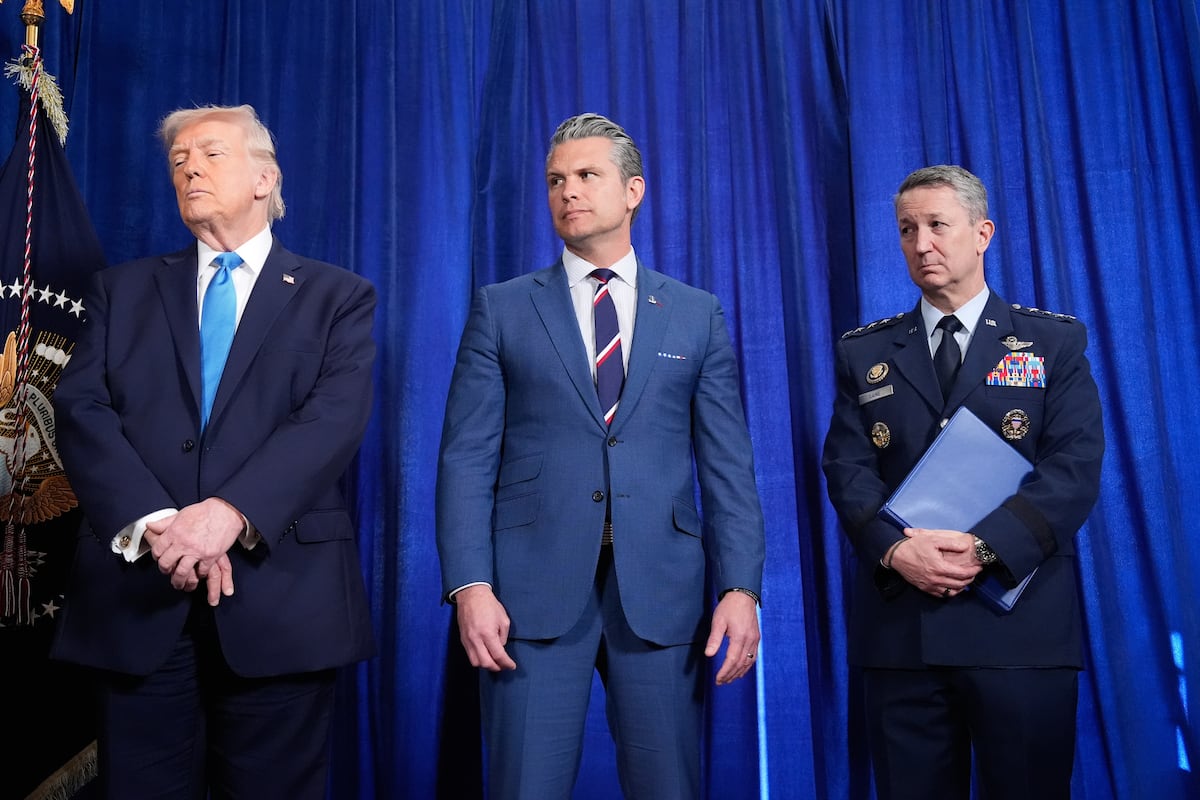
Now, as the U.S.-Israeli war in Iran reaches the critical 60th day of operations, Defense Secretary Pete Hegseth controversially claimed on Thursday that the fragile ceasefire with Iran means that Trump does not yet have to seek congressional consent to extend the war.
Hegseth argued that the pause in hostilities freezes the ticking clock that would otherwise require the president either to get agreement from lawmakers or to end military operations after 60 days.
“We are in a ceasefire right now, which [in] our understanding means the 60-day clock pauses, or stops,” Hegseth told Sen. Tim Kaine, D-Va., during a Senate Armed Services Committee hearing.
Friday marks 60 days since the Trump administration notified Congress that it had launched strikes on Iran. The law gives the president the option to ask for a 30-day extension, though it is unclear whether Trump intends to do so.
“I do not believe the statute would support that,” Kaine said, adding that he has “serious constitutional concerns and we don’t want to layer those with additional statutory concerns.”
Any member of the House or Senate, regardless of committee assignment, can invoke section 5(c) of the War Powers Resolution and get a full floor vote on whether to require the president to remove U.S. armed forces from hostilities.
Under the procedural rules of the War Powers Act, these bills are granted expedited status — requiring a full floor vote in the House within 15 calendar days, and in the Senate within 10 calendar days of introduction.
Claire Barrett is an editor and military history correspondent for Military Times. She is also a World War II researcher with an unparalleled affinity for Sir Winston Churchill and Michigan football.
Tanya Noury is a reporter for Military Times and Defense News, with coverage focusing on the White House and Pentagon.
Read the full article here
