

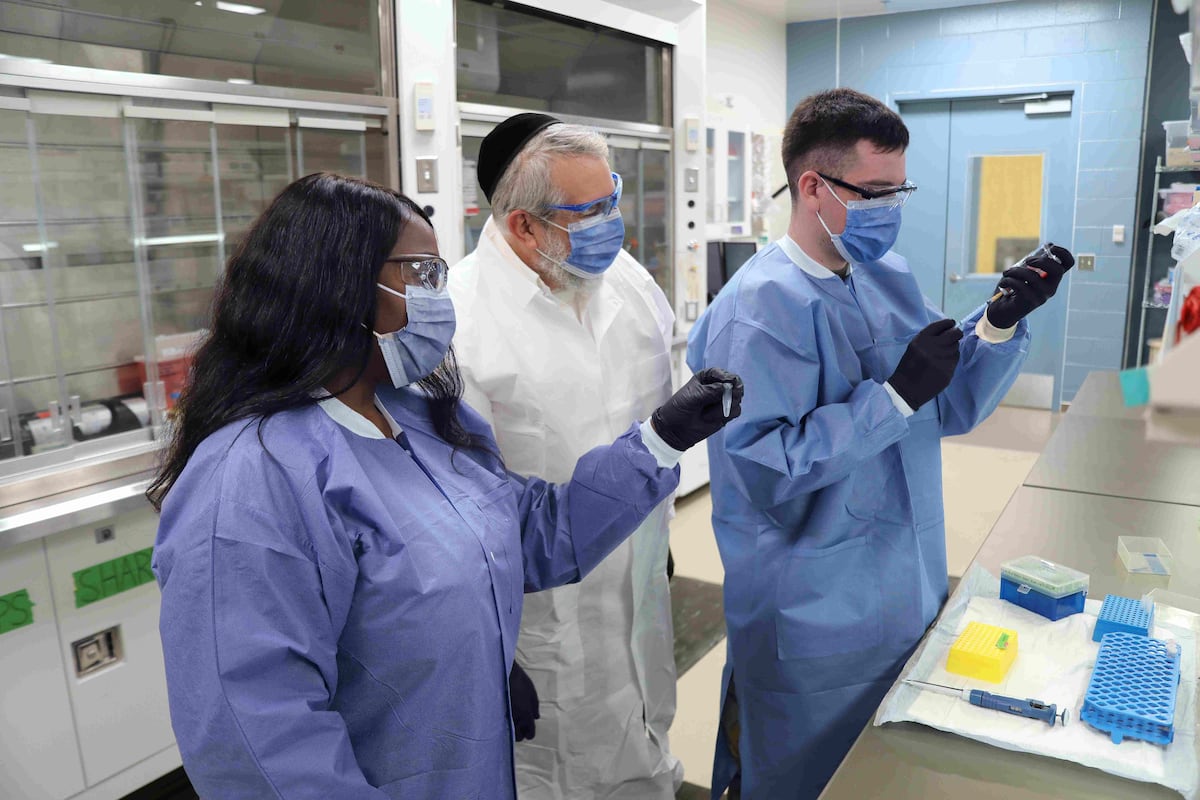

Army researchers have developed a potential antidote to the deadly poison cyanide.
The new injectable antidote was invented at the U.S. Army Medical Research Institute of Chemical Defense. It’s been licensed to Defender Pharmaceuticals, a St. Louis-based life sciences company, for further development, according to an Army release.
“This would be the first non-intravenous cyanide countermeasure approved by the U.S. Food and Drug Administration, which is very exciting,” said Dr. Gary A. Rockwood, a research biologist in the institute’s Medical Toxicology Division who pioneered the development of the antidote.
“We are envisioning the antidote being delivered by autoinjector, similar to an EpiPen, that could quickly and easily be administered into a muscle mass by a medic or even a battle buddy.”
Cyanide is used in a variety of manufacturing processes, but it is highly toxic and a potential chemical warfare agent.
“A lethal dose can kill within seconds; non-lethal doses can leave survivors with a range of permanent physical and neurological effects,” according to the release.
The new countermeasure antidote aims to improve patient survivability, in part by offering longer shelf life and greater portability than intravenous antidotes in current use.
The new antidote also requires less time to prepare and administer, according to the release.
“We talked with several companies and venture capitalists, and tried to leave no stone unturned,” said Dr. David Humphrey, a licensing officer at MTT who worked with Rockwood on the process.
In addition to the Army researchers who worked on this project, several other universities and research laboratories contributed to the development of the injectable antidote.
“There definitely were challenges along the way that we’ve learned a lot from,” Rockwood said. “But I think that the approach we took provides a potential option for future research. It may take some creativity, may take some patience, but there are alternatives to the typical pathways to getting a product through the regulatory process and into the hands of people who need them.”
Todd South has written about crime, courts, government and the military for multiple publications since 2004 and was named a 2014 Pulitzer finalist for a co-written project on witness intimidation. Todd is a Marine veteran of the Iraq War.
Read the full article here
