

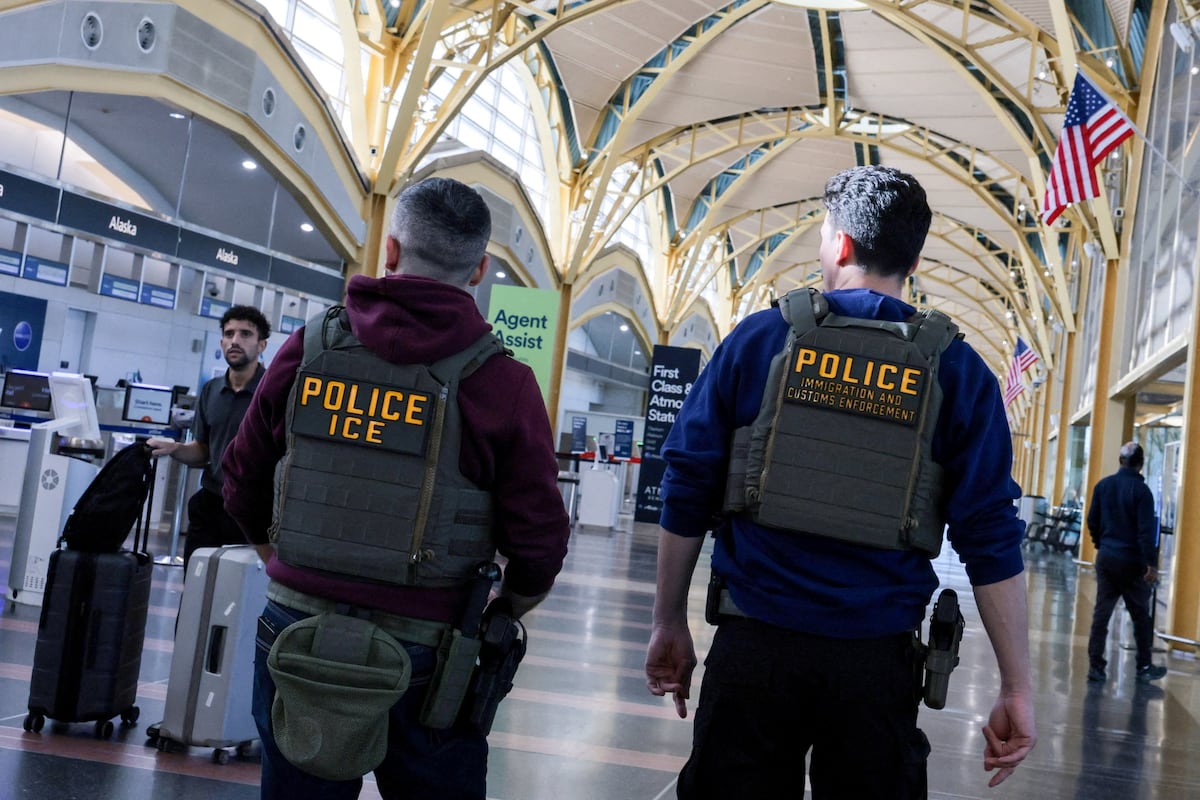

The military measures readiness through deployments, training, retention and equipment. Recent ICE detentions of military spouses have exposed a question the Pentagon has not publicly answered: are threats of deportation affecting troops’ ability to serve?
The Trump administration said in 2025 that “military service alone doesn’t exempt aliens from the consequences of violating U.S. immigration laws,” and a string of military spouses have been detained in immigration crackdowns.
Deisy Rivera Ortega was detained and placed in ICE custody, according to the Department of Homeland Security, or DHS. Army Sgt. 1st Class Jose Serrano had served in the Army for more than 27 years, including deployments to Afghanistan. In April, his wife
Though her attorney has challenged the legality of her detention in federal court, Serrano said the detention destabilized his mental health and ability to function.
“I can’t sleep even with the medication,” he said.
Ortega was later released after a U.S. senator personally contacted DHS on her behalf.
Military family advocates, immigration attorneys and lawmakers say the issue highlights a gap in how the armed forces measure family- readiness stressors, which also include housing instability, childcare access, spouse employment and mental health. According to the National Military Family Association, “supporting the well-being of military families is essential to ensuring the readiness of military personnel.”
The 2021 Military Family Lifestyle Survey by Blue Star Families found that one in 10 service members belong to families that have recently immigrated into the country, and advocacy groups and military researchers estimate roughly 45,000 immigrants currently serve in the armed forces, with about 5,000 noncitizens enlisting each year. More than 760,000 noncitizens have earned U.S. citizenship through military service over the past century.
DHS and U.S. Citizenship and Immigration Services, or USCIS, already maintain programs designed to reduce immigration- instability for military families, including Deferred Action protections and expedited immigration processing.
Another program, Military Parole in Place, can allow some undocumented spouses and relatives of service members to remain in the United States, obtain work authorization and pursue legal residency without leaving the country and triggering lengthy reentry bans. USCIS says the protections recognize “the important sacrifices made by U.S. service members, veterans, enlistees, and their families.”
Military legal assistance offices on many installations provide immigration- guidance to service members and spouses, though military attorneys generally can’t represent families in immigration court proceedings.
But while DHS and USCIS have maintained military-family immigration protections for years, the Pentagon hasn’t publicly indicated if it is formally studying whether immigration- stress affects force readiness.
No public Pentagon or DHS database tracks how many active duty troops have noncitizen relatives without legal status, how many military families are involved in deportation proceedings, or whether immigration stress affects readiness. The Pentagon also has no public readiness assessment that includes immigration- family instability among tracked force stressors.
One recent case involved Annie Ramos, a 22-year-old Army spouse who was detained by immigration authorities after accompanying her husband, Army Staff Sgt. Matthew Blank, to Fort Polk in order to obtain a military dependent identification card shortly after the couple married. Blank said the couple had already begun pursuing legal residency options before the arrest. “We were doing everything the right way,” he told The New York Times.
Military family organizations and lawmakers say such cases reflect broader operational concerns inside military households. The National Military Family Association warned in a 2026 statement that immigration enforcement actions involving military families affect both readiness and recruiting: “How can [a service member] focus on deployment when his wife is threatened with deportation?”
Lawmakers have pressed both DHS and the Pentagon about whether immigration enforcement involving military families creates adverse consequences. Sen. Tammy Duckworth, an Iraq War veteran, described forced family separation as harmful to “military morale and mission readiness,” and introduced the PROTECT Military Families Act earlier this year to curb unnecessary separations.
In letter sent to the departments of homeland security and defense, over 60 lawmakers wrote that “family well-being directly impacts Service members’ performance during deployment” and asked whether either department had studied the readiness implications of deportations involving military households.
Military Times reached out to the Pentagon, asking if the Defense Department tracks immigration- family stress as part of readiness assessments, but didn’t receive a response before publication.
Read the full article here
