

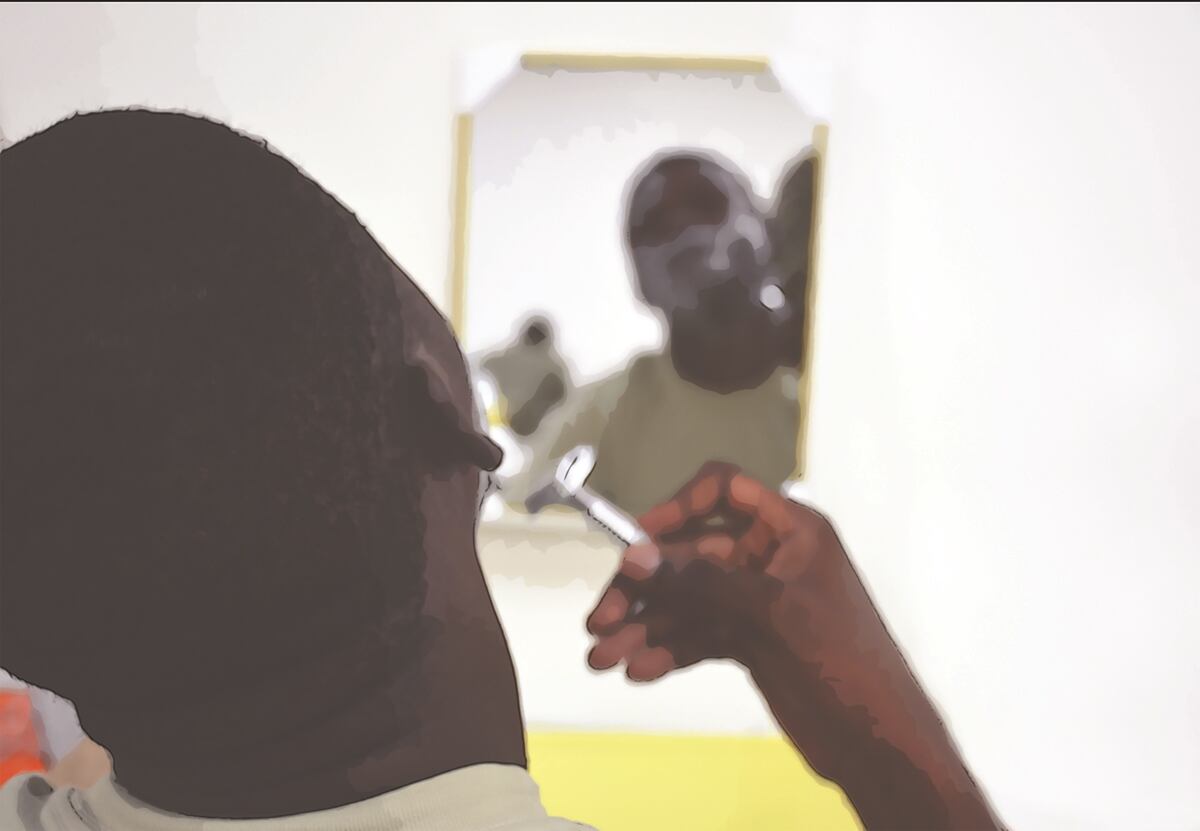

U.S. Navy service members with shaving waivers who are classified as having a permanent skin condition will face administrative separation, the service announced Tuesday.
Active duty and reserve sailors granted facial hair accommodations will be allowed to receive medical treatment for up to 12 months under new Navy grooming standards, but if the irritation they face from shaving is incurable, then they will be evaluated for discharge.
The new guidance doesn’t apply to waivers for Navy grooming standards submitted on the basis of religious accommodations.
“Mission accomplishment hinges on stringent compliance with standards and ensuring implementing policies are clear, unambiguous, and compliant with law and regulation,” a Navy administrative message said. “Grooming standards add to sailor and mission safety and ensure the safe and proper utilization of protective equipment in all naval environments and operational conditions.”
The announcement follows a February Pentagon memo in which Defense Secretary Pete Hegseth said that troops who required medical shaving waivers for over a year would face involuntary separation.
Sailors experiencing razor bumps or irritation resulting from shaving are to report it to their supervisor so that they can receive a military medical evaluation and treatment plan.
Service members specifically suffering from a diagnosed skin condition like pseudofolliculitis barbae are instructed to provide “medical findings, recommendations and a medical provider signature” to their command so that they may be approved for a shaving accommodation.
Pseudofolliculitis barbae leads to unwanted bumps and painful ingrown hairs after shaving.
About 60% of Black men are affected by the condition, according to the American Osteopathic College of Dermatology.
Medical treatment plans will last no longer than 90 days, but service members are allotted up to four 90-day blocks for treatment during a 12-month span.
Commanding officers will make the final decision on whether a service member is approved for a shaving waiver.
Service members with an approved accommodation are only allowed to grow their facial hair out to one quarter of an inch from their skin and should carry their accommodation with them at all times when they are not shaving and in uniform.
If a sailor reports to a new command, they must present their approved accommodation and treatment plan to the new commanding officer so that the CO can review it and permit them to continue their accommodation.
After 12 months, a sailor with a facial hair accommodation will be evaluated to see if they’re allowed to continue serving.
Service members with an incurable condition face the possibility of being administratively separated if a medical evaluation board determines the service member’s condition is permanent.
Administrative separations for sailors with a permanent condition will begin no earlier than July 8, 2027.
The service has gone back and forth on the severity of its grooming standards.
The Navy reviewed a policy in 2020 that would end the need for permanent shaving waivers for those diagnosed with pseudofolliculitis barbae. In 2022, the service altogether halted separations for sailors with facial hair conditions.
The Navy also announced in June that it will be reevaluating religious accommodations for facial hair that doesn’t adhere to grooming standards and implementing new procedures in the near future.
Riley Ceder is a reporter at Military Times, where he covers breaking news, criminal justice, investigations, and cyber. He previously worked as an investigative practicum student at The Washington Post, where he contributed to the Abused by the Badge investigation.
Read the full article here
