


The U.S. Navy released its fiscal 2027 shipbuilding plan Monday, laying out the possibility of the service turning to allied nations to build its vessels.
The confirmation of potential outsourcing comes after President Donald Trump reportedly rejected previous Navy Secretary John Phelan’s suggestion to build Trump-class battleships abroad to meet the president’s desired delivery of 2028.
“Building and maintaining ships in America is central to the president’s vision and strengthens the nation’s industrial base,” the budget document said. “While American shipbuilding remains the priority, the Navy will evaluate overseas options and whether allied and partner shipbuilding can supplement domestic production if U.S. industry cannot meet required timelines.”
Phelan told reporters at the Navy League’s annual Sea-Air-Space symposium in April that the Navy was going to study the possibility of building warships outside the U.S.
He cited labor shortages in the U.S. as a catalyst for the potential move.
He was fired one day later, with the Trump administration citing a needed change in leadership.
But over the coming days, reports surfaced that a brewing fissure between Trump and Phelan came to a head after Trump bristled at Phelan’s idea to build Navy battleships abroad, a sentiment that flew in the face of Trump’s previous promise to build his namesake ship class in the U.S.
Phelan’s comments at SAS undercut the Trump administration’s messaging about revitalizing the American maritime industrial base by investing in U.S. shipyards, according to Hunter Stires, maritime strategist for previous Navy Secretary Carlos Del Toro.
The fiscal 2027 shipbuilding plan, meanwhile, raises the possibility of turning overseas to build auxiliary ships, or ships that can provide fuel and ammunition to U.S. Navy combatant ships.
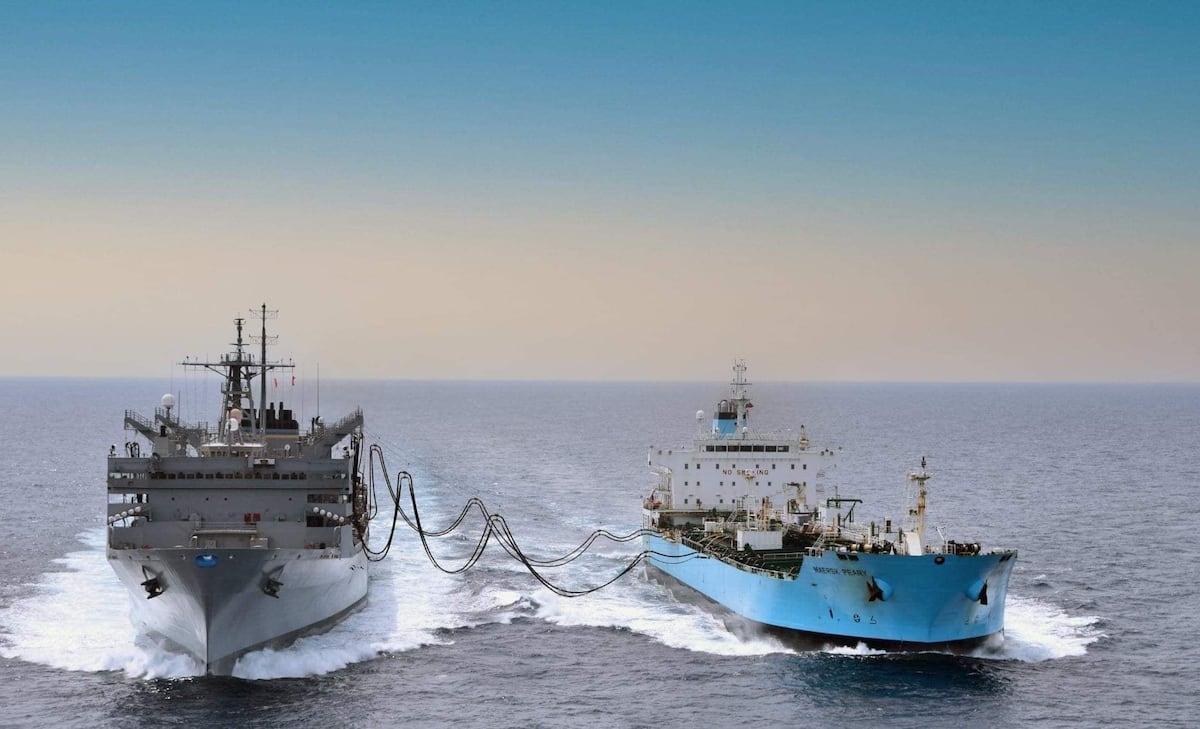
Specifically, the Navy would like to invest $450 million in obtaining one consolidated cargo replenishment at sea, or CONSOL, tanker in fiscal 2027. CONSOL references a commercial tanker chartered by Military Sealift Command that refuels a U.S. Navy ship while underway.
The Navy also aims to spend $2.3 billion over the next five years to purchase five tankers for fuel support, built “potentially” and “initially” at overseas shipyards.
The sea service is asking Congress for approval to build two auxiliary ships and the “flexibility for fabrication of some combatant modules overseas,” the shipbuilding plan says.
The budget also negates another of Phelan’s previous comments regarding the fiscal 2027 Defense Department budget request. The Navy announced that Golden Fleet-era battleships will be nuclear powered, despite Phelan saying at the Sea-Air-Space exposition that the presence of nuclear power aboard the future vessels was “unlikely.”
Overall, the service aims to increase its number of ships dramatically, according to the plan.
There are currently over 290 battle force ships, though the number, according to Navy requirements by law, is 355, the document stated. The service intends to have 395 vessels in fiscal 2027 and 450 vessels by the end of fiscal 2031.
The shipbuilding plan emphasizes three primary points the service views as key to asserting maritime supremacy: ending backlogs by rewarding industry partners that prioritize speed; making good on the Golden Fleet promise by building a high-low mix of advanced combatants, cost-effective ships and unmanned systems; and reinvigorating the maritime industrial base by creating jobs and attracting private investment.
The Navy plans to address the latter issue by increasing reliance on distributed shipbuilding sites, or sites away from a main shipbuilding yard.
Currently, only 10% of shipbuilding is taking place at distributed sites. The service wants to increase that number to 50% to increase flexibility, reduce reliance on legacy shipyards and accelerate delivery.
President Donald Trump’s proposed $1.5 trillion fiscal 2027 defense budget calls for a $65.8 billion investment in shipbuilding, including funding for 34 manned ships and five unmanned platforms.
Riley Ceder is a reporter at Military Times, where he covers breaking news, criminal justice, investigations, and cyber. He previously worked as an investigative practicum student at The Washington Post, where he contributed to the Abused by the Badge investigation.
Read the full article here
