


Editor’s note: This article first appeared on The War Horse, an award-winning nonprofit news organization educating the public on military service. Subscribe to their newsletter.
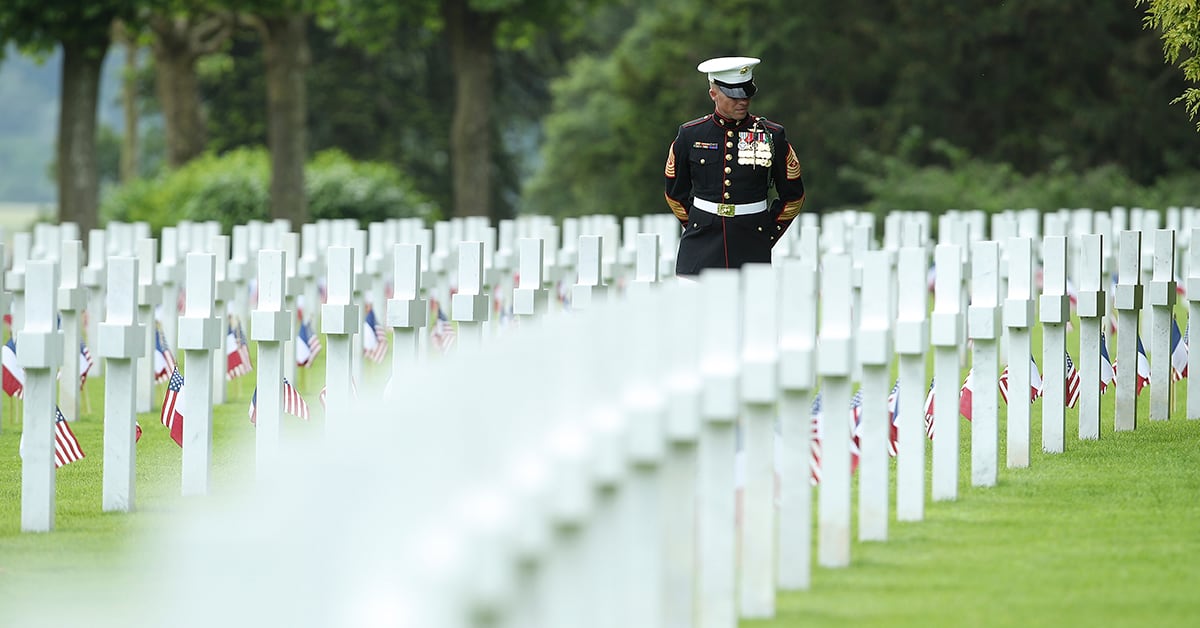
Buried beneath the curved, sweeping rows of white marble crosses and Stars of David at the Manila American Cemetery lies a special kind of American hero.
Their headstones carry no names. No ranks or branches of the military. No dates of death.
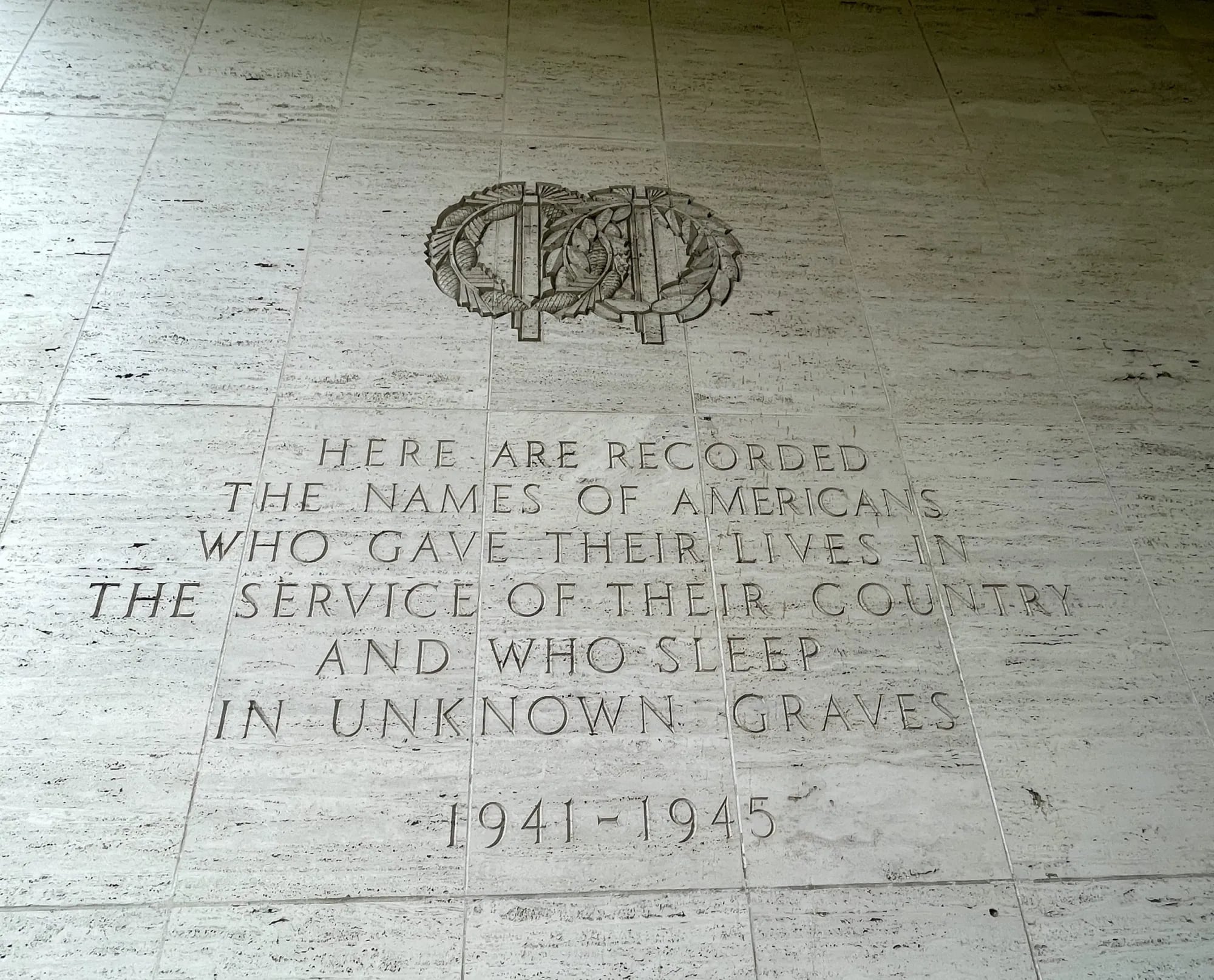
Each grave marker bears the same inscription: “Here rests in honored glory a comrade in arms known but to God.”
About 2,900 American service members are still buried as “unknowns” in the Manila cemetery—soldiers, sailors, Marines, and airmen whose remains were recovered after World War II but could not be identified with the science of their time.
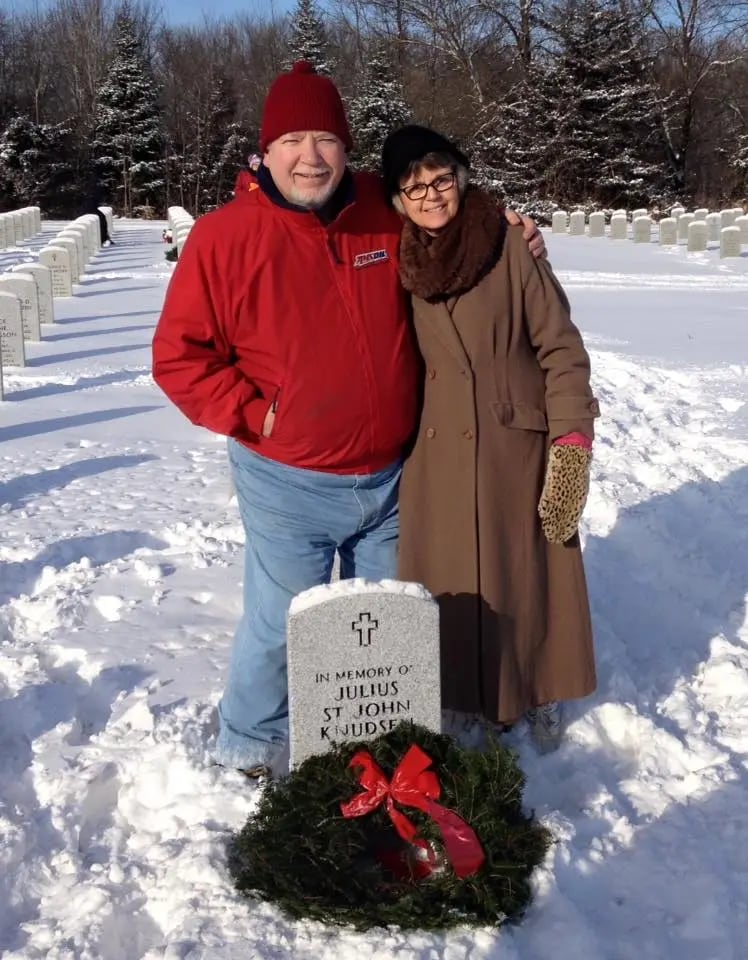
Jim Knudsen believes his Uncle Julius is one of the unknowns.
For 17 years, the Minnesota resident has carried his family’s torch in the search for the remains of Army Technician 5th Class Julius St. John Knudsen, a 25-year-old tanker who vanished in the Philippines in 1942 during the infamous Bataan Death March.
Jim Knudsen, 75, has tracked down military records and contacted distant relatives to submit DNA samples. He’s studied dog-eared wartime maps and interviewed the last surviving soldier from his uncle’s tank battalion—fulfilling a promise made to his dad in 2009.
“Rest easy,” he told his father when he went into hospice care. “I’ll keep looking for Julius.”
Earlier this year, Knudsen believed the mystery of Julius’ final days might finally be solved—thanks to the marvels of forensic DNA science.
It took several years for Knudsen and a military researcher to convince the Pentagon’s MIA agency to exhume the remains of nine American soldiers recovered after World War II along the route of the death march. There is more than a glimmer of hope that Julius is one of the nine.
According to the Defense POW/MIA Accounting Agency, there are still more than 80,000 U.S. service members who remain unaccounted for since World War II. The DPAA estimates that 38,000 of them are recoverable. Most of the rest were lost at sea.
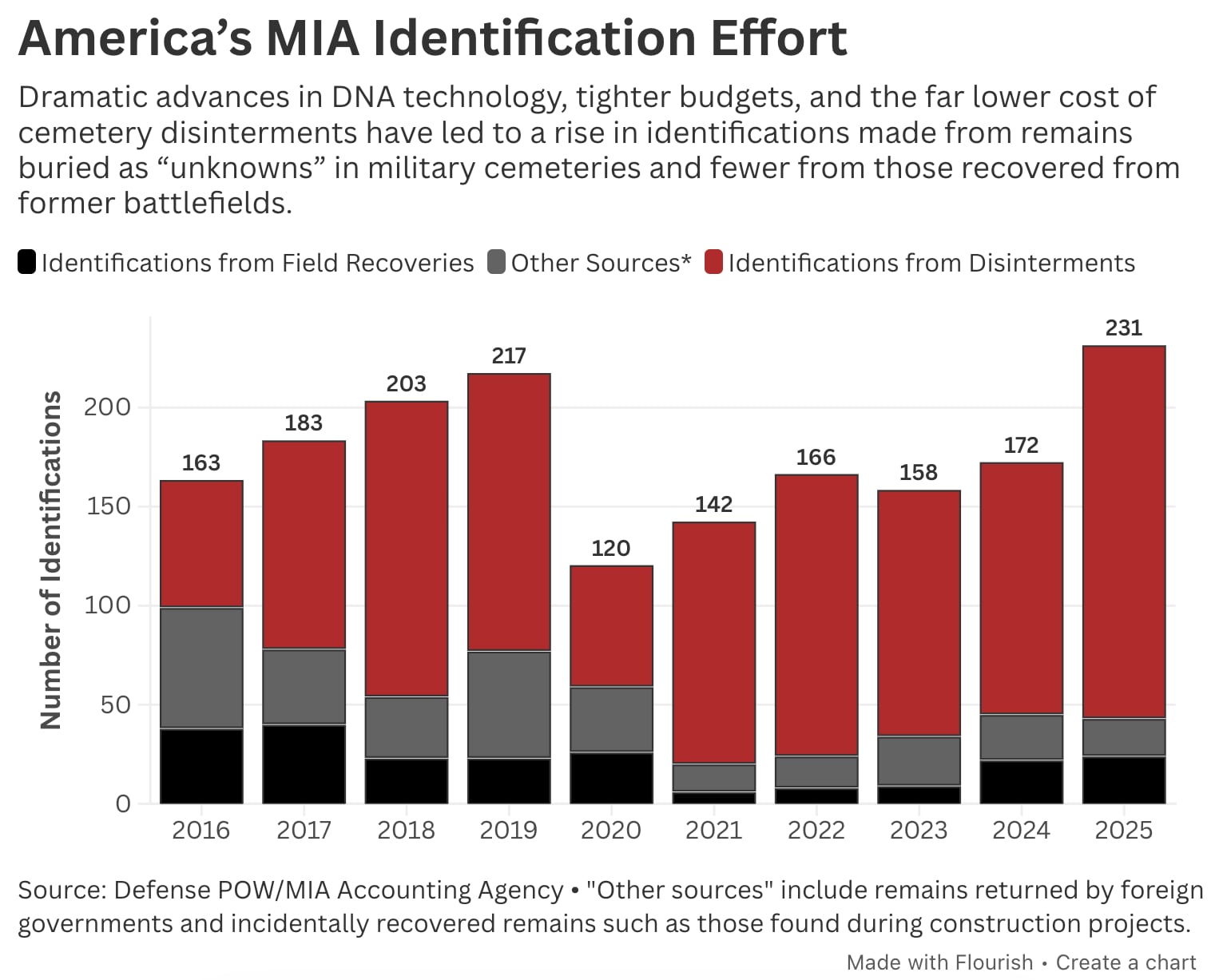
The agency identified the remains of 231 service members in fiscal year 2025—the highest number ever for the DPAA or its predecessor agencies.
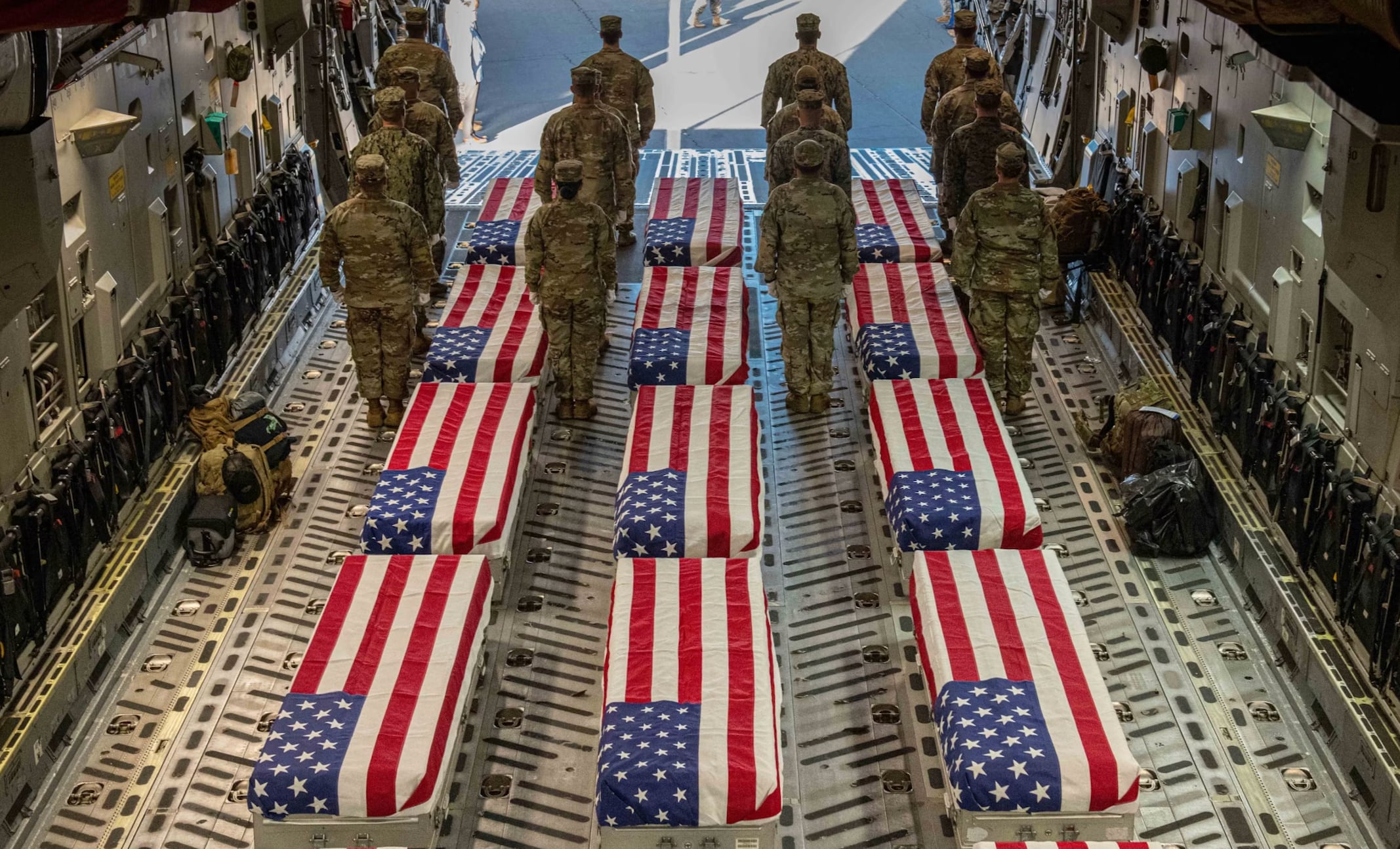
By far, the easiest remains to recover are the 5,100 unidentified American service members buried in overseas military cemeteries, as well as the 900 at the National Memorial Cemetery of the Pacific in Honolulu—better known as the Punchbowl—and 50 unknowns at other stateside cemeteries.
But while modern DNA science offers new hope to MIA families, the time for closure is running out for a generation of descendants of service members whose fates remain uncertain. At the current pace of the DPAA’s disinterments, identifying all of the unknowns in cemeteries would take more than three decades. And, as Knudsen has learned, even after remains are sent to laboratories for analysis, the wait can continue for years.
“My grandkids will be having kids before they identify my uncle,” Knudsen said. “And that’s not right.”
‘They Could Do This’
Some forensic DNA experts agree with Knudsen. They argue that in many ways the Pentagon is still approaching the identification of the unknowns with a system designed for an earlier scientific era.
They contend that bureaucratic inertia is the main obstacle to adding names to thousands of tombstones with a robust plan aimed at identifying all 6,050 service members in years, rather than decades.
“They could do this if they really wanted to,” said Edwin Huffine, a prominent forensic DNA scientist who served in leadership roles at the elite Armed Forces DNA Identification Laboratory from 1994 to 1999.
Huffine argues that the Pentagon still relies too heavily on slower forensic methods such as skeletal analysis and historical reconstruction, instead of allowing DNA to drive identifications. He believes state-of-the-art nuclear DNA testing and wider use of forensic genealogy—similar to how law enforcement uses DNA to crack cold cases—could dramatically accelerate the identification of thousands of unknowns.
That argument is at the heart of a poignant debate over how best to honor the unidentified World War II and Korean War service members in an era when DNA technology can unlock identities once thought to be lost forever.
In an interview with The War Horse, Kelly McKeague, a retired Air Force major general who has been the director of the DPAA since 2017, ruled out a dramatic surge in disinterments.
McKeague defended the current system for identifying the unknowns. He said the painstaking, respectful process effectively blends science, military history, and the solemn responsibility of disturbing military graves only when investigators believe there’s a strong chance of finding answers.
He said a massive disinterment campaign would destroy the sanctity of America’s military cemeteries. In addition, McKeague said, the DPAA lacks the laboratory capacity for such an effort.
McKeague pointed to one of the agency’s signature projects as evidence that DPAA’s approach is working: the disinterment of the remains of sailors and Marines killed on the battleship USS Oklahoma during the Japanese attack on Pearl Harbor. The 394 servicemen had been buried as unknowns in 61 caskets in the Punchbowl after the war.
Most of the caskets contained commingled remains. “One casket alone had 95 different individuals,” McKeague said.
The DPAA exhumed the remains of all the sailors and spent six years using forensic anthropology, dental analysis, and advanced DNA testing to separate and identify them. Of the 394 servicemen, 362 have been identified and their remains returned to their families for reburial with military honors in the cemeteries of their choice.
McKeague said the DPAA has adopted a similar strategy for the 862 Korean War unknowns who were buried at the Punchbowl.
The average length of time between the arrival of remains at the DPAA lab and formal identification is three to four years, McKeague said, “with some cases being closed in as little as a few weeks and others requiring many years to solve.”
Asked what he would say to MIA families hoping for quicker answers, McKeague said the “generational grieving” is often on full display when the DPAA updates families at regular meetings around the country.
“We understand, we empathize, and we’re doing everything possible” to alleviate that suffering, he said.
From Brainerd to Bataan
The decades-long quest to find Julius Knudsen illustrates the conviction required to navigate through the triumphs and pitfalls of the DPAA’s process.
For most of Jim Knudsen’s life, Uncle Julius existed only in family stories. He was the fun-loving prankster from Brainerd, Minnesota, who walked on stilts in parades, entered beard-growing contests, and rode an Indian motorcycle to California during the Great Depression before joining the California Army National Guard in 1941.
Like those of many World War II-era service members, however, his military record survived only in fragments: a few handwritten documents and a condolence proclamation bearing President Harry Truman’s signature.
“Dad never talked about it,” Knudsen said.
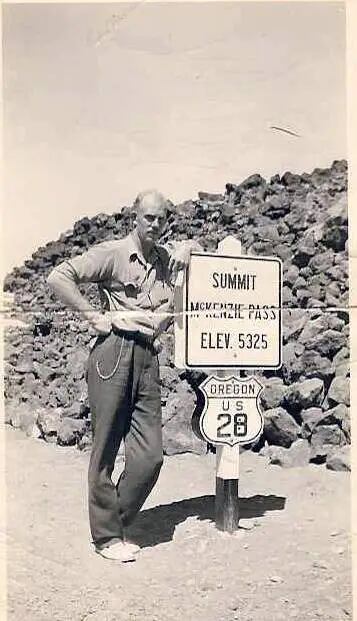
In the 1980s, Knudsen’s father, Wilbur, began searching for answers by writing letters to Congress and the Pentagon, only to encounter dead ends. Officials repeatedly told him that most of his older brother’s records had likely been destroyed in the 1973 fire at the National Personnel Records Center in St. Louis. Burned out and frustrated, Wilbur Knudsen eventually stopped searching.
When his son resumed the hunt years later, he had internet tools his father never possessed. And after cycling through two Army casualty officers, he was assigned Charles Johnson, who became his steady guide through the bureaucracy.
Knudsen tracked down distant relatives and asked them to submit DNA samples to the Pentagon’s Delaware DNA lab as he pieced together Julius’ wartime path. He learned Julius had transferred from the California Army National Guard to join 63 other Brainerd men in Company A of the Army’s 194th Tank Battalion, one of the first mechanized units sent to defend the Philippines before Japan began attacking the island nation within hours of bombing Pearl Harbor.
After the fall of Bataan in April 1942, Julius joined 75,000 American and Filipino troops on the Bataan Death March. Army records initially suggested he died at the Cabanatuan POW camp, but secret camp records kept by American prisoners showed he never arrived there or at Camp O’Donnell, the end point of the 65-mile march.
In 2019, Knudsen sought the help of Colorado MIA researcher John Bear, who located the diaries of Julius’ commander, Lt. Col. Ernest Miller. He had written that Julius was last seen near the city of Lubao.
Knudsen then interviewed Walt Straka, the last surviving Brainerd tanker, a year before he died at 101 in 2021. Straka, who told Knudsen he believed Julius was among a group of POWs who ran into the woods somewhere south of Lubao, said some marchers reported hearing gunshots in the area where the men had fled.
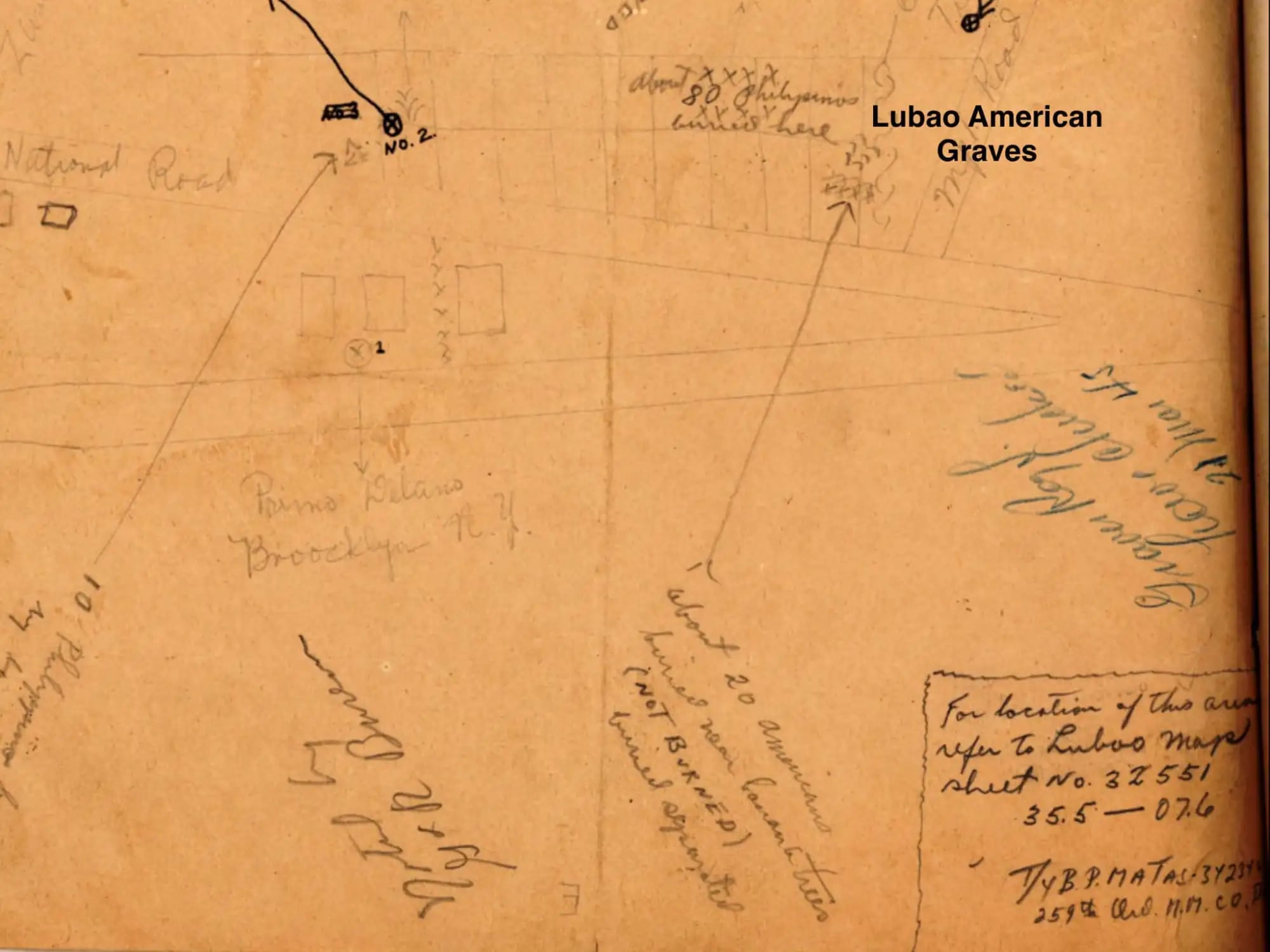
Bear later found Army maps showing a cluster of wartime graves in a banana field near Lubao. Greg Kupsky, the DPAA’s lead World War II historian for the Philippines, then connected the site to the remains of nine unidentified soldiers recovered after the war and eventually buried at the Manila American Cemetery.
Kupsky ultimately assembled a list of candidates that included Julius and 151 other soldiers. Before approving a disinterment, the DPAA requires DNA reference samples from relatives tied to at least 60% of those possible matches—a threshold that took Bear and Army genealogists until 2023 to reach.
In April 2024, top Pentagon officials gave their approval for workers to exhume the remains of the nine soldiers and nine others from the Manila cemetery.
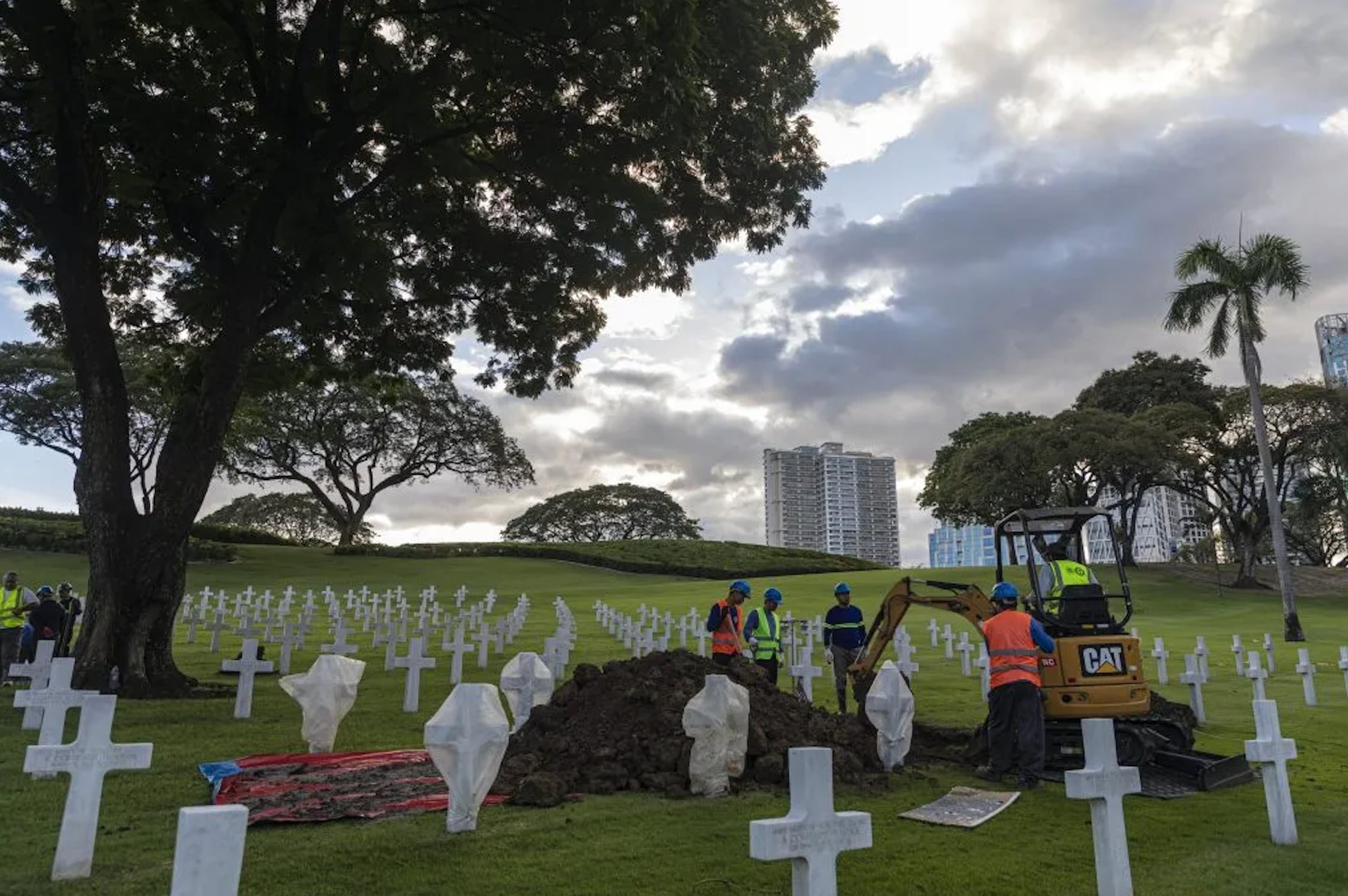
The DPAA and the American Battle Monuments Commission, which manages 26 military cemeteries overseas, then worked together to schedule the disinterments. The 18 caskets were exhumed in December 2025 and sent the next month to the DPAA’s Honolulu lab.
Knudsen was elated—until he learned the identification process could still take years because of laboratory backlogs.
“They have thousands of remains to process and have their own internal hierarchy when it comes to priority cases,” Johnson wrote to Knudsen in a Jan. 26 email. “So this is the part of the ID process where patience will be the most difficult.”
Identifying Victims of Genocide
Huffine says there’s no reason families like the Knudsens should be waiting so long to find the remains of the dead warriors.
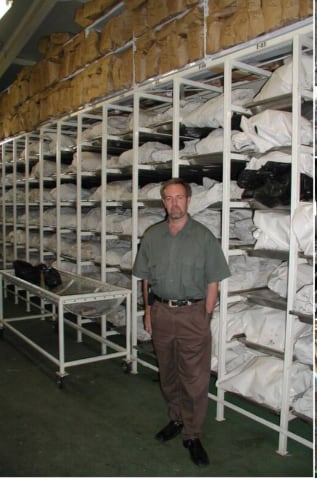
During his time at the Armed Forces DNA Identification Laboratory, the friendly Oklahoman helped pioneer mitochondrial DNA testing, which became the backbone of early military identifications because it could recover genetic clues from badly degraded remains.
But it was his work in Bosnia and Herzegovina that helped push DNA science into a new era.
In 1999, Huffine quit his AFDIL job to join the International Commission on Missing Persons in the aftermath of the Bosnian war. He was asked to help solve one of the most daunting forensic challenges in modern history: identifying thousands of victims found in mass graves.
Bosnian Serb forces had massacred tens of thousands of Bosnian Muslim civilians and POWs and hastily buried them. To hide the evidence of their war crimes, the Serbs later dug up the mass graves and reburied the victims in other graves, using bulldozers to scatter and conceal the bodies.
“When I got there 27 years ago, they had 4,000 bodies and had identified only seven in three years,” Huffine told The War Horse.
The mitochondrial DNA tests the Bosnians were using were producing results, but because mitochondrial DNA passes only from mothers to their children, large numbers of victims often share the same genetic signature, Huffine said. That was a huge problem in Bosnia, where entire extended families were slaughtered and buried together.
So Huffine and his team inverted the system.
Instead of treating DNA as the final step, they made it the first. They shifted to nuclear DNA—which comes from the nucleus at the center of human cells—and built a database of family reference samples. They then tested every viable bone to try to find a genetic match.
Within two years, the system was identifying about 500 individuals a month.
The implications were profound. Fragmented and commingled remains could be reassembled through genetic matches. Identification was no longer a slow, case-by-case exercise.
A quarter of a century later, however, the identifications of the commingled remains of the unknowns in America’s military cemeteries still emerge through a fusion of forensic anthropology, dental analysis, isotope testing, and military history—with DNA serving as one powerful line of evidence within a larger scientific reconstruction rather than the engine driving the case.
Huffine said it’s a system designed for a time when extracting DNA was expensive, limited, and uncertain.
“They need to do DNA testing first,” he said. “Then have everything else confirm it.”
Huffine said he believes the Bosnian model could identify the overwhelming majority of the 6,050 unknowns in U.S. military cemeteries in several years, particularly if Congress allocates more money for DNA testing and more of the testing is outsourced to private labs to eliminate the identification bottlenecks.
He argues that a large-scale identification campaign wouldn’t require turning America’s military cemeteries into excavation sites. Huffine envisions tightly controlled operations using temporary shielding, mobile DNA laboratories, and CT scanners positioned near cemetery grounds.
Remains could be exhumed, scanned, sampled for DNA, and reburied quickly. Forensic anthropologists and geneticists could analyze the data later.
“You could go through an entire cemetery relatively fast,” Huffine said. “It would actually shorten the length of time that you have to be there opening graves.”
Is a ‘Blended’ System Better?
McKeague, the DPAA’s director, said it is standard for the lab to start large projects—cases with commingled remains—with DNA analysis. The “blended” approach in those cases, he said, happens concurrently while samples are being processed.
“When we have sufficient information from our DNA-led approach to identify someone, we do so once the data are validated,” McKeague said. “Best practice for identifying large groups of poorly preserved skeletonized remains is to use a diverse toolkit, with DNA being a key component.”
He said forensic anthropologists routinely remove fingernail-sized slivers of bone from remains soon after they arrive at the DPAA lab. And the bone samples are sent to the Delaware lab for immediate analysis.
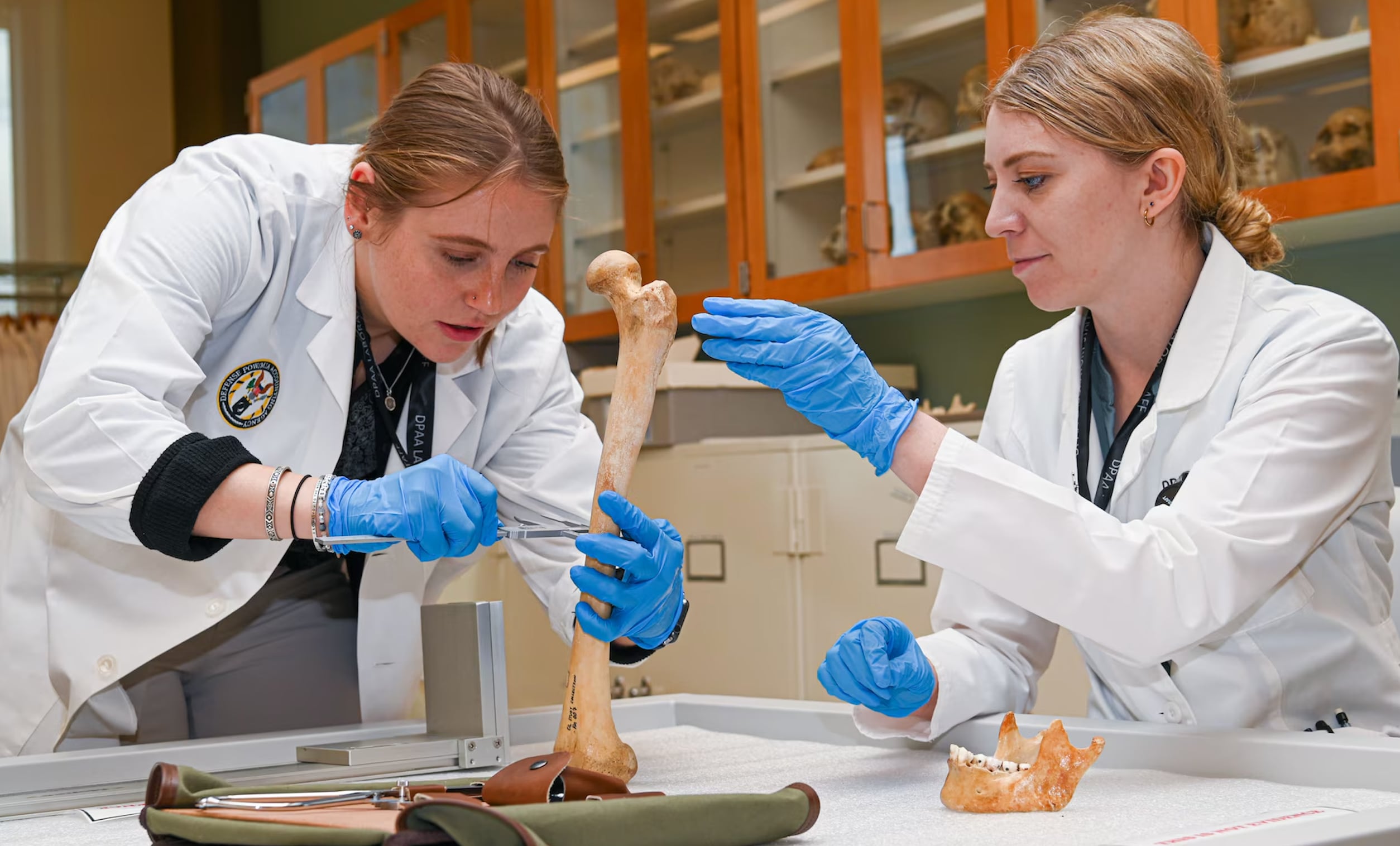
But Huffine said the issue is not whether the DPAA sometimes uses DNA at the beginning of the process, but how much weight the agency gives the science. The DPAA’s current blended approach still leans too heavily on anthropology, history, and other forensic disciplines rather than allowing DNA to drive identifications, he said.
“Always use your strongest science first,” he said.
Geneticist David Mittelman, CEO and co-founder of Texas-based Othram Inc., agreed. He said flatly that “DNA should lead the investigation.”
His lab specializes in extracting hard-to-get DNA from degraded and damaged bones, embalmed tissue, and even century-old remains. Othram’s customers include numerous law enforcement agencies across the country.
Mittelman told The War Horse that traditional forensic identification relies on testing for roughly 20 genetic markers, a method that is useful for confirming a suspected identity but often ineffective when no close family DNA sample exists or when remains are badly degraded.
Instead of 20 markers, Mittelman said, his scientists analyze hundreds of thousands of markers, allowing investigators to identify distant relatives and reconstruct identities through genealogical networks—a process he calls “identity inference.”
The Power of FIGG
The 2018 arrest of Joseph James DeAngelo, the Golden State Killer, helped transform forensic genetics and brought national attention to an investigative technique known as forensic investigative genetic genealogy, or FIGG.
Instead of relying on traditional DNA methods that compare crime scene samples with known suspects or close relatives, California investigators used GEDmatch, a public DNA database, to search for distant genetic relatives of the killer—in some cases third or fourth cousins.
Genealogists then built sprawling family trees across generations until investigators narrowed the search to DeAngelo, a former California police officer who later pleaded guilty to 13 murders and dozens of rapes committed in the 1970s and 1980s.
Michelle Leonard, a genetic genealogy pioneer in the United Kingdom, said public DNA databases such as GEDmatch and FamilyTreeDNA are best viewed as investigative resources rather than standalone identification systems.
Coupled with DNA testing and traditional genealogy research, she said, the databases can generate leads, narrow family trees, and point investigators toward possible relatives in missing-person cases.
“FIGG isn’t magic,” Leonard said. “But it’s a very powerful tool.”
The Armed Forces DNA Identification Laboratory still primarily relies on a closed DNA system built around samples voluntarily submitted by relatives of missing servicemembers—an approach that genetic genealogists say can limit potential matches in long-unsolved cases.
“It would certainly be possible to identify more soldiers if genetic genealogy could be used as an add-on to the regular methods,” Leonard said.
In written responses to questions from The War Horse, AFDIL defended its cautious approach.
“We currently do not use any publicly available databases for family references,” the laboratory statement said, arguing that the databases lack the quality controls required for forensic identifications. But the lab acknowledged it was now developing strategies to incorporate FIGG because its results have proved to be so promising.
Tom Osypian, associate director and product manager at GEDmatch, agreed that public DNA databases and FIGG are not substitutes for traditional forensic identification databases. They’re “meant to accelerate” IDs, he said.
“We don’t do the DNA testing at GEDmatch,” Osypian said. “But we have processes in place to make sure the data getting uploaded” to GEDmatch products is as robust as possible.
‘These Are Our Fallen’
For all of their disagreements, Huffine and McKeague describe their work in deeply personal terms—shaped as much by grief and duty as by technology.
McKeague said advocates of stepped-up disinterments sometimes underestimate the emotional and cultural weight of disturbing gravesites holding America’s war dead.
“These are not just cases,” he said. “These are our fallen.”
For his part, Huffine said his focus on identifying the missing was shaped in part by personal tragedy.
In 1995, his father disappeared during a drive and did not return home. Several days later, authorities found his body.
Even during that relatively short period of uncertainty, Huffine said, he came to understand “what just not knowing can do to someone.”
David Americo, the Paris-based chief of cemetery operations for the American Battle Monuments Commission, said that under an agreement with the DPAA, the current limit is 100 disinterments a year at the Manila American Cemetery and 75 annually across Europe. But, Americo said, the staff would work in good faith with DPAA officials if they eventually decide to accelerate the pace of disinterments.
Americo said the disinterments are carefully managed to minimize disruption to the cemeteries and the families who visit them. But headstones must be temporarily removed, and sod is cut away. Freshly disturbed earth can remain visible for weeks as the grounds slowly heal.
Still, Americo said, he understands the need to balance the beauty of the cemeteries and the MIA families’ pressing need for closure, and he hopes the issue can be resolved to the satisfaction of people on both sides of the debate.
Americo ended an interview with The War Horse by recounting the first disinterment he witnessed at the Florence American Cemetery in Italy after joining the commission in 2017.
He remembers watching in awe as a casket was opened and he saw the remains of a young American who had given his life for his country. “He was probably 18, 19, 20 years old,” Americo recalled.
U.S. soldiers then carried the casket away from the grave with military honors before it was transported to the DPAA’s forensic lab.
“That,” he said, “is a moment that will remain with me for the rest of my life.”
Reporting for this War Horse investigation was supported by the Pulitzer Center. The story was edited by Mike Frankel, fact-checked by Jess Rohan, and copy-edited by Mitchell Hansen-Dewar. Hrisanthi Pickett wrote the headlines.
Read the full article here
