

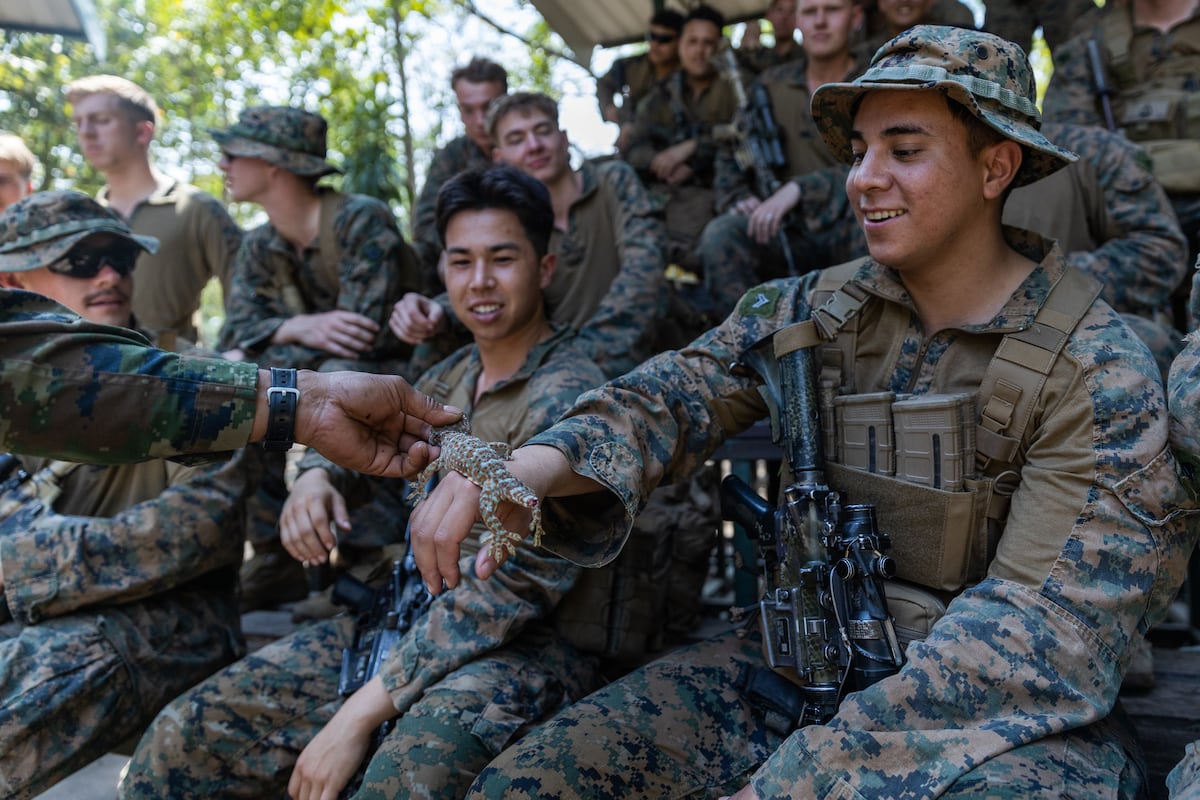

Tuesday marks National Reptile Awareness Day, a time to appreciate the cold-blooded creatures that have slithered, crawled and snapped their way through human history. For the U.S. military, that appreciation runs deeper than curiosity.
From cobras to gators, reptilian mascots and call signs appear on patches, aircraft and unit logos across every branch. These creatures represent qualities service members value most: patience, precision and power.
Reptiles embody a primal toughness that resonates with warfighters. A cobra never warns before it strikes. A gator waits still and silent until the right moment. That instinct for timing and discipline mirrors how military personnel are trained to operate.
A sniper may hold his breath for hours before taking a shot. A gator may wait underwater for the same amount of time before ambushing prey. Both rely on control, not chaos.
That kind of symbolism has shaped unit identity for generations. During World War II, the U.S. 158th Infantry Regiment earned the nickname “Bushmasters” after encounters with the deadly snake in the jungles of Panama and the Pacific.
The name was not chosen for flair. It came from survival. The men faced the snake daily, and it became a symbol of resilience and grit. The Bushmaster remains part of the regiment’s heritage today, its image still coiled across the insignia.
Reptiles thrive in the same kinds of environments where American forces have fought for more than a century: deserts, swamps and jungles. That shared toughness has made them natural emblems.
In Iraq and Afghanistan, Marines in amphibious assault units often referred to themselves as “Gators.” The nickname reflected both their vehicles and their versatility. Like the animal, they could move between land and water without hesitation. Adaptability became part of the identity.
The 75th Field Artillery Regiment made that link official. Its distinctive unit insignia, approved in 1923, features a gold lizard on a red shield. The design honors the regiment’s roots in Alabama, once called the “Lizard State.” The symbol stands for quickness and survival, traits that define the artillerymen who served under its banner.
Reptilian call signs and nicknames also work from a practical standpoint. On radio channels, short names like “Cobra One” or “Viper Six” cut through static and confusion. They are clear, aggressive, and easy to remember. Their sharp consonants sound fast and decisive, reinforcing the message. Over time, those names become part of a unit’s mythology, spoken with pride by generations of soldiers who never even met.
The connection between reptiles and flight became permanent during the Vietnam War. When the Bell AH-1 “Cobra” helicopter was introduced in 1967, the aircraft’s sleek profile and lethal precision fit the name perfectly.
The helicopter’s reputation for speed and firepower helped solidify the snake as a symbol of American air dominance. The tradition continues today with the AH-1Z “Viper,” a modernized version that carries the same bite in combat.
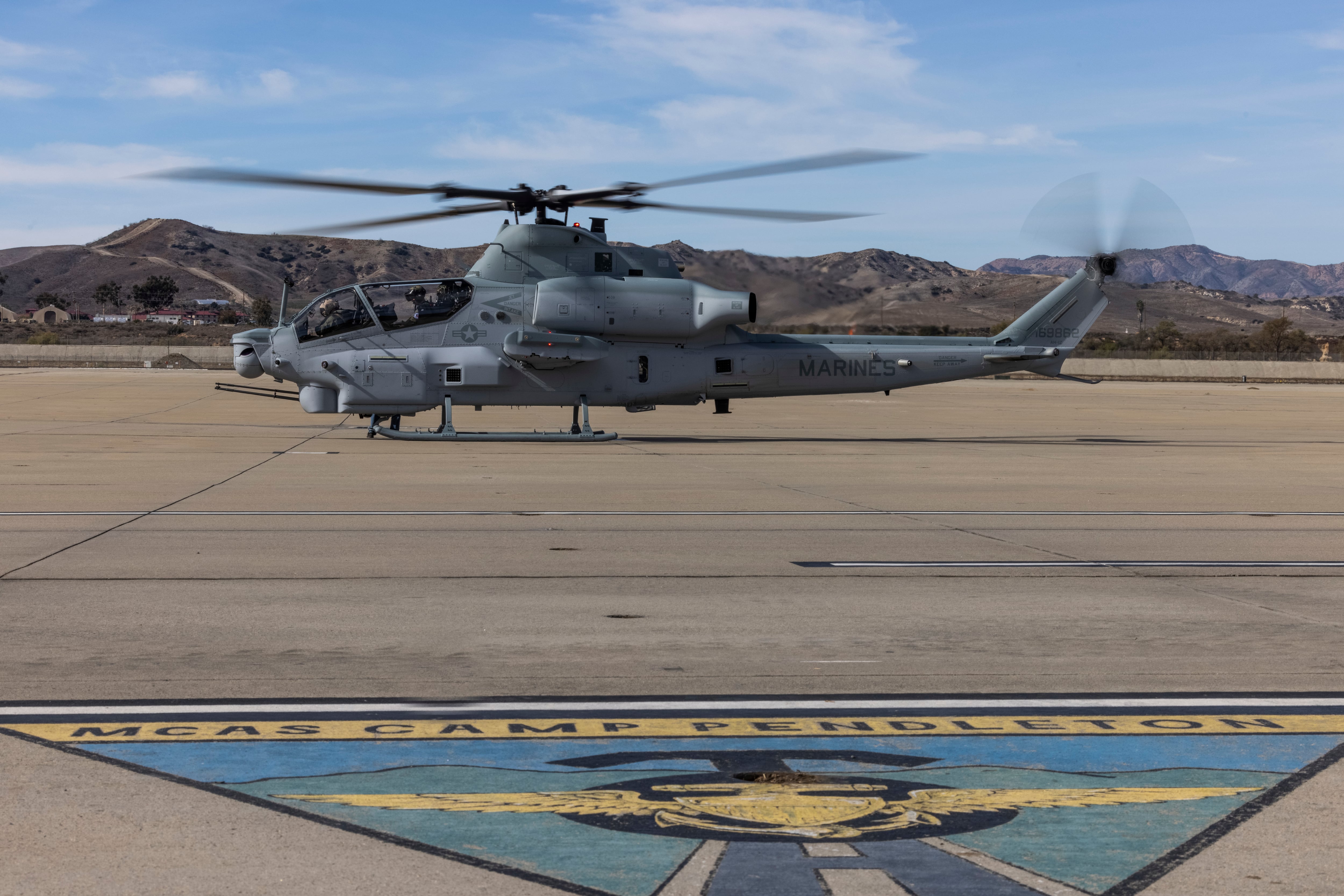
Reptile imagery also appears in the Army’s heraldic tradition. The 3rd Armored Cavalry Regiment once used the motto, “Brave Rifles, Scales of the Dragon,” merging reptilian symbolism with mythology to convey unity and strength.
The Marine Corps’ Amphibious Assault Schools in California still informally call themselves “the Gator School,” a title that reflects their amphibious heritage and connection to World War II landings.
Reptiles have appeared in military symbolism around the world for thousands of years. In ancient Egypt, crocodiles represented power and protection. Sobek, the crocodile god, was invoked for strength and military success.
That same instinct to channel the reptile’s strength appears in modern American patches, coins and mottos. No matter the era, the message is the same: be patient, strike hard and survive.
Reptiles have even influenced how service members describe themselves. The term “cold-blooded” has become shorthand for operating without emotion. It means carrying out the mission despite fear, fatigue or doubt. That is not heartlessness. It is control. It is the same focused discipline a gator shows before it snaps its jaws shut.
When you hear a call sign like “Cobra One” or see a gator stitched on a sleeve, you are witnessing more than branding. You are seeing the result of decades of storytelling, myth-making and tradition.
Reptiles have survived longer than almost any other species on earth. They adapt, endure and dominate in silence. It makes perfect sense that service members, who are trained to do the same, would see themselves in those scales.
From the jungles of the Pacific to the deserts of Iraq, from the cockpits of attack helicopters to the beaches of Camp Pendleton, the reptile has remained one of the military’s most enduring symbols. It represents readiness, resilience and survival.
So when a young soldier earns a patch marked by a gator’s jaw or a coiled snake, they join a lineage that stretches across decades of service.
Observation Post is the Military Times one-stop shop for all things off-duty. Stories may reflect author observations.
Read the full article here
