



Disclaimer: I am not a medical doctor and nothing in this article should be taken as medical advice. This article is for informative purposes only. Use these methods at your own risk and please consult a physician or qualified health provider first.
Some of the most incredible advances of the modern age have been in the field of medicine. When we get hurt, we just go to the hospital and a doctor treats us. But as we’ve become more dependent on hospitals, we have forgotten how to deal with many health conditions and injuries on our own. If the day comes when the hospitals are closed or overcrowded due to a major disaster, we’ll be in big trouble.
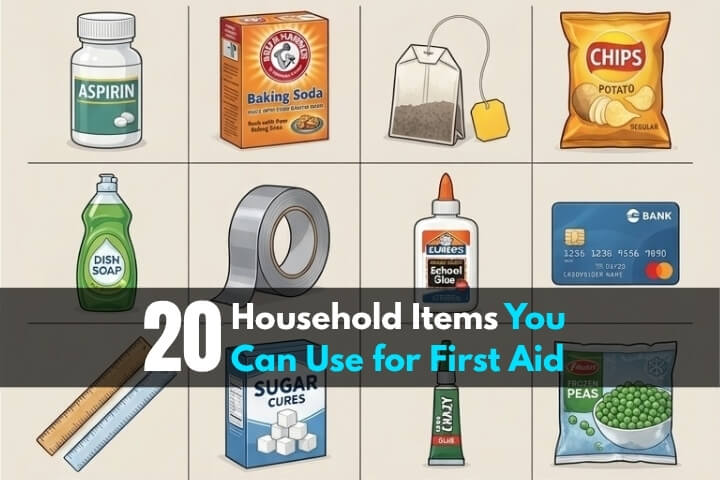
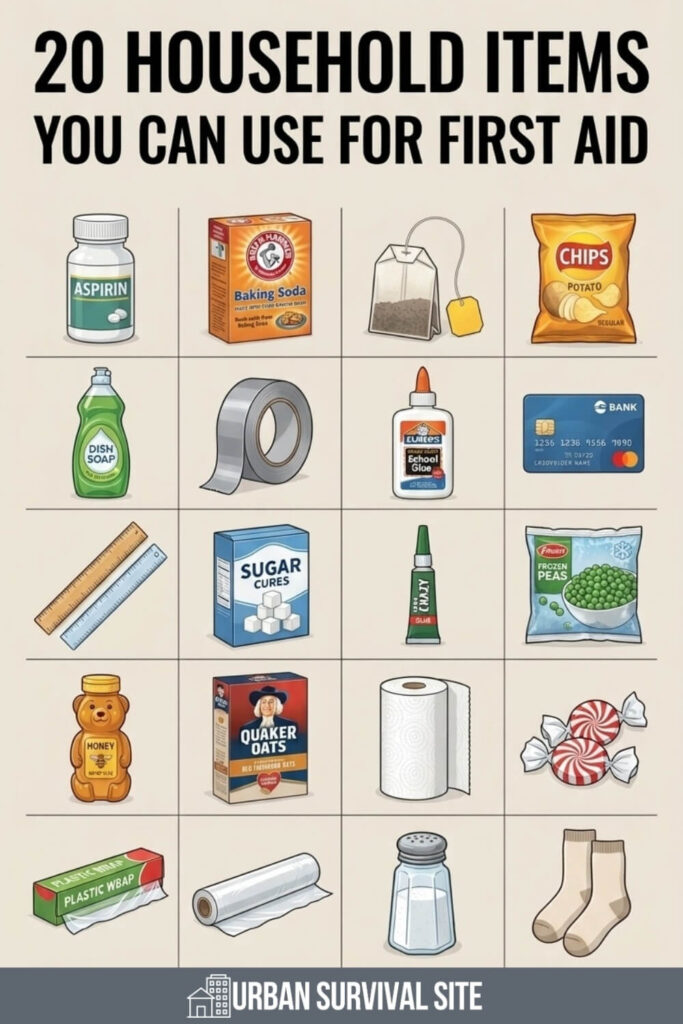
Thankfully, there are ways you can deal with everything from a small cut to a medical emergency without having to rely on expert doctors and million-dollar technology. If you want to be better equipped to handle these situations in a disaster scenario, check out these 20 household items that you can use for first aid.
Aspirin
Aspirin is an effective over-the-counter pain reliever. However, it can also prove to be lifesaving if you are having a heart attack. As soon as you notice signs of a heart attack, chew a single aspirin. While this won’t stop a heart attack and further medical attention will almost certainly be required, it is able to thin your blood enough to buy you some time.
Baking Soda
Baking soda can be mixed with water and ingested in order to soothe indigestion and stomach aches, or you can make a paste out of baking soda and water and use it to relieve the itching and discomfort from bug bites, sunburns, and rashes.
Black Tea Bags
The tannins in black tea act as a natural astringent, which means they can help slow bleeding and reduce swelling. If you have a tooth pulled or a socket that won’t stop bleeding, bite down on a damp tea bag to encourage the blood to clot.
A cooled, moist tea bag can also be held against a canker sore, a minor burn, or puffy, irritated eyes to soothe the discomfort.
Brooms
In an emergency, a broom has the right height and sturdiness to serve as a crutch. The bristles at the end will offer some padding, though you can easily add more padding using washrags and duct tape.
Chip Bags
A sucking chest wound is one of the most serious injuries to deal with. A sucking chest wound occurs when your ribcage and at least one of your lungs is punctured, creating a new path for air in your lungs to travel out of and quickly leading to death if untreated.
One way to temporarily treat a sucking chest wound is to make a makeshift flutter valve by taping an empty chip bag over the wound. However, be sure to only tape 3 sides, leaving one side open. This allows air to escape the chest cavity during exhalation while preventing air from reentering during inhalation.
Credit Card
Removing a bee stinger without squeezing any more venom into your skin can be difficult. One great way to remove a bee stinger, though, is to scrape it out with the edge of a credit card. Just be sure that you are scraping in the opposite direction of the stinger’s entry.
Dish Soap
Dish soap normally contains more powerful antibacterial agents than most hand soaps, making it good for cleaning cuts and scrapes. Mix the dish soap with water and use a clean washrag to gently wash the wound.
Duct Tape
The versatility of duct tape knows no bounds. While duct tape can prove useful in almost any DIY project, it can also be used for first aid applications such as holding a bandage tightly in place or making things such as splints, arm immobilizers, and braces.
Elmer’s Glue
While superglue can be used to close a cut, Elmer’s glue can be used to remove a splinter. Apply a patch of the glue to the splinter and wait for it to dry. When you peel off the dried glue, the splinter should come out with it.
Frozen Peas
Frozen peas make for a great ice pack that will stay cold for a long period of time and not leave a puddle of melted water when it warms up.
Honey
One of the most effective household items for treating burns is honey. Gently spread honey over a burn wound and wrap it with gauze in order to speed up the healing process.
Oatmeal
Along with making for a healthy breakfast, oatmeal is also able to soothe sunburns and rashes such as those caused by poison ivy. Tie off the oatmeal inside a sock or pantyhose and place it with you in a hot bath to relieve the itching and burning from a wide range of rashes.
Paper Towels
If nothing else is available, a thick bundle of paper towels can be used as a bandage. When held in place with duct tape, paper towels can actually be quite effective at stopping bleeding and preventing contamination.
Peppermint Candy
Peppermint oil is one of the most powerful natural anti-nausea solutions available today. If you don’t have a bottle of peppermint essential oil available, though, eating a few pieces of peppermint candy will work almost as well.
Plastic Wrap
Plastic wrap can be used to cover a burn after it has been thoroughly cleaned and treated in order to keep it from getting infected.
Salt
Plain table salt is one of the most useful first aid items in your kitchen. Dissolve a teaspoon in a cup of clean, warm water to make a simple saline solution you can use to flush out cuts, scrapes, and debris from a wound.
That same saltwater mix also makes a great gargle for soothing a sore throat, and swishing it around your mouth can ease the pain of a toothache or a mouth ulcer until you’re able to get proper treatment.
Socks
Socks can be used to create either a heat pack or an ice pack. To make a heat pack, fill the sock with rice and place it in the microwave for 1-2 minutes. To make an ice-pack, take the same rice-filled sock and place it in the freezer for a few hours.
Sugar Cubes
If you are a diabetic, sugar cubes are great to keep around as a way to quickly boost your blood sugar if it gets too low. Candy works as well, but you can’t beat a pure lump of sugar in these situations.
Superglue
To this day, doctors often use a form of medical superglue to close small cuts and incisions. However, ordinary superglue will work in a pinch. Simply push the cut closed and apply a liberal amount of superglue to the line the cut forms, holding it closed until the superglue dries.
Wooden Rulers
Making a splint is relatively simple – so long as you have a short, straight, lightweight, and sturdy piece of wood to make it from. Wooden rulers fit this description perfectly, making them ideal for constructing splints.
You May Also Like:

Read the full article here
